
Marssonina leaf spot
Diplocarpon
The causative agent of Marssonina leaf spot is the fungus Diplocarpon rosae (its asexual stage is known as Marssonina rosae). This pathogen is highly specialized in infecting plants of the Rosaceae family.
What the section contains
Marssonina leaf spot
The fungus survives through the winter as mycelium or spores within fallen, infected leaves or on dormant canes. In spring, when moisture and temperature conditions are favorable, it initiates the cycle of primary infection.
The fungus spreads via conidia, which are disseminated by rain splash, wind, and irrigation water. This allows for repeated infection cycles throughout the growing season, potentially leading to severe outbreaks.
Once it lands on a leaf surface, the spore germinates and penetrates the leaf cuticle. It then colonizes the intercellular spaces of the leaf tissue, drawing nutrients from the host and causing localized cell death.
This pathogen is highly adapted to temperate climates, allowing it to remain a persistent threat in home gardens, commercial nurseries, and landscape plantings where host plants are densely populated.
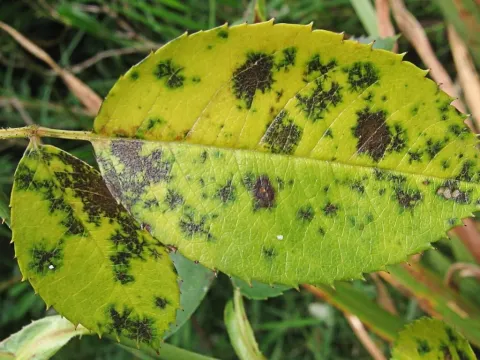
The most recognizable symptom is the appearance of dark brown or black spots on the upper surface of the leaves. These spots typically feature feathery, irregular margins and may vary in size.
As the disease progresses, the leaf tissue surrounding the black spots often turns yellow (chlorosis). Eventually, the entire leaf may become chlorotic and drop prematurely, leaving the plant defoliated.
Small, raised, blister-like structures called acervuli appear on the spots. These are the fruiting bodies of the fungus that produce masses of spores, which give the spots a dark, crusty appearance.
Symptoms typically manifest on the lower leaves first and spread upward toward the canopy. In cases of severe infection, younger leaves and succulent stems may also develop lesions.
The disease can cause significant premature leaf abscission, leaving the plant completely bare by mid-summer, which significantly stresses the plant and inhibits its growth cycle.
Marssonina leaf spot development is strictly dependent on moisture. Prolonged leaf wetness is the most critical factor for spore germination and infection, which is why rainy periods trigger outbreaks.
The optimal temperature for the growth of Diplocarpon rosae ranges from 18°C to 25°C. High humidity levels combined with these temperatures create ideal conditions for rapid fungal reproduction.
Poor air circulation, caused by dense planting or lack of pruning, keeps the foliage wet for longer periods, significantly increasing the likelihood of infection and the speed of disease spread.
Plants under nutritional stress, specifically those lacking balanced soil nutrients, or those weakened by other pests, are significantly more susceptible to severe infection than healthy, robust plants.
Overhead irrigation, especially during the evening, mimics natural rainfall and keeps foliage wet overnight, which provides an excellent environment for the fungus to establish itself.
The primary harm caused by Marssonina leaf spot is premature defoliation, which reduces the plant's ability to photosynthesize and store carbohydrates for winter dormancy and spring growth.
Weakened plants show reduced cold hardiness and are significantly more likely to suffer winter injury or complete dieback. The loss of vitality also leads to a marked decline in flower production.
The aesthetic value of ornamental plants is destroyed, which poses a significant problem for commercial growers and home gardeners who rely on the visual appeal of these crops.
Long-term infestation leads to chronic stress on the plant, making it highly susceptible to secondary pathogens, wood-boring insects, and other environmental stressors like drought or heat.
Economic impacts include the costs of intensive fungicide programs, losses in nursery sales, and the additional labor costs required for constant monitoring, pruning, and debris removal.
Effective management begins with cultural practices, such as choosing disease-resistant varieties and planting in locations with good sunlight and airflow to minimize leaf wetness.
Sanitation is paramount: all fallen leaves must be collected and disposed of (not composted) during the autumn. This reduces the inoculum level for the following spring significantly.
Fungicide applications are necessary during wet seasons. Products containing copper, mancozeb, or systemic fungicides like triazoles are effective when applied preventively or at the first sign of infection.
- Prune plants to improve internal air circulation.
- Water at the base of the plant to avoid wetting the leaves.
- Rotate fungicide chemical classes to prevent the development of resistance.
- Apply mulch to create a barrier between the soil and the foliage.
If an outbreak occurs, all infected foliage should be removed immediately to decrease the source of spores, followed by a regular spraying schedule to protect newly developing healthy tissue.