
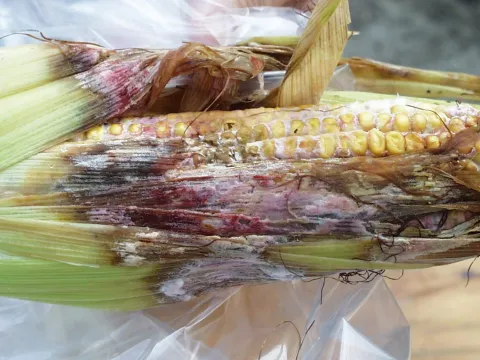
Dieback of shoots
Gibberella intricans
The causative agent of this disease is the fungus Gibberella intricans (anamorph Fusarium equiseti). It is a widespread soil-borne pathogen belonging to the Fusarium genus, known for its significant impact on various agricultural crops.
What the section contains
Dieback of shoots
The pathogen is primarily a saprotroph living on organic matter, but it can quickly switch to a parasitic lifestyle when the host plant is stressed or weakened by environmental factors.
It spreads efficiently via conidia, which are dispersed by wind, splashing rain, and contaminated agricultural tools used during pruning or other maintenance activities.
Once inside the plant, the fungus colonizes the vascular tissues, specifically the xylem, where it produces toxins that disrupt water and nutrient transport, eventually leading to tissue necrosis.
The resilience of this fungus is supported by the production of chlamydospores, which allow it to persist in the soil and plant debris for several years even under unfavorable environmental conditions.
The primary symptom is the chlorosis and wilting of leaves at the shoot tips. Over time, the affected leaves turn brown or black, lose turgor, and become brittle, often remaining attached to the branch.
A cross-section of an infected shoot typically reveals dark discoloration in the vascular bundles, indicating that the fungus has obstructed the plant's transport system.
Under high humidity, a whitish, yellowish, or pinkish mycelial mat may appear on the bark of the dying shoots. This indicates active sporulation, which serves as a source for secondary infections.
In mango trees, the disease frequently leads to the necrosis of inflorescences, preventing fruit development and causing significant damage to the plant's reproductive potential.
The progression of the disease is often systemic, starting from the tip and moving downwards, causing significant parts of the canopy to die off if left untreated.
The development of Gibberella intricans is favored by warm temperatures combined with high atmospheric humidity, conditions typical of tropical and subtropical mango-growing regions.
Plant stress, caused by drought, overwatering, or nutrient imbalances, significantly increases susceptibility to the pathogen. Plants that are not thriving are much more likely to be colonized.
Improper pruning practices, particularly the use of non-sterilized tools, are major vectors for the pathogen. Fresh pruning wounds provide an immediate entry point for fungal spores.
Dense planting schemes that prevent airflow contribute to high humidity within the canopy, creating an ideal microclimate for the fungus to multiply and spread to adjacent shoots.
Accumulated crop debris, such as fallen leaves and pruned branches left on the ground, acts as a primary reservoir for the pathogen, ensuring its survival from one season to the next.
The economic impact of this disease is primarily linked to yield loss. By killing shoot tips and inflorescences, the fungus directly reduces the fruit-bearing capacity of the mango tree.
The disease weakens the tree overall, making it more vulnerable to secondary pest attacks, such as bark beetles or wood-boring insects, which further accelerate the plant's decline.
Management costs are significantly increased due to the need for continuous sanitation, which involves labor-intensive pruning and the proper disposal of infected material.
Severe and unchecked infections can lead to the death of entire branches or even the whole tree, necessitating expensive replanting programs and disrupting long-term orchard productivity.
Furthermore, the systemic nature of the infection can lead to chronic tree health issues, reducing the lifespan of the orchard and its overall profitability.
The primary control strategy is the rigorous removal of infected shoots. It is crucial to prune at least 10-15 cm below the discolored tissue into healthy-looking wood to ensure the infection is completely removed.
Disinfecting pruning tools between every cut is mandatory to prevent the transmission of the fungus. Using alcohol or appropriate disinfectant solutions effectively kills spores on the blade.
Preventive fungicide sprays, particularly those containing copper or systemic triazoles, can help protect susceptible plant tissues during periods of high infection risk, such as rainy seasons.
Maintaining optimal tree health through balanced fertilization, especially ensuring sufficient potassium levels, helps strengthen cell walls and improves the plant's natural resistance to infection.
Proper orchard management, including regular removal of fallen debris and pruning to ensure good airflow, is essential for reducing the humidity levels that the pathogen needs to flourish.