
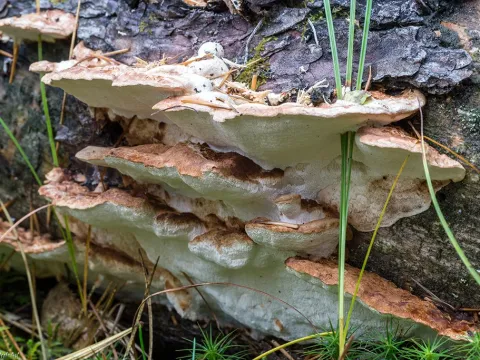
Dichomitus
Dichomitus
The disease is caused by fungi belonging to the genus Dichomitus, most notably Dichomitus squalens. It is a basidiomycete fungus known for its role in decaying wood by breaking down complex structural components like lignin and cellulose.
What the section contains
Dichomitus
These fungi are typically saprotrophic, thriving on dead wood, but they can act as opportunistic pathogens by attacking trees that have been weakened by environmental stressors or previous mechanical damage.
The fungus develops woody, bracket-like fruiting bodies on the surface of the bark or around wounds. These structures are essential for the production and dispersal of spores, which allow the fungus to colonize new hosts.
The mycelium penetrates deep into the xylem of the tree, creating a network that gradually decomposes the wood tissue. Over time, this biological activity destroys the tree's internal structure from the inside out.
Adaptability is a key trait of this pathogen; it can remain dormant in favorable conditions for long periods, waiting for signs of host vulnerability before initiating a rapid and aggressive colonization process.
The most visible sign of infection is the emergence of hard, shelf-like fruiting bodies on the trunk. Often appearing near old pruning scars or frost cracks, these are clear indicators of advanced internal decay.
The wood texture changes significantly, presenting as white or mottled rot in cross-sections. In later stages, the wood becomes soft, stringy, and loses all its structural load-bearing capacity.
Visible changes in the canopy include sparse foliage, yellowing of needles or leaves, and premature leaf drop. While these symptoms might be mistaken for drought stress, they often indicate deep-seated fungal infection.
Bark abnormalities, such as vertical cracking or localized patches of depressed and dying tissue, often serve as entry points or locations where the mycelium is actively growing just beneath the surface.
Increased susceptibility to physical damage, such as branches snapping or the tree leaning significantly during wind events, suggests a compromised internal structure caused by the spread of the fungal network.
High moisture levels are essential for the colonization and growth of Dichomitus. The fungus thrives in environments where wood remains damp for extended periods, facilitating the germination of spores.
Temperature plays a crucial role in the development rate, with warm, temperate conditions providing the ideal environment for the mycelium to expand through the wood tissue at an accelerated pace.
Open wounds are the primary entry vectors. Damage from heavy machinery, wild animals, or climatic events like lightning or frost creates the necessary access to the internal tissues, bypassing the protective layer of the bark.
Poor airflow in overcrowded stands contributes to higher humidity levels and restricted light, which weakens the trees and creates a conducive environment for the fungal spread between adjacent trees.
Trees experiencing physiological stress from drought, nutrient deficiency, or prior infestation by wood-boring insects have reduced defenses, making them much easier targets for Dichomitus colonization.
The primary economic harm is the degradation of timber quality. Infected wood loses its market value as it becomes brittle and structurally unreliable for construction or other industrial uses.
In forest stands, the presence of these fungi creates significant safety hazards due to the risk of trunk failure. Diseased trees are prone to collapsing, which endangers both foresters and wildlife habitats.
The ecological impact involves the premature death of trees, which alters the microclimate and structure of the forest. This can trigger a cascade effect, leading to further forest decline and loss of biodiversity.
Management costs are significantly increased, as forest managers must implement sanitation logging to remove infected trees to prevent the further spread of the fungus to healthy populations.
For urban and park trees, the presence of the pathogen often requires expensive removal or ongoing professional management to prevent potential damage to nearby property or public infrastructure.
Sanitation practices are the cornerstone of management. Regularly removing infected wood and dead trees helps reduce the local spore load and limits the habitat available for the fungus to multiply.
Minimizing mechanical damage during forestry operations is vital. Using care when operating equipment around living trees protects the bark barrier, effectively preventing initial fungal inoculation.
In ornamental tree management, surgery involves carefully removing the decayed portion of the wood to expose healthy tissue, followed by the application of antiseptic treatments to aid in the tree's natural compartmentalization.
While chemical fungicides have limited use in large-scale forestry due to environmental concerns, they may be applied locally in high-value trees to create a temporary protective barrier during high-risk seasons.
Selecting and planting tree species with demonstrated resistance or higher natural defense mechanisms is the most sustainable approach for managing Dichomitus in long-term forest plantations.