
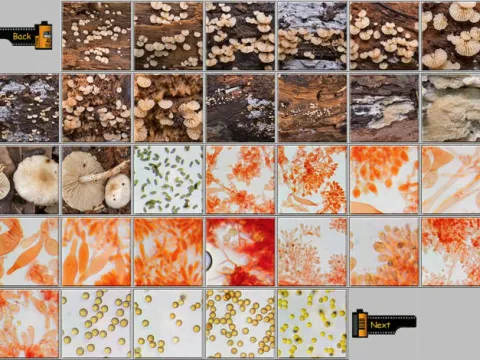
Dichostereum effuscatum
Dichostereum effuscatum
The fungus Dichostereum effuscatum (syn. Peniophora effuscata) is a basidiomycete pathogen primarily responsible for the decay of dead or dying deciduous wood.
What the section contains
Dichostereum effuscatum
This fungus acts as a wood-rotting agent, utilizing specialized enzymes to break down the complex polymers, specifically lignin and cellulose, within the wood cells.
The pathogen produces thin, effused (spread out) basidiocarps, which are the reproductive structures that release spores into the surrounding environment.
It exists as a mycelial network that penetrates the host tissue, gradually colonizing the sapwood and, in some cases, the heartwood of susceptible trees.
Its biological success is attributed to its ability to survive in a variety of environments, making it a common sight in forest habitats across temperate zones.
The most distinctive sign of the fungus is the formation of resupinate, leather-like fruiting bodies on the surface of bark or exposed wood.
The color of these fruiting bodies is typically dark brown or chocolate-brown, distinguishing them from other pale-colored crust fungi found on trees.
Infected wood often shows signs of structural degradation, becoming brittle and showing significant discoloration near the areas colonized by the fungus.
During periods of high humidity, the fruiting bodies may appear swollen and more prominent, often showing a smooth or slightly velvety texture upon inspection.
The presence of Dichostereum effuscatum is frequently observed on the lower sections of trunks where environmental conditions remain moist for longer periods.
Moisture is the critical factor for the growth of this fungus. It thrives in high-humidity microclimates such as dense forest understories or shaded tree patches.
Mechanical injuries to the tree, such as wounds from storm damage or wildlife, serve as entry points for spores, significantly increasing the probability of infection.
Stagnant air and lack of sunlight on tree trunks create an ideal environment for the spores to germinate and for the mycelium to establish itself on the host.
Temperature fluctuations are usually handled well by the fungus, although optimal growth occurs within the mild ranges typical of spring and autumn seasons.
Stress factors in trees, including drought or insect infestations, weaken the tree's natural defenses, allowing the fungus to transition from a scavenger to an active degrader.
The primary harm is the destruction of wood tissue, which causes the tree to lose its structural integrity and potentially suffer from breakage or collapse.
For forestry, this fungus is detrimental as it devalues timber by causing decay that makes the wood useless for structural or furniture purposes.
By infecting and eventually killing weakened trees, the fungus acts as a driver for forest succession, which can be an issue in commercial plantations or parklands.
The spreading of spores from decaying wood to nearby living trees creates a localized disease pressure that can affect the health of an entire tree stand.
The reduction of tree longevity due to fungal decay leads to ecological and economic costs, especially in areas managed for wood production or aesthetic landscape value.
Effective management begins with strict sanitation practices, such as the removal of dead wood, fallen branches, and stumps that harbor the fungal spores.
Pruning should be performed with care; all large wounds should be sealed with appropriate wound dressings to prevent the entry of fungal pathogens.
Improving the air circulation and light penetration within a grove or garden helps keep the bark dry, creating a hostile environment for fungal growth.
In cases where a living tree is partially infected, surgical removal of the affected area followed by fungicide treatment may save the plant.
- Regular sanitary cleaning.
- Wound care for trees.
- Proper thinning of stands.
- Monitoring of tree health.