
Diatrypella quercina
Diatrypella quercina
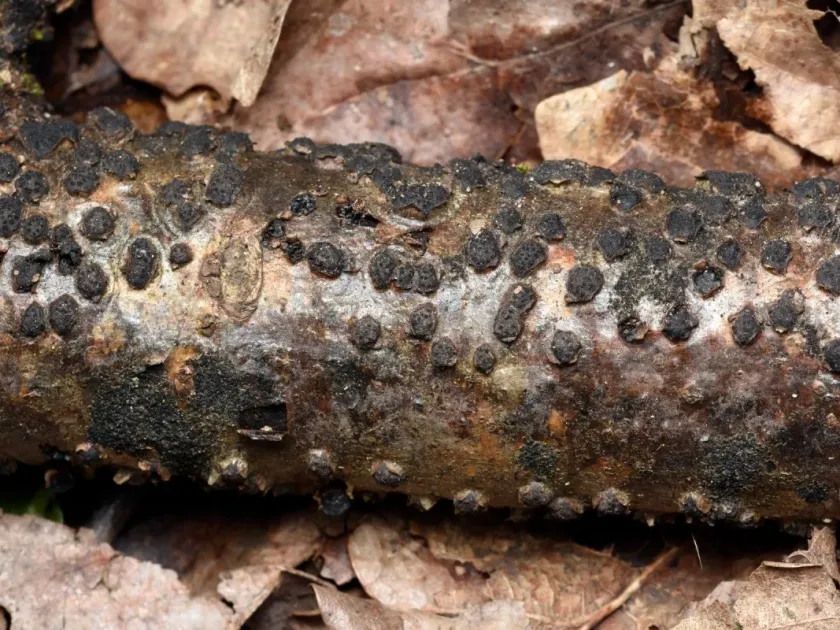
Description
Symptoms
The most prominent sign of infection is the emergence of small, black, crust-like or wart-like growths on the bark of twigs and trunks.
These black stroma are often clustered together, breaking through the outer bark layer, which reveals the presence of the fungal colony underneath.
As the disease progresses, the bark surrounding these growths may become brittle, discolored, and eventually crack or peel away from the wood.
Infected twigs often show signs of necrosis, leading to localized dieback that can be observed even from a distance if the infection is heavy.
- Black pustule-like growths on oak bark.
- Cracking and premature peeling of the bark.
- Dieback of twigs and smaller branches.
- Small pimple-like ostioles visible on the surface of stroma.
Pathogen
The causative agent of this disease is the ascomycete fungus Diatrypella quercina, belonging to the Diatrypaceae family. It is a specialized pathogen that typically infects oak tree tissues.
The fungus acts as a facultative parasite, meaning it can survive on dead organic matter but actively attacks weakened living tissues of its host tree.
The pathogen develops within the bark and phloem layers of the oak, eventually forming complex reproductive structures known as stroma, which erupt through the bark surface.
Reproduction occurs through the release of ascospores, which are dispersed primarily by wind and rain, allowing the fungus to spread across forest stands.
Research indicates that Diatrypella quercina has a high affinity for oaks, exploiting the bark structure to anchor itself and extract nutrients during the vegetative stage.
Conditions for development
The development of Diatrypella quercina is highly dependent on environmental moisture, which is essential for spore germination and mycelium penetration.
Trees with pre-existing bark wounds caused by physical damage, animal activity, or heavy storms are significantly more susceptible to successful fungal colonization.
High humidity and poor air circulation in dense forest stands or poorly managed groves promote the rapid spread of the pathogen between trees.
Environmental stress factors, such as prolonged drought periods or pollution, weaken the natural defense mechanisms of oak trees, making them easier targets for the fungus.
The fungal spores are highly resilient and can remain viable under various climatic conditions, waiting for an opportunity to infect a new host through a bark opening.
Why it matters
The primary harm is the physiological weakening of the host tree, which diminishes the oak's ability to resist secondary pests like wood-boring insects.
Infection leads to localized necrosis of the cambium layer, hindering the transport of essential nutrients and moisture throughout the affected branches.
The cumulative effect of infection often results in the premature loss of lower canopy branches, which negatively impacts the overall vitality and growth rate of the tree.
In commercial forestry, the infection lowers the quality and marketability of the oak timber due to bark damage and associated wood decay.
Landscape trees suffer from decreased aesthetic value, as the black fungal outgrowths create an unsightly appearance and indicate a decline in tree health.
Protection
The most effective management strategy involves rigorous sanitation, which includes the prompt removal and destruction of dead or heavily infected branches.
Preventative measures should focus on maintaining tree vigor through proper irrigation and soil care to bolster the tree's innate resistance to pathogens.
Care should be taken during pruning or mechanical operations to avoid damaging the bark, as these wounds serve as primary entry points for Diatrypella quercina.
If pruning is necessary, tools should be disinfected between trees, and exposed surfaces should be protected with appropriate wound-sealing agents.
Regular forest monitoring allows for the early detection of fungal outbreaks, enabling control measures to be applied before the disease spreads throughout the plantation.
Discussion
No discussions yet — be the first.