
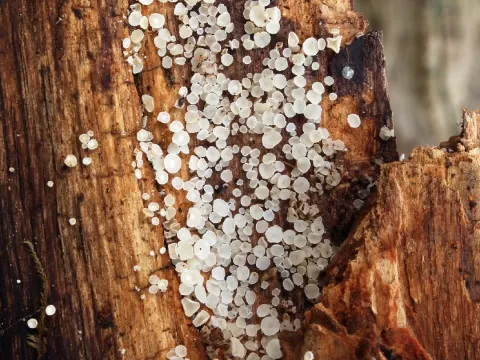
Dasyscyphella nivea
Dasyscyphella nivea
The causal agent is the ascomycete fungus Dasyscyphella nivea, belonging to the Helotiales order. It is recognized as a xylotrophic fungus that thrives on weakened or dead bark tissue of various woody plants.
What the section contains
Dasyscyphella nivea
The mycelium of the fungus develops within the bark layers and cambium, inducing decay. It acts as a facultative parasite, taking advantage of plants that are already stressed by environmental factors or other pests.
The characteristic reproductive structures are apothecia—tiny, cup-shaped fruiting bodies. These are typically white or cream-colored, which gives the fungus its distinctive appearance and the specific epithet "nivea" (snowy).
The fungus can persist within the woody substrate for extended periods, remaining latent until environmental conditions favor the development of fruiting bodies for spore release.
Dispersal is primarily achieved through ascospores, which are efficiently transported by air currents and rain splashes, allowing the fungus to colonize new sites within a plantation or forest.
The primary diagnostic sign is the presence of small, white, pubescent cup-shaped fruiting bodies appearing on the surface of tree bark. They are often found in clusters, particularly in areas with bark fissures.
Affected bark may show symptoms of necrosis, characterized by discoloration, brittle texture, and eventual sloughing off from the underlying sapwood.
In areas colonized by the mycelium, the bark often becomes dry and loses its structural integrity. This damage is frequently observed on the lower parts of stems or on shaded, dying lower branches.
While the apothecia are highly visible under moist conditions, they may shrink during dry weather, making the infection harder to detect without a closer inspection of the bark surface.
Associated symptoms often include the growth of secondary decay organisms, which may complicate the visual diagnosis of the specific pathology caused by Dasyscyphella nivea.
The development of Dasyscyphella nivea is strictly governed by high humidity levels and the presence of moist bark. Shaded, humid habitats provide the most favorable environment for the fungus.
The spring and autumn months, characterized by moderate temperatures and frequent precipitation, are the peak periods for the emergence and activity of the fungal fruiting bodies.
Tree hosts that are suffering from environmental stress, such as prolonged drought or pest infestation, are significantly more susceptible to colonization by this opportunistic pathogen.
Mechanical damage to the bark acts as a primary entry point, allowing the fungus to bypass the protective layer of the tree and reach the nutrient-rich inner tissues.
Dense stand architecture that restricts airflow contributes to a microclimate with persistently high humidity, which significantly increases the risk of rapid fungal spread between neighboring trees.
The fungus contributes to the degradation of bark tissues, which disrupts the transport of water and nutrients. While not always a primary killer, it severely impairs the host's vitality.
Massive colonization of branches leads to their premature death, which reduces the overall canopy health and lowers the aesthetic and biological productivity of the tree.
The destruction of bark creates niches for secondary pests and more aggressive pathogens, creating a synergistic effect that can ultimately lead to tree mortality.
In forestry and nursery settings, the presence of this fungus reduces the quality of wood and can lead to the rejection of nursery stock due to poor health status.
The ornamental value of trees is significantly degraded by the presence of necrotic patches and fungal fruiting bodies, necessitating costly management interventions.
Effective management begins with strict sanitation practices, including the removal and destruction of dead or heavily infested branches to reduce the spore load in the area.
Protecting trees from mechanical wounding is a crucial preventative measure, as most infections occur through these entry points. Prompt treatment of wounds with professional sealants is recommended.
In cases of high infection pressure, contact fungicides specifically aimed at protecting bark can be applied during the early stages of the growing season to suppress spore germination.
- regular sanitary pruning;
- disposal of infested wood through burning or burying;
- improving canopy ventilation via proper spacing;
- applying fertilizer to enhance tree resilience.
A long-term strategy should focus on site-species matching and maintaining tree vigor through appropriate silvicultural practices to make plants less attractive to facultative pathogens.