
Corticium disease
Corticium
Corticium disease is caused by fungi belonging to the genus Corticium. These basidiomycetes are recognized as plant pathogens that specifically target the stem and basal parts of various agricultural and ornamental crops.
What the section contains
Corticium disease
The pathogen survives in the soil and on crop debris, often overwintering as mycelium or sclerotia. This makes it a persistent threat in fields where host plants are grown continuously or without proper soil management.
The fungus functions by secreting enzymes that degrade plant tissues, primarily the outer layers of the stem, leading to typical necrosis and decay. This effectively disrupts the transport of water and nutrients.
Dissemination is achieved through basidiospores that are easily dispersed by wind or splashing water. This transmission method allows the pathogen to spread across entire fields rapidly under suitable conditions.
Biologically, the fungus is highly adapted to moist environments, thriving in the microclimate found near the soil surface where humidity remains consistently high for extended periods.
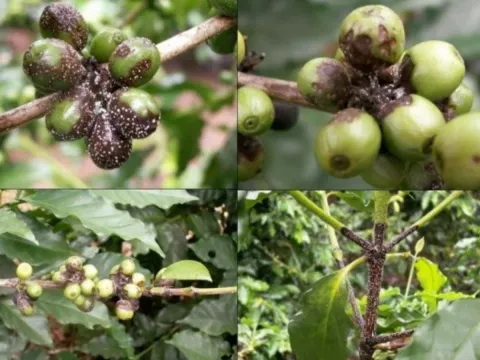
##signs##The most distinct sign of Corticium infection is the appearance of thin, crust-like mycelial mats on the lower portions of the plant stems. These mats may vary in color, often appearing white, creamy, or pale pink.
Infected areas of the stem often exhibit browning, softening, and tissue decay. As the structural integrity of the stem is compromised, the plants may lodge or collapse under their own weight.
Leaf symptoms often start at the base, with yellowing, wilting, and premature senescence of the lower foliage. This is often the first indicator that the infection is moving upward from the ground level.
In humid conditions, the mycelial growth can become more prominent, covering a larger surface area of the stem. During the final stages, necrotic tissue becomes brittle and may break easily.
Young seedlings are particularly vulnerable and may exhibit damping-off symptoms, resulting in bare patches in the field where plants have failed to establish themselves properly.
High humidity and moisture are the primary drivers for the development and spread of Corticium. Frequent rainfall, prolonged dew, and irrigation systems that keep the foliage wet create an ideal environment.
Temperature plays a crucial role, with the pathogen being most active in mild temperature ranges, typically between 15°C and 23°C. In these conditions, the fungus can proliferate rapidly.
Poor field drainage is a critical risk factor, as it keeps the soil moisture levels high and contributes to a humid microclimate. Stagnant air within dense crop canopies also facilitates the spread of the disease.
Continuous cropping of susceptible species without rotation allows the fungal inoculum to accumulate in the soil over time, leading to more frequent and severe outbreaks in subsequent seasons.
Mechanical damage to stems caused by tillage or insects can create entry points for the pathogen, significantly increasing the probability of successful infection in a population of healthy plants.
The primary economic harm caused by Corticium is the disruption of systemic nutrient flow, which stunts plant growth and prevents normal development of fruits or grains.
Substantial yield loss is common, particularly when infection occurs early in the growing season. The reduction in the number of healthy plants per hectare directly correlates to a lower harvest volume.
The quality of the produce is also negatively affected. In many cases, infected plants suffer from poor grain filling or fruit development, rendering the harvest less marketable and unsuitable for long-term storage.
Furthermore, the increased vulnerability of infected plants to opportunistic secondary infections by bacteria or other fungi creates additional management challenges for the grower.
Long-term harm includes the contamination of fields with fungal propagules, which necessitates expensive and intensive soil management or extended fallow periods to reduce the pathogen population.
Crop rotation is the most effective cultural practice for managing Corticium. By interrupting the life cycle of the fungus through non-host crops, farmers can significantly reduce the pathogen density in the soil.
Proper field hygiene is essential. This includes deep plowing to bury infected crop residues, which hastens their decomposition and removes the primary source of overwintering inoculum.
Using certified, disease-free seed and applying appropriate seed dressings with fungicides can protect the crop during the most vulnerable germination and seedling emergence stages.
During the growing season, if conditions favor disease development, foliar applications of systemic fungicides are recommended to prevent the progression of the fungus into healthy tissues.
- Ensure proper spacing between plants to improve airflow.
- Manage irrigation to avoid prolonged leaf and stem wetness.
- Control weeds, as they can act as alternative hosts for the pathogen.
- Maintain balanced soil fertility, emphasizing potash to boost plant resistance.