
Corticioid fungi
Corticiales
Description
Symptoms
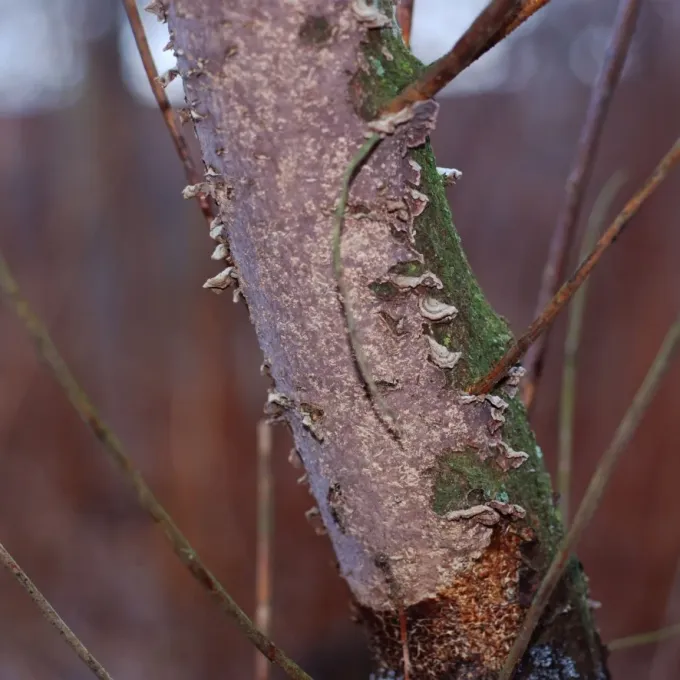
The most visible symptom is the presence of crust-like or film-like growths on the bark, which can range in colour from pure white to yellow or brown. These growths often have a waxy or leathery texture.
Infected areas of the bark tend to crack, peel, or die off prematurely. As the fungus progresses, the underlying wood may also be affected, leading to localized necrosis of the vascular tissues.
Affected trees often show symptoms of decline, including stunted growth, yellowing foliage, and premature leaf drop. The structural stability of affected branches is compromised, making them prone to breakage.
In advanced stages of infection, the bark may exhibit visible fungal mats that cover large surface areas. These mats are sometimes accompanied by a distinctive musty smell, especially during wet weather.
The expansion of the pathogen often happens in a circular or irregular pattern, reflecting the radial growth of the mycelium beneath the bark and on its surface.
Pathogen
Corticioid fungi (order Corticiales) are a diverse group of basidiomycetes that form crust-like, resupinate fruiting bodies on bark and wood. While many species are saprotrophs, others act as opportunistic pathogens that contribute to the decay of woody plants.
These fungi invade plant tissues primarily through wounds in the bark caused by pruning, frost, or mechanical damage. Once inside, the mycelium colonizes the cambium and phloem, disrupting the transport of nutrients and water.
Their reproduction is facilitated by basidiospores, which are easily dispersed by wind and rain splash. These spores are highly resilient, allowing them to remain viable until they land on a susceptible surface.
The enzymatic activity of these fungi is capable of degrading complex components such as lignin, which is essential for the structural integrity of trees. This makes them significant threats in both orchards and natural forests.
Biology of these fungi is characterized by slow but persistent growth, allowing them to expand across the surface of the bark during favourable environmental conditions, gradually weakening the host plant.
Conditions for development
High humidity and mild temperatures are the primary environmental drivers for the development of corticioid fungi. Rainfall and prolonged mist provide the necessary moisture for spore germination.
Poor airflow within the canopy, common in densely planted orchards, creates an ideal microclimate for the fungus to thrive and spread between adjacent trees.
Exposure of fresh wounds through improper pruning or lack of wound protection significantly increases the risk of infection. The pathogen quickly exploits these unprotected sites to enter the plant's vascular system.
Trees suffering from physiological stress, whether due to drought, nutritional deficiencies, or over-irrigation, are far more vulnerable to infection compared to healthy, vigorous specimens.
The age and condition of the bark are also critical factors; older trees with deeply fissured bark provide more surface area and shelter for fungal spores to settle and germinate successfully.
Why it matters
The primary harm caused by corticioid fungi is the systematic decay of the bark and cambium, which leads to the eventual death of individual branches and, in severe cases, the entire tree.
By disrupting the plant's metabolic pathways, these fungi reduce overall productivity, leading to smaller yields and poorer fruit quality. This can represent a significant economic burden for growers.
Increased susceptibility to winter injury is a major concern, as the weakened bark cannot effectively insulate the underlying tissues from extreme cold. This often results in the loss of major scaffold branches.
Persistent infections require intensive management, which increases labor costs and chemical inputs. Furthermore, once established, the pathogen is difficult to eradicate without aggressive surgical intervention.
The decline of tree health reduces the longevity of the orchard, often necessitating premature replanting and further investment, which impacts the long-term sustainability of the operation.
Protection
Effective management begins with good orchard hygiene, specifically consistent sanitary pruning practices and the thorough disinfection of tools to prevent cross-contamination.
All pruning wounds should be promptly treated with specialized wound paints or fungicides to create a physical and chemical barrier against fungal colonization.
Whitewashing the trunk and lower branches with lime-based solutions provides a protective layer that helps prevent bark damage and inhibits the settlement of fungal spores.
If infections are detected early, it is recommended to surgically excise the diseased tissue until healthy, clean wood is exposed, followed by immediate application of disinfectants.
- Maintain appropriate planting density to ensure proper air circulation throughout the tree crown.
- Regular application of balanced fertilizers to support plant immunity and stress resilience.
- Proper disposal of all infected wood and bark material through burning to reduce inoculum sources.
Discussion
No discussions yet — be the first.