
Coremiella
Coremiella
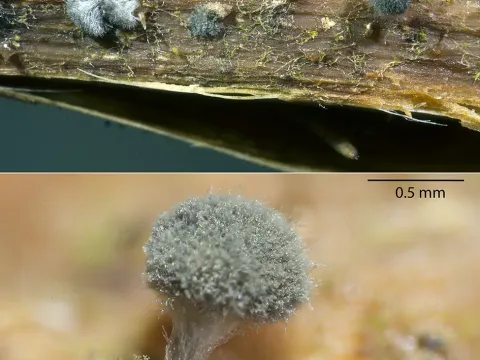
The causative agent of the disease is a fungus from the genus Coremiella (most commonly Coremiella cubispora). It belongs to the hyphomycetes group, known for producing specialized spore-bearing structures called coremia.
What the section contains
Coremiella
This pathogen acts as a facultative parasite, capable of surviving in the soil and on plant debris for extended periods. It is highly adapted to various environmental conditions, allowing it to persist in agricultural ecosystems.
The fungus produces conidia, which are easily disseminated by wind, rain splashes, and human activities in the field. Once they land on a susceptible host, they germinate and penetrate the plant tissue.
Biologically, the fungus thrives by breaking down complex organic materials, which is why it often accumulates in fields where crop residues are not properly managed or plowed under.
Laboratory identification involves isolating the fungus on nutrient media and examining its characteristic conidiophores and spore arrangements under a microscope to confirm the genus.
The initial symptoms include the appearance of small, irregular spots on leaves and stems. These spots are often chlorotic at first but gradually turn necrotic as the infection progresses.
Under conditions of high humidity, a grey or olive-colored fuzzy growth appears on the lesions. This growth represents the fungal sporulation, specifically the coremia clusters that give the pathogen its name.
Affected plants often show signs of severe stress, including wilting, premature leaf yellowing, and eventual defoliation. The energy production of the plant is significantly impaired due to the loss of photosynthetic area.
If the infection reaches the fruit or flowers, it can cause deformation, discoloration, and softening of the tissues, making the produce unsuitable for market.
Over time, the necrotic areas may merge, leading to the death of entire leaves or stems, particularly in the lower parts of the plant canopy where humidity is usually higher.
High humidity levels, typically above 80%, combined with moderate temperatures between 18°C and 25°C, are the primary triggers for Coremiella outbreaks.
Poor ventilation within dense crop stands creates a microclimate that traps moisture on the leaf surfaces, which is critical for the germination of fungal spores.
Excessive nitrogen fertilization often leads to lush, succulent growth that is more susceptible to fungal penetration, creating a favorable environment for the pathogen.
Mechanical damage caused by pests, hail, or agricultural machinery provides easy entry points for the fungus to bypass the plant's natural protective barriers.
Fields with poorly managed crop rotations are highly prone to recurring infections, as the pathogen successfully overwinters on debris left in the upper layers of the soil.
The primary damage is a reduction in crop yield and quality. As the fungus destroys leaf tissue, the plant loses its ability to produce necessary sugars, stunting overall growth.
Infected crops are significantly weakened, making them more vulnerable to secondary infections by other opportunistic pathogens and environmental stressors like drought.
Commercial producers face financial losses due to the unsalable nature of infected fruit and vegetables, which rot quickly during post-harvest storage.
Severe infestations can lead to substantial reductions in total harvest volume, sometimes necessitating the destruction of entire plant sections to prevent wider spread.
The need for repeated fungicide applications to manage the disease increases the economic cost of production and places additional pressure on farm management resources.
Crop rotation is the most effective cultural practice to manage Coremiella. Alternating susceptible crops with non-host plants helps disrupt the pathogen's life cycle in the soil.
Deep plowing of crop residues immediately after harvest is essential to bury the inoculum, accelerating its decomposition and limiting the chances of spring infection.
Fungicide treatments, particularly those with systemic action, should be applied at the first signs of symptoms. Proper timing and coverage are critical for successful disease management.
Maintaining proper plant spacing and ensuring good airflow through pruning or strategic planting helps reduce the humidity around the plants, making the environment less hospitable for the fungus.
Boosting plant immunity through balanced fertilization—specifically adequate potassium and phosphorus levels—can enhance the natural resistance of the crop to fungal pathogens.