
Corinectria constricta
Corinectria constricta
Description
Symptoms
The primary symptom is the emergence of constricted or sunken areas on the bark of young twigs and trunks. In these necrotic zones, the bark often cracks and eventually sloughs off.
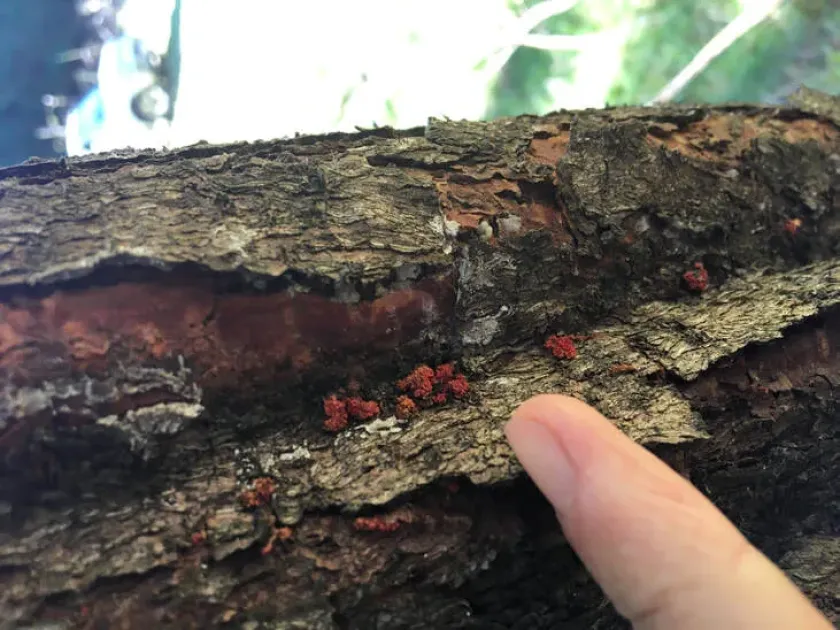
Small, bright red or orange fruiting bodies (perithecia) appear on the surface of the infected bark. These are often clustered into small, cushion-like structures that are visible to the naked eye.
In the early stages of infection, the affected bark may show reddish-brown discoloration. As the fungus progresses, the tissue collapses, creating the characteristic "constriction" that identifies the disease.
Leaves on branches affected by this fungus often exhibit premature yellowing and leaf drop. Branches located above the point of infection frequently wither and die due to a lack of sap supply.
The wood beneath the infected bark usually turns dark brown, indicating the depth of the fungal invasion. In severe cases, the structural integrity of the wood is compromised, leading to branch breakage.
Pathogen
The disease is caused by the ascomycete fungus Corinectria constricta (syn. Nectria constricta). This pathogen belongs to a group of fungi responsible for serious canker and necrosis diseases in woody plants.
The fungus survives primarily within the host's bark and cambium layers. As a mycelium, it remains active in the tissues, gradually expanding and eventually developing reproductive structures for further spread.
Infection is disseminated via conidia and ascospores. These are easily transported by wind, rain splashes, or insects that visit the trees. As a facultative parasite, it can also persist as a saprotroph on dead plant debris.
By invading the vascular tissues, the fungus disrupts the flow of nutrients and water. This metabolic interference is the root cause of the damage seen on the branches and trunks of infected trees.
The secretion of fungal toxins plays a critical role in the pathogenesis. These substances accelerate the death of healthy cells surrounding the initial point of infection, creating expanding lesions.
Conditions for development
High relative humidity is the most significant environmental factor promoting disease development. Moist conditions are necessary for spore germination and the subsequent colonization of the host's bark.
The most critical periods for infection are early spring and autumn. During these times, the combination of frequent rainfall and moderate temperatures creates an ideal window for the pathogen to penetrate the bark.
Tree density and canopy structure are crucial; lack of air circulation in overcrowded orchards prevents bark from drying quickly, allowing the fungus to establish itself more easily.
Trees under stress, whether due to nutrient deficiency or drought, are significantly more susceptible to infection. Healthy trees with robust bark are generally better at resisting initial fungal attacks.
Optimal growth temperatures for the fungus typically range from +15 to +22 degrees Celsius. During these conditions, any pruning wound or bark abrasion serves as an entry point for the pathogen.
Why it matters
Corinectria constricta poses a significant threat to orchard productivity by causing the progressive death of branches and thinning the tree canopy over time.
Infection lowers the tree's overall immunity and resilience, making it more vulnerable to winter cold and secondary pathogens that exploit the weakened state of the host.
Yield loss is a direct outcome of restricted nutrient translocation. If the disease attacks the main trunk, the long-term survival of the entire tree is jeopardized within just a few growing seasons.
The economic impact involves high costs related to intensive maintenance, the need for fungicide treatments, and the eventual necessity of removing and replacing dead trees.
In nurseries, the presence of this fungus is catastrophic, leading to the rejection of large batches of nursery stock and risking the contamination of future planting sites.
Protection
The cornerstone of management is strict sanitation: regular pruning and immediate removal of all symptomatic branches. It is vital to cut 10–15 cm into healthy tissue to ensure all latent mycelium is removed.
Disinfecting pruning tools with alcohol or appropriate chemical sanitizers between each cut is mandatory to prevent the spread of fungal spores from infected trees to healthy ones.
Any identified bark lesions should be surgically cleaned down to healthy wood. The treated area must then be coated with copper-based fungicides and a protective sealant like grafting wax or specialized paint.
- Applying copper-based preventive sprays during dormant seasons.
- Ensuring optimal fertilization to promote tree vigor and resistance.
- Managing bark-boring insect populations to prevent entry wounds.
Maintaining a clean orchard environment and prompt disposal of pruned materials are essential strategies to keep inoculum levels low and ensure orchard health.
Discussion
No discussions yet — be the first.