
Corinectria necrosis of spruce
Corinectria fuckeliana
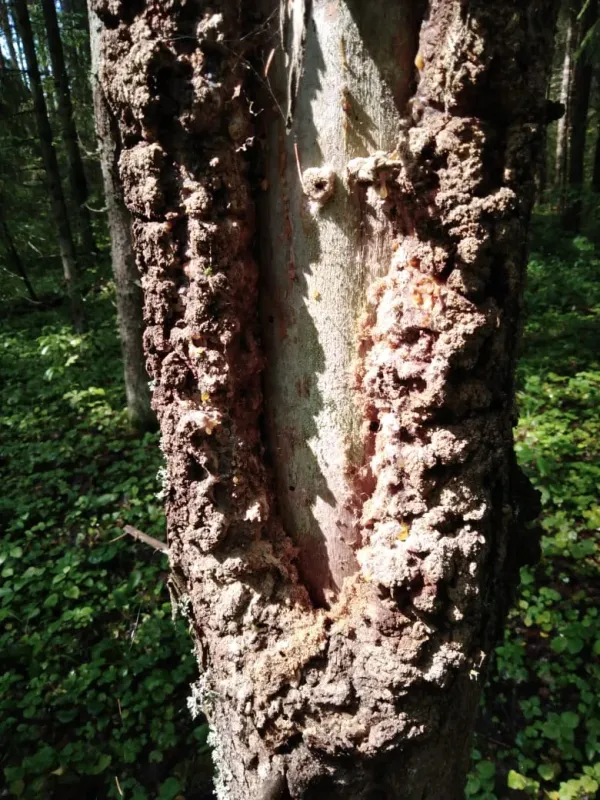
Description
Symptoms
The initial manifestation of the disease includes the appearance of depressed, brownish necrotic patches on the bark of stems and branches.
A distinctive feature is the emergence of small orange-red to reddish-brown fruiting bodies of the fungus, which are clearly visible on the bark surface.
Heavily infected trees often exhibit excessive resin flow near the necrotic areas as the tree attempts to seal off the site of infection.
As the disease progresses, the needles on the affected branches turn yellow and drop prematurely, leading to thinning and dieback of the crown.
Girdling of the stem by the fungal lesion causes rapid mortality of the distal parts of the tree, resulting in visible signs of branch or top dieback.
Pathogen
The disease is caused by the ascomycete fungus Corinectria fuckeliana, which is a known pathogen of the bark and cambium layers of spruce species.
This fungus acts as a necrotrophic pathogen, colonizing the bark tissue and gradually expanding its mycelium deep into the living layers of the tree.
The pathogen completes its life cycle by producing characteristic fruiting bodies, which facilitate the dispersal of spores throughout the forest environment.
It is frequently identified in stressed forest stands where the host's natural defenses are compromised by environmental factors or mechanical injury.
The fungus is highly efficient at establishing itself in the bark, leading to persistent local lesions that can eventually encircle branches or stems.
Conditions for development
Corinectria necrosis development is strongly promoted by high humidity and cool to moderate temperatures, which favor fungal sporulation and growth.
Mechanical damage caused by forest management practices or pest activity provides entry points for the pathogen to infect healthy bark tissue.
Dense, poorly ventilated stands are particularly susceptible, as they maintain higher moisture levels on the bark surface for longer periods.
Spore dispersal is primarily mediated by wind and rain splashes, which move the fungal propagules from infected sites to neighboring healthy trees.
Trees weakened by drought, poor soil nutrition, or competition are significantly more prone to rapid infection by Corinectria fuckeliana.
Why it matters
The disease severely impacts the ornamental value of spruce trees in parks and gardens due to crown disfigurement and foliage loss.
In forestry, the pathogen causes extensive bark necrosis, which degrades timber quality and can lead to structural weakness in the wood.
Widespread outbreaks contribute to the formation of dieback areas, which are vulnerable to secondary wood-boring insects and fire hazards.
High levels of infection in young stands can significantly impede reforestation efforts and reduce the overall productivity of the spruce forest.
Persistent presence of the fungus increases the total inoculum load in the forest, making it difficult to prevent future spread to healthy individuals.
Protection
The most effective strategy is regular sanitation, which includes the prompt removal and destruction of infected branches and heavily damaged trees.
Proper forest management techniques must be employed to minimize mechanical damage to the bark, thereby reducing potential infection courts.
Maintaining appropriate stand density ensures better airflow, which creates a less favorable microclimate for the development of fungal pathogens.
In nursery settings or high-value landscapes, protective applications of copper-based fungicides can help prevent infection during high-risk seasons.
Monitoring for early signs of the disease and maintaining the overall vigor of the trees are essential components of long-term integrated pest management.
Discussion
No discussions yet — be the first.