
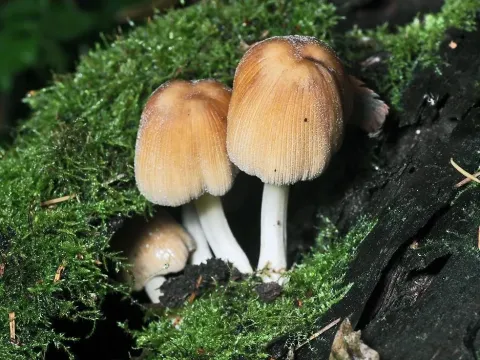
Mica cap
Coprinellus micaceus
Coprinellus micaceus, commonly known as the mica cap, is a basidiomycete fungus in the family Psathyrellaceae. It is strictly a saprotroph and not a plant pathogen.
What the section contains
Mica cap
The mycelium of this fungus feeds exclusively on decaying organic matter, breaking down lignin and cellulose. It lacks the biological capability to infect healthy, living plant tissues.
Spores play a crucial role in the lifecycle of this fungus, spreading via wind and water. Under favorable conditions, they germinate in humus-rich soil or on woody debris.
A distinctive feature of this species is the presence of glistening particles on the cap, which are easily washed away by rain. Upon maturity, the fruiting body undergoes autolysis, turning into a black liquid.
As a saprotroph, the mica cap acts as a natural recycler of dead organic matter, contributing to soil health rather than acting as a pest or disease vector.
Signs of the fungus often appear near the base of old trees, buried roots, or rotting stumps. Fruiting bodies typically emerge in dense clusters.
The presence of these fungi indicates the accumulation of decomposing wood or organic matter in the soil profile. The mycelium penetrates deep into the substrate to digest decayed roots.
Nearby plants usually show no signs of distress or necrosis caused by this fungus. Its presence is generally a reflection of environmental conditions rather than a plant disease.
Fruiting bodies indicate high moisture levels and a high content of decomposing organic material. This state is common in areas where soil drainage or aeration is poor.
Unlike true plant pathogens, the mica cap does not produce spots, fungal mats, or deformities on the leaves, stems, or fruits of agricultural crops.
The fungus thrives in conditions of high humidity and soil moisture. The optimal temperature range for mycelial growth is between +15°C and +22°C (59°F–72°F).
Decaying hardwood is the primary substrate for this fungus. It frequently colonizes areas where buried timber or inadequately removed stumps are present in the soil.
High levels of poorly composted organic fertilizer can trigger the activation of spores and subsequent mycelial growth in the rhizosphere.
Dense planting schemes that prevent airflow and hinder soil drying create a microclimate ideal for the development of the mica cap.
The lack of proper crop rotation and the accumulation of plant debris on the soil surface are key factors supporting the lifecycle of this fungus in a garden environment.
There is no direct harm to healthy cultivated plants. The mica cap does not possess the mechanisms required to attack living tissues or secrete toxins harmful to crops.
Indirect harm may occur if the fungus serves as an indicator of drainage issues. Soil waterlogging, which encourages the fungus, simultaneously promotes the development of true root rot diseases.
When the mycelium colonizes the roots of already declining trees, it may accelerate the decomposition of woody tissue that was previously weakened by other pathogens.
In intensive farming, the mass appearance of these fungi suggests degraded soil quality due to an excess of incompletely humified organic matter.
The presence of this fungus should be treated as a signal for the grower to evaluate the site's water management and soil structure to prevent more serious pathological problems.
Specific fungicides are unnecessary as the fungus is not parasitic. Management strategies should focus entirely on prevention and good agricultural practices.
Thorough site sanitation, including the removal of old stumps, dead roots, and buried woody debris, is the most effective way to eliminate the food source for the fungus.
- Improve soil drainage to prevent waterlogging.
- Regularly loosen the soil to promote aeration.
- Regulate the application of fresh organic fertilizers.
- Optimize plant spacing to improve airflow around crops.
In greenhouse environments, it is essential to adjust ventilation and lower humidity levels. Manually removing fruiting bodies before they mature can reduce the local spore load.
Applying biological stubble decomposers helps to process organic matter more efficiently, making the environment less suitable for saprophytic fungal growth.