
Microascus root rot
Microascus trigonosporus
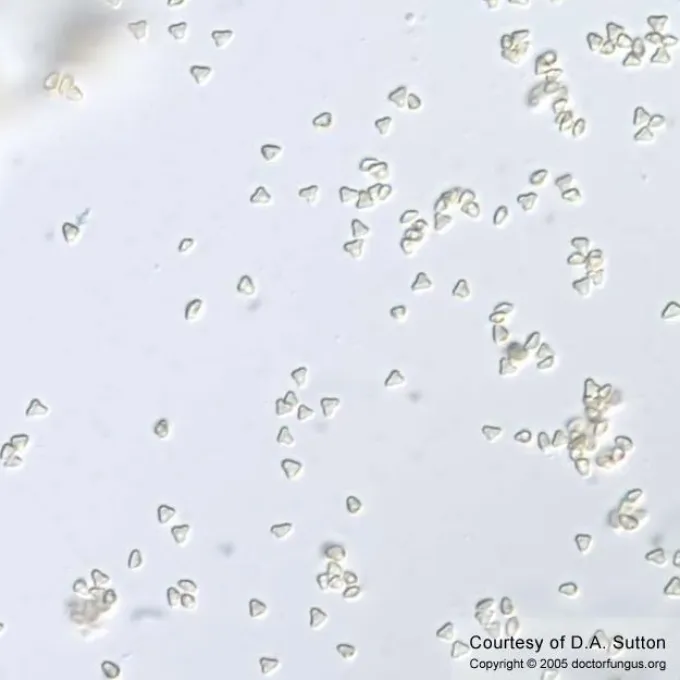
Description
Pathogen
The causal agent of this disease is the ascomycete fungus Microascus trigonosporus. It is a microscopic soil-borne pathogen characterized by the formation of perithecia and distinct triangular or sub-triangular ascospores, which are key features for laboratory identification.
This fungus typically maintains a saprotrophic or weakly parasitic lifestyle. It possesses significant enzymatic activity, allowing it to efficiently degrade organic matter and penetrate the tissues of agricultural crops when they are stressed or vulnerable.
The biology of the pathogen is closely tied to the soil environment, where it can persist for long periods in the form of resting structures. It exhibits broad temperature tolerance, contributing to its resilience against various environmental stressors.
In mycological studies, this species is frequently identified as a secondary colonizer; however, under specific conditions, it can demonstrate pronounced pathogenicity, affecting both root systems and seeds of host plants.
From a phytopathological perspective, this species is considered a component of root rot complexes, contributing to the decay of plant tissues, particularly in substrates with high moisture levels.
Conditions for development
Disease development is promoted by high soil moisture, which creates optimal conditions for fungal spore germination and subsequent spread within the rhizosphere.
A temperature range between 20 and 28 degrees Celsius is most favorable for the active vegetative growth of mycelium and the sporulation of this microorganism.
The presence of undecomposed plant residues in the soil provides a vital nutrient source, allowing the fungus to build up significant inoculum potential before infecting healthy plant tissue.
Poor agricultural practices, such as soil compaction and inadequate drainage, drastically increase the risk of massive outbreaks caused by this pathogen.
Plant weakness resulting from nutrient deficiencies or physical root damage also facilitates the rapid colonization of host tissues by the pathogen.
Why it matters
The primary damage includes the inhibition of seedling growth and the development of root rot, which leads to reduced plant stand and overall yield losses in the field.
Infection by the fungus disrupts water and nutrient uptake processes, often manifesting as foliar chlorosis and the premature wilting of the aerial parts of the plant.
When seeds are infected during germination, they may become moldy, which frequently results in the death of the embryo before it can emerge from the soil.
In commercial production, infestation leads to significant economic losses, particularly in seasons with excessive rainfall during planting and early vegetative stages.
The quality of harvested produce is compromised due to direct tissue damage caused by the fungal mycelium, which often creates entry points for opportunistic secondary bacterial infections.
Protection
The primary control strategy involves crop rotation, incorporating species that are not susceptible to this complex of pathogens, which helps to disrupt the life cycle of the fungus in the soil.
Seed treatment with modern systemic fungicide products is essential to provide protection for seedlings during the most vulnerable early stages of development.
Effective management requires improving soil aeration and moisture control, which is achieved through high-quality tillage operations and appropriate field drainage systems.
The application of balanced fertilizers assists in bolstering the natural immune response of plants, making them less susceptible to fungal infection.
- Deep autumn plowing to incorporate and bury plant residues.
- Monitoring the quality of seed stocks and utilizing certified material.
- Regular phytosanitary assessments during periods of high humidity.
Discussion
No discussions yet — be the first.