
Micarea prasina
Micarea prasina
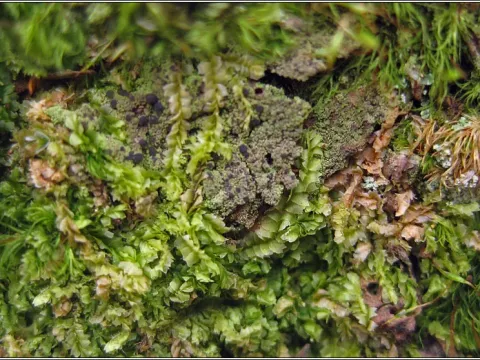
Micarea prasina is a crustose lichen that forms a thin, granular thallus of a greenish or grayish-green color on the surface of tree bark.
What the section contains
Micarea prasina
Visually, the affected areas appear as rough, fine-grained crusts that adhere tightly to the substrate and have a matte texture.
Upon close inspection, one can notice tiny fruiting bodies called apothecia, which typically exhibit a dark, often brownish-black shade.
The lichen usually spreads in patches, gradually occupying significant areas of the tree trunk or major structural branches.
The color of the thallus may vary depending on the environmental humidity and the degree of light exposure on the specific section of the bark.
Micarea prasina is a symbiotic organism consisting of a fungal component (mycobiont) and an alga (photobiont), classifying it as a lichen.
It is not a pathogen in the traditional sense, as it does not cause infectious tissue disease; rather, it is an epiphyte that uses bark as a base.
The fungal component provides structural integrity and protection for the algae, receiving photosynthetic products in return.
The species belongs to the Pilocarpaceae family and shows high adaptability to various types of bark on both deciduous and coniferous trees.
The biological activity of this organism is restricted to the surface layers of the bark and does not penetrate into the cambium or wood.
The development of this lichen directly depends on air humidity levels and the availability of light on specific sections of the tree.
It prefers shaded and humid locations, often occurring on the lower parts of tree trunks in forests or gardens with dense canopies.
Micarea prasina is sensitive to air quality and can serve as an environmental indicator, typically avoiding areas with high levels of pollution.
Optimal conditions for growth occur during periods of prolonged rainfall and mild temperatures, which contribute to constant substrate moisture.
Lichen spores are dispersed by the wind, which allows it to successfully colonize new surfaces that meet its moisture requirements.
Although the lichen is not a parasite, its massive growth can create unfavorable conditions for the bark by potentially hindering gas exchange.
A thick layer of lichen on the trunk can become a refuge for pests and pathogenic fungi that use it as protective cover.
Excessive accumulation of organic matter and moisture beneath the thallus can sometimes lead to premature softening of the bark's outer layer.
In ornamental gardening, the presence of massive lichen growths is often perceived as a sign of poor maintenance and detracts from the garden's aesthetic.
Significant bark coverage may indirectly signal a slowing of tree growth or a weakened physiological state of the plant.
Prevention involves maintaining good horticultural practices, ensuring proper pruning to improve canopy airflow and reduce local humidity.
If removal is necessary, mechanical cleaning of the bark with stiff brushes can be used, taking care not to damage the underlying living tissues.
A highly effective method is the whitewashing of trunks and large branches with a lime-based solution, which creates an inhospitable environment for spores.
The application of specific copper-based fungicidal compositions can suppress the development of lichens if their spread becomes excessive.
It is crucial to monitor the tree's overall health: timely fertilization and irrigation stimulate active bark growth, which hinders the establishment of lichen cover.