
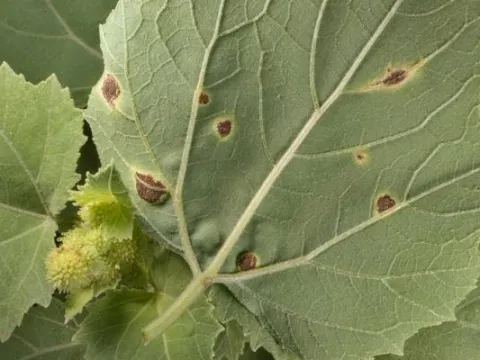
Cocklebur rust
Puccinia xanthii
The initial symptoms appear as small, chlorotic spots on the upper leaf surface, which gradually expand as the infection progresses.
What the section contains
Cocklebur rust
On the undersides of the leaves, numerous rust-colored pustules, known as uredinia, develop and begin releasing spores.
Severe infections cause leaves to curl, yellow, and eventually necrotize, leading to premature defoliation of the plant.
Affected cocklebur plants exhibit stunted growth and reduced vigor, often showing signs of systemic stress and deformity.
In cases of heavy infestation, the entire canopy of the weed can be compromised, significantly reducing its biomass.
The disease is caused by the obligate fungal parasite Puccinia xanthii, which belongs to the Pucciniaceae family.
The pathogen is highly host-specific, primarily infecting various species within the Xanthium genus, particularly cocklebur.
It acts as a biotroph, extracting nutrients directly from living plant cells without causing immediate host death, allowing for sustained infection.
The fungal lifecycle is characterized by the production of airborne spores that facilitate rapid transmission between weed clusters.
Its biological stability and specialized host range make it a subject of research for natural weed management programs.
Fungal growth and spore germination are optimal at moderate temperatures, typically between 18 and 25 degrees Celsius.
Prolonged periods of leaf wetness, such as high humidity, dew, or light rain, are essential for the spores to penetrate the plant tissue.
Dense populations of cocklebur create a localized microclimate that traps humidity and promotes the spread of the rust fungus.
Environmental stability without extreme heat or desiccation is crucial for the pathogen to establish itself and proliferate across a field.
Wet springs and summers provide the necessary atmospheric conditions for epidemics of rust to develop in weed populations.
The primary damage is the suppression of the weed's competitive ability, allowing crops to outgrow and shade out the cocklebur.
By damaging the leaf area, the fungus reduces the plant's photosynthetic efficiency and its ability to store energy for seed production.
Infected cockleburs produce fewer and less viable seeds, which disrupts the weed's long-term reproductive success in agricultural soil.
The disease acts as a natural pressure factor, reducing the overall density of the weed population over multiple growing seasons.
This natural stressor provides an ecological benefit by minimizing the need for heavy herbicide reliance in specific agricultural settings.
Cocklebur rust is recognized as a biological control agent, often studied for its potential to suppress invasive Xanthium species.
Management involves optimizing environmental conditions to favor fungal spread rather than using traditional chemical fungicides.
Strategic monitoring of rust outbreaks allows farmers to assess the natural reduction of weed pressure before opting for mechanical interventions.
Integrated weed management includes utilizing such biological agents to maintain weed populations below economic injury levels.
Since the pathogen does not affect crop species, it remains a safe and sustainable tool in modern agro-ecological systems.