
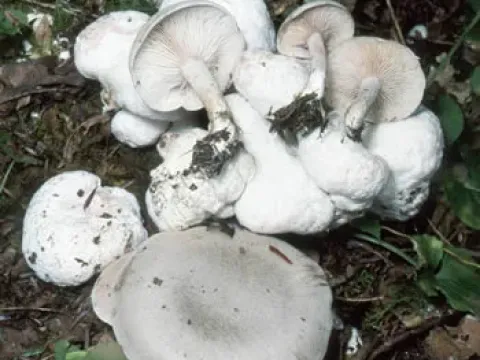
Clitopilus abortivus
Clitopilus abortivus
The fungus Clitopilus abortivus belongs to the Entolomataceae family and is known for its complex interaction with wood and other fungi.
What the section contains
Clitopilus abortivus
While often found as a saprotroph on decaying wood, it exhibits facultative parasitic behavior, often associating with the Armillaria species.
The biology of the organism is characterized by its ability to create abnormal or "aborted" fruiting bodies, which appear as distorted white masses.
The mycelium of the fungus penetrates the root systems and the lower trunks of trees, actively decomposing lignin and cellulose fibers.
Reproduction occurs through spores that travel via wind and water, seeking vulnerable spots in the bark or root zones to initiate new infections.
The most prominent sign is the presence of deformed, whitish fungal growths near the base of the tree or on associated decaying wood.
Wood tissue affected by the fungus shows distinct signs of white rot, becoming soft, spongy, and often emitting a characteristic flour-like odor.
Infected trees typically show signs of decline, such as premature leaf yellowing, branch dieback, and reduced overall vigor of the crown.
A dense white or yellowish mycelial mat may be visible under the bark or around the root collar, particularly in humid conditions.
Structural damage is often severe, as the fungal decomposition compromises the tree’s ability to support its own weight, leading to potential snapping.
High soil moisture is the primary catalyst for the growth and spread of Clitopilus abortivus within a garden or forest landscape.
Presence of organic debris, such as stumps or rotting timber, provides a sustained nutrient source that allows the fungus to thrive and propagate.
Optimal environmental conditions include temperatures ranging from 15°C to 25°C combined with frequent rainfall or heavy dew.
Poorly managed areas with dense canopy cover and limited airflow create a stagnant microclimate that favors the proliferation of fungal spores.
Trees that have suffered physical injury or are already stressed by drought or nutrient deficiencies are significantly more susceptible to successful infection.
The fungus causes severe degradation of woody tissues, which leads to a gradual loss of the tree's structural integrity and eventual death.
Interruption of the vascular system prevents efficient water and nutrient transport, resulting in rapid foliage loss and crown death.
The organism acts as a persistent source of infection, making it extremely difficult to replant susceptible species in contaminated soil without remediation.
Economic damage involves the loss of valuable trees, the cost of professional removal of dead timber, and the expense of soil treatment.
Furthermore, because it interacts with other pathogens, it can exacerbate the overall disease pressure on the surrounding ecosystem.
Sanitation is the most critical management strategy; removing stumps, fallen logs, and debris significantly reduces the available fungal habitat.
Frequent monitoring of the tree bases and the root collar allows for the early detection of mycelium, enabling quicker intervention.
Maintaining high tree vitality through balanced fertilization and proper irrigation helps the tree's natural defenses resist fungal colonization.
Applying appropriate systemic fungicides, when prescribed by a professional, can help limit the spread of the pathogen in garden settings.
- Clean and disinfect pruning tools.
- Ensure adequate drainage in the soil.
- Avoid damaging the bark of healthy trees.
- Remove any deformed fruiting bodies immediately.