
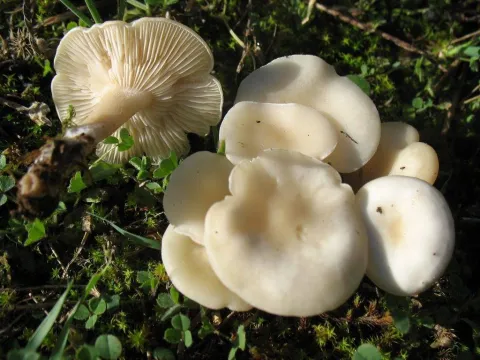
Fool's funnel
Clitocybe rivulosa
The fool's funnel (Latin: Clitocybe rivulosa) is a type of mushroom that, in an agronomic context, is classified as a facultative parasite or saprotroph affecting the soil ecosystem. The pathogen belongs to the Tricholomataceae family and is capable of forming extensive mycelial networks.
What the section contains
Fool's funnel
The main mechanism of impact is the active development of mycelium in the soil layer, which is rich in organic residues. The pathogen is capable of negatively affecting the root system of herbaceous plants, disrupting their nutrition and metabolic processes.
Biologically, this organism is a xylotrophic or humus saprotroph that, under certain conditions, begins to suppress healthy plant tissues. Its aggressiveness directly depends on the acidity and density of the soil substrate.
Unlike narrow-spectrum pathogens, this fungus affects a wide range of crops, weakening their immune system by impacting the rhizosphere. The growth of mycelium creates a dense network that prevents normal gas exchange in the root zone.
From the perspective of phytopathology, Clitocybe rivulosa acts as a stress factor for agroecosystems, promoting the development of secondary infections in weakened plant roots.
The first visual sign of the fungus's presence on a site is the appearance of characteristic "fairy rings" on lawns or sodden soil areas. The grass inside such rings often has a yellowish tint or signs of wilting.
During the active vegetation period, fruiting bodies form around the affected crops, which have a convex-spread shape with a slightly depressed center. Their color varies from whitish to pale pink.
When the root system of agricultural crops is affected, a slowdown in general growth, premature yellowing of the lower leaves, and general depression of the plant's vegetative mass are observed.
On the roots of plants located at the epicenter of the mycelium spread, whitish threads can be found that tightly entwine the root, preventing the absorption of water and micronutrients.
- Presence of a specific musty odor in the area of mycelial development.
- Formation of necrotic areas on the root collar of plants.
- Delayed flowering in sensitive species of ornamental plants.
The active development of the fungus is triggered by high soil humidity and the presence of large amounts of undecomposed plant residues. The optimal temperature for mycelial growth is between 15 and 22 degrees Celsius.
Overcrowded plantings and a lack of proper ventilation in the root layer create a favorable microclimate for the expansion of the mycelium. The soil pH also plays a critical role, as the fungus prefers slightly acidic or neutral soils.
The spread of the pathogen occurs mainly through spores carried by the wind or through the movement of soil fragments contaminated with mycelium via agricultural equipment.
Periods of prolonged rain followed by a sudden warm spell activate the fruiting of the fungus, which indicates that the mycelium concentration in the soil has reached its peak.
Soil compaction and poor natural drainage contribute to the deep penetration of the pathogen, making it much more difficult to combat in subsequent seasons.
The main damage consists of suppressing the growth of cultivated plants due to competition for nutrients. The mycelium absorbs mineral components necessary for the normal development of the root system.
Damage to root hairs by the mycelium leads to the plant's inability to withstand drought or other stress factors, which results in reduced yields.
In ornamental gardening, infection with the fool's funnel leads to complete degradation of the lawn's appearance, requiring drastic replacement of the sod in the affected areas.
Toxins released during the fungus's life cycle can have a phytotoxic effect on sensitive vegetable crop varieties, causing early wilting.
The long-term presence of the pathogen on a site depletes soil fertility, requiring additional costs for land reclamation and the application of biological preparations to restore the soil microflora.
A key preventive method is the observance of crop rotation and the timely removal of plant residues, which serve as a substrate for mycelial growth.
Improving soil structure through regular loosening and the application of liming materials helps modify acidity, which negatively affects the fungus's viability.
In cases of local outbreaks, it is recommended to completely remove the contaminated soil along with the mycelium to a depth of at least 20-30 centimeters, followed by disinfection of the area.
The use of systemic fungicides approved for soil application allows the spread of the infection to be stopped at early stages, although it requires strict adherence to dosage guidelines.
Biological control includes the use of preparations based on Trichoderma, which actively suppress the development of pathogenic fungi in the soil, restoring the balance of beneficial microorganisms.