
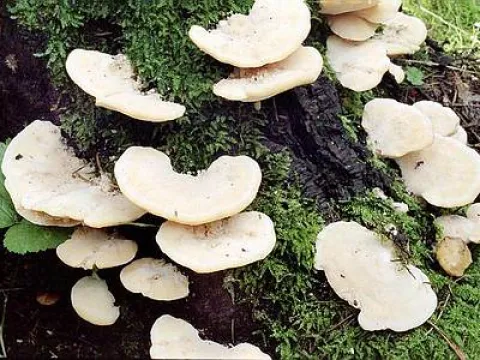
Climacocystis
Climacocystis
The disease is caused by the fungus Climacocystis borealis, a basidiomycete that acts as a wood-decay pathogen. It primarily targets coniferous trees, often colonizing living but stressed individuals.
What the section contains
Climacocystis
The fungus functions by breaking down cellulose and lignin within the wood structure, leading to a condition known as brown rot. This degradation compromises the structural integrity of the tree.
The life cycle involves the production of fleshy, white-to-yellowish fruiting bodies that emerge from the bark. These bodies serve as the primary source of airborne spores for reproduction.
As a facultative saprophyte, the organism can persist in decaying wood after the host tree dies, ensuring its presence in the ecosystem for several years.
Scientific studies confirm that Climacocystis borealis is widely distributed in temperate and boreal forests, showing a preference for spruce and fir species.
The most visible symptom is the appearance of distinct, shelf-like fruiting bodies on the trunk or base of the tree. These structures are often clustered and have a characteristic soft texture.
Internally, the wood undergoes a transformation into a brittle, brown mass. The infected wood often cracks in cuboidal patterns, which is a hallmark of brown rot decay.
Foliage symptoms include chlorosis and premature shedding of needles. The crown may appear sparse and thin as the tree loses its physiological efficiency.
Cracks may appear on the bark surface as the fungal mycelium exerts pressure and degrades the underlying cambium layers of the tree.
As the rot advances, the tree's overall stability is compromised, leading to a high risk of stem failure, especially during strong wind events or heavy snow loads.
Optimal development for the fungus occurs in humid conditions with moderate temperatures. It thrives in dense forest stands where airflow is restricted and moisture remains high.
Mechanical injuries are the primary entry point. Any damage caused by wildlife, logging equipment, or severe weather provides an easy pathway for fungal spores.
Stressed trees, particularly those suffering from drought or soil compaction, are significantly more susceptible to successful colonization by the fungus.
The spread is primarily achieved through wind-borne spores, though contact between the roots of adjacent trees can facilitate the transmission of the mycelium.
High canopy density creates a microclimate that shields the spores from UV radiation and helps maintain the moisture levels required for germination on the bark surface.
The fungus causes severe economic damage to forestry by rendering timber unsuitable for commercial use due to the advanced state of internal decay.
Ecologically, the infection reduces the lifespan of coniferous trees and can alter the composition of the forest if outbreaks become persistent.
Infected trees become safety hazards in recreational areas and parks, as they are prone to snapping or uprooting without prior warning.
Reduced vigor makes the trees secondary targets for wood-boring insects, further accelerating the decline and eventual mortality of the affected specimens.
The loss of canopy cover due to tree death can lead to increased soil erosion and a reduction in the habitat quality for various forest-dwelling species.
The primary management strategy involves the identification and sanitary removal of infected trees to minimize the inoculum load in the forest.
Preventative measures should focus on protecting trees from physical injury. Proper forest management practices, such as careful thinning, are essential to minimize bark damage.
Regular inspections are necessary, especially in stands with high commercial or aesthetic value, to catch the early signs of fruiting body formation.
Infected wood material should be disposed of by burning or deep burial to ensure that spores are destroyed and cannot spread to healthy neighbors.
Promoting a healthy, vigorous forest through proper species selection and maintenance is the most effective long-term defense against this fungal pathogen.