
Clematis phoma leaf spot
Calophoma clematidina
Description
Symptoms
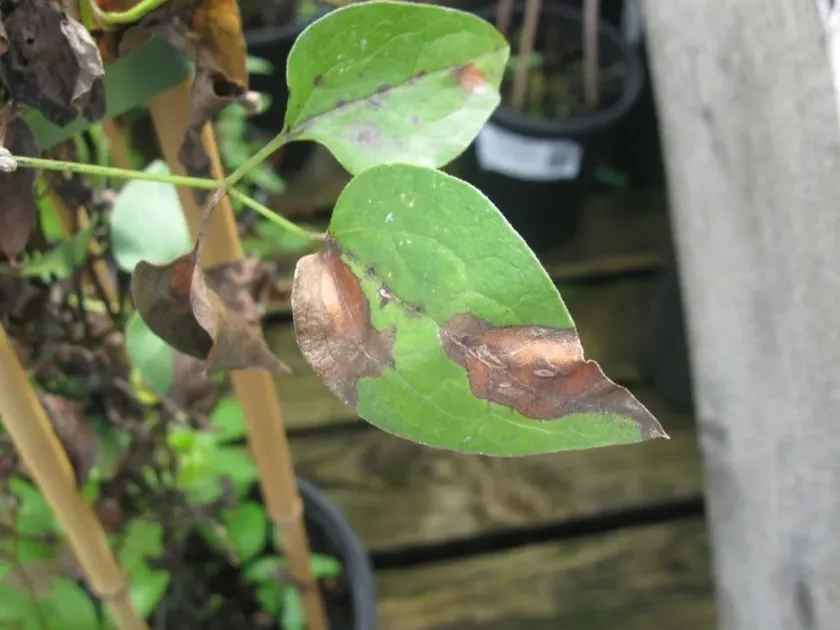
The first symptoms of Clematis phoma leaf spot appear as small, greyish-brown spots on the leaves, often surrounded by a darker purple or brown margin. Over time, these spots expand, leading to the necrosis of the leaf blade.
Stem infection is particularly severe, manifesting as brown, sunken lesions on the lower parts of the shoots. These lesions can girdle the stem, disrupting the transport of water and nutrients to the upper parts of the plant.
As the disease progresses, leaves wilt, turn yellow, and eventually die. On infected stems and dying foliage, tiny black fruiting bodies known as pycnidia develop, which release spores to spread the infection.
Infected shoots often become brittle and break easily. The foliage may show irregular dry patches, giving the plant a scorched, unkempt appearance, which significantly impacts its ornamental value.
In advanced stages, if the stem base near the soil line is infected, the entire shoot or even the whole plant may collapse and die suddenly, as the root-to-shoot vascular connection is completely severed.
Pathogen
The causative agent of this disease is the fungus Calophoma clematidina (formerly classified as Phoma clematidina). It is a specialized pathogen specifically targeting the Clematis genus.
The fungus functions primarily as a saprotroph, surviving in dead plant debris, leaf litter, and even in the soil surface for extended periods, waiting for favorable conditions to initiate infection.
The pathogen reproduces via conidia, which are produced within pycnidia. These spores are easily disseminated by wind, rain splashes, and physical contact with contaminated tools or clothing during maintenance.
Upon landing on a suitable host, the fungus germinates and penetrates the plant tissues through stomata or mechanical injuries. The mycelium then colonizes the plant cells, secreting enzymes that break down tissues.
Biological resilience is a key feature of this pathogen. It can withstand various environmental stresses, allowing it to persist in the garden environment from one growing season to the next.
Conditions for development
The development of Calophoma clematidina is strongly linked to high humidity and moderate temperatures. Rainy springs and early summers create an ideal environment for spore germination and infection.
Poor air circulation, often caused by overly dense planting or lack of proper pruning, creates a localized microclimate with high moisture levels, which is highly conducive to the spread of the fungus.
Over-fertilization with nitrogenous fertilizers leads to rapid but succulent growth, which is more susceptible to fungal penetration compared to tissues grown with balanced mineral nutrition.
Shaded or low-lying areas where dew persists for long hours on the leaves provide a longer window for the fungus to establish infection compared to sunny, breezy locations.
Optimal temperatures for the fungus range between 18°C and 25°C (64°F to 77°F). Within this range, the life cycle of the pathogen speeds up, potentially leading to rapid outbreaks in favorable seasons.
Why it matters
Phoma leaf spot causes significant aesthetic loss to clematis collections. Severe infections can defoliate entire plants, leaving only bare stems that ruin the visual appeal of vertical garden structures.
By girdling stems, the fungus halts the flow of nutrients to flowers and buds, leading to stunted blooming or the complete failure of the plant to produce flowers in the current year.
Long-term infestation drains the plant's energy reserves. Weakened plants exhibit reduced vigor, poor winter hardiness, and an increased susceptibility to secondary infections, such as powdery mildew.
When the crown or root neck is affected, the risk of permanent death is high. This often necessitates the removal and disposal of the entire plant to prevent further spread within the garden.
Management of the disease requires intensive labor, including constant monitoring, sanitation, and chemical intervention, increasing the overall cost and maintenance effort for the gardener.
Protection
Strict sanitation is the foundation of control: remove and destroy all infected stems and fallen leaves immediately. Do not add these materials to a home compost pile, as the fungus may survive.
Implement proper pruning and spacing to ensure maximum air movement around the plant foliage. Keeping the base of the plant free of dense debris helps to break the disease cycle.
Preventive spraying with copper-based fungicides or other broad-spectrum protectants early in the growing season can significantly reduce the initial infection pressure from overwintering spores.
If symptoms appear, use systemic fungicides containing active ingredients like thiophanate-methyl or difenoconazole. Apply the treatment thoroughly to all surfaces of the leaves and stems.
- Choose well-drained, sunny locations for planting.
- Use gravel or inorganic mulch around the base to keep foliage away from moist soil.
- Fertilize with balanced phosphorus and potassium to strengthen plant tissues.
- Always disinfect pruning tools between plants to prevent cross-contamination.
Discussion
No discussions yet — be the first.