
Ergot
Claviceps
Ergot is caused by a fungal pathogen belonging to the genus Claviceps, most commonly Claviceps purpurea. It is a specialized parasitic fungus that infects the ovaries of various grass and cereal species.
What the section contains
Ergot
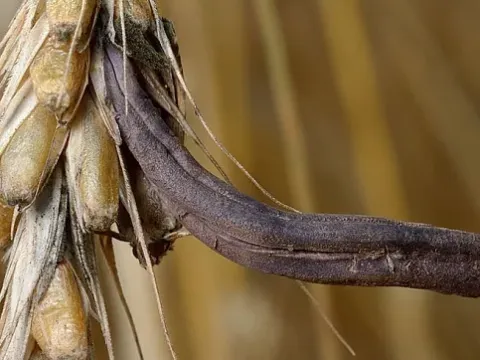
The fungus produces hard, dark, elongated structures known as sclerotia, which are commonly referred to as "ergot bodies." These structures serve as the resting stage of the fungus and allow it to survive adverse environmental conditions.
During the spring, the overwintered sclerotia germinate and produce fruiting bodies that release ascospores. These spores are dispersed by wind or insects, landing on the open flowers of grasses and cereals during the anthesis phase.
Once infection is established, the fungus produces a sticky, sweet substance known as "honeydew," which is rich in conidia. This substance is attractive to insects, which further spread the pathogen to healthy plants.
Ultimately, the fungus replaces the developing grain with its sclerotium, which contains a variety of toxic alkaloids that make the harvest unfit for human or animal consumption.
The most visible early sign of ergot infection is the appearance of sticky, sugary droplets ("honeydew") on the ears of cereals during the flowering period.
As the plant reaches maturity, the primary diagnostic sign is the presence of large, dark-violet or black ergots that protrude from the glumes of the florets, clearly replacing the normal grain.
Heavily infected fields may show signs of deformed or stunted ear growth. In humid conditions, a grey or pinkish mould growth may also be observed on the infected florets.
Infection patterns are often clustered, with higher concentrations of ergot bodies usually found along the edges of fields where insect activity and humidity are more conducive to fungal spread.
During the harvesting process, the sclerotia are easily threshed along with the grain, necessitating strict post-harvest inspection and sorting protocols to ensure product quality.
Fungal development is highly dependent on environmental factors. Cool, damp, and rainy weather during the flowering period significantly promotes the germination of sclerotia and subsequent infection.
Cereal varieties that exhibit a prolonged or uneven flowering period are more susceptible to infection, as the time window for the fungus to penetrate the open flowers is extended.
The presence of wild grasses, such as rye grass, brome grass, or fescue, serves as a natural reservoir for the pathogen, sustaining its presence in the surrounding environment.
Insufficient crop rotation is a major risk factor, as it allows for the accumulation of sclerotia in the upper layers of the soil, providing a ready source of inoculum for the next crop cycle.
Strong winds and high insect populations during the pollination phase increase the dispersal rate of spores, potentially leading to widespread outbreaks across large agricultural areas.
The primary concern regarding ergot is its production of toxic alkaloids, such as ergotamine and ergometrine. These toxins cause ergotism, a severe condition affecting the central nervous and circulatory systems.
Ingestion of contaminated grain by livestock can result in reduced growth rates, reproductive failures, and tissue necrosis in extremities, leading to significant economic losses for producers.
Human consumption of grain containing ergot is strictly regulated due to the potential for fatal poisoning, requiring mandatory cleaning and milling standards.
Direct economic impact occurs due to yield reduction, as the presence of ergot bodies in the crop directly translates to the loss of marketable, high-quality grain.
Farmers often face high costs for grain cleaning, involving advanced optical sorting equipment to separate toxic sclerotia from the wholesome cereal harvest.
- Use only certified, high-quality seeds that have been thoroughly cleaned to ensure the absence of ergot bodies.
- Implement diverse crop rotations, incorporating non-host species to break the life cycle of the pathogen.
- Practice deep plowing to bury sclerotia at a depth where they cannot successfully germinate and infect new crops.
- Manage weed populations around field borders to eliminate alternative hosts for the fungus.
- Select cereal varieties that possess short, uniform flowering intervals to minimize the duration of vulnerability to infection.