
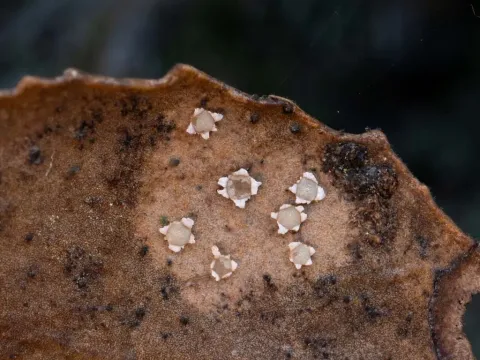
Claussenomyces jahnianus
Claussenomyces jahnianus
Claussenomyces jahnianus is a species of ascomycete fungus that typically acts as a saprophyte or a weak parasite. It is commonly found colonizing the bark of trees that are stressed, injured, or already dying.
What the section contains
Claussenomyces jahnianus
The biological cycle of this fungus involves the development of small, dark, often gelatinous or waxy apothecia on the surface of the bark. These fruiting bodies are key to the reproductive strategy of the fungus.
Spore dissemination is primarily driven by air currents and water splashes. Upon landing on a suitable substrate, such as a wound in the bark, the spores germinate and initiate the colonization of the wood tissues.
The mycelium of Claussenomyces jahnianus breaks down lignocellulosic components of the bark, gradually impairing the health of the tree's outer defensive layers. It rarely attacks healthy, vigorously growing trees directly.
As a pathogen, it is often considered an opportunistic agent. It flourishes in niches where the physiological defenses of the tree have been compromised by external or internal stressors.
The most visible sign of infection is the presence of small, disc-shaped fruiting bodies, which appear as dark, moist, or waxy spots on the outer bark.
Affected bark areas often show signs of discoloration, cracking, and peeling. These symptoms indicate the disruption of the normal growth of the tree's protective layers.
Branches infected by the fungus may show premature leaf yellowing and wilting, which eventually leads to the dieback of the entire affected limb.
In humid conditions, the presence of the fungus might be accompanied by the softening of the bark tissue, which creates deep ulcers that can expand over time.
- Small, dark, waxy fruiting discs on the bark surface.
- Cracking, peeling, and localized necrosis of the bark.
- Gradual dieback of branches and crown thinning.
The development of Claussenomyces jahnianus is highly dependent on humidity. Periods of prolonged rainfall, mist, or high air humidity are conducive to its sporulation and colonization.
Physical injuries to the bark are critical entry points. Damage caused by frost, heat, or insect activity significantly increases the probability of an infection taking hold.
Plants in a state of physiological stress are much more susceptible. Lack of nutrients, drought, or poor soil quality weakens the tree, making it easier for the fungus to penetrate.
Dense planting or improper pruning leads to poor air circulation within the canopy, creating a stagnant microclimate that encourages the growth of various fungal pathogens.
While the fungus can exist in a range of temperatures, high humidity remains the primary environmental factor that triggers its activation and spread throughout the garden or forest.
The primary damage is caused by the deterioration of the bark, which is the tree's main protective barrier against pathogens and environmental extremes.
Extensive colonization can lead to the loss of large branches, which impairs the aesthetic value and the structural integrity of the tree.
Once the bark is compromised, the tree becomes significantly more vulnerable to secondary infections by more aggressive pathogens or wood-boring insects.
In commercial forestry, the presence of this fungus can lower the quality of wood, as it facilitates decay processes that soften the timber structure.
If left unmanaged, the cumulative impact of the disease can lead to the premature senescence and death of the host plant, necessitating its removal.
Preventative care is the most effective approach. Ensuring proper irrigation, balanced fertilization, and good soil health are essential to keep the tree resistant to opportunistic fungi.
Sanitary pruning should be practiced regularly. Removing and destroying infected branches helps to eliminate the source of spores within the garden or plantation.
All pruning wounds and physical injuries should be treated immediately with antiseptic pastes or wood paint to seal the tissue and prevent fungal entry.
Controlling bark-feeding insects is vital, as they are often the primary cause of the wounds that Claussenomyces jahnianus exploits.
In cases of severe infection, copper-based fungicides can be applied as a preventive spray during the dormant period to reduce the overall fungal load in the environment.