
Citrus anthracnose
Colletotrichum citri
Description
Symptoms
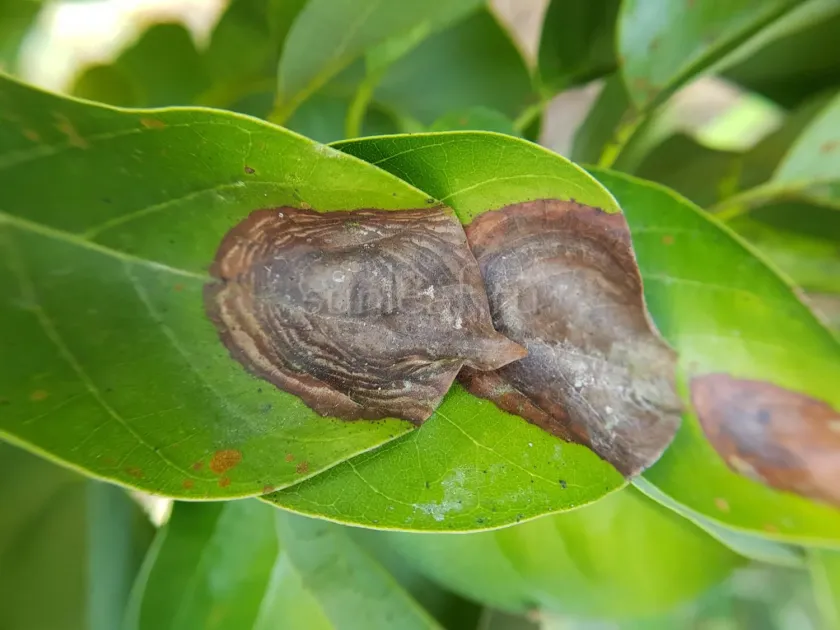
The most common symptom is the appearance of dark, sunken lesions on leaves, stems, and fruits, often surrounded by a chlorotic or yellowish halo.
Twig dieback is a classic sign, where the fungus advances down the branch, leading to the withering and death of the terminal parts of the plant.
On fruits, the disease typically manifests as dark, firm, sunken spots which may become covered with salmon-colored, gelatinous masses of conidia under high humidity.
Defoliation is common in severe cases, as the infection weakens the petioles, causing the leaves to drop prematurely even if the infection is not systemic.
Flowers and young fruits are particularly susceptible, often turning black and shriveling shortly after infection, leading to significant fruit drop.
Pathogen
Citrus anthracnose is caused by the fungal pathogen Colletotrichum citri, also widely known in literature as Colletotrichum gloeosporioides.
This fungus is a hemibiotroph that can survive as both a saprophyte on dead tissues and a parasite on living plant parts, making it highly persistent in the orchard environment.
The pathogen produces asexual spores called conidia, which are primarily spread through water splashing during rain, overhead irrigation, and human activity.
The fungus penetrates the plant through natural openings such as stomata or via wounds created by environmental stress, insects, or pruning activities.
Once inside, the mycelium colonizes the intercellular spaces, producing toxins that kill the host cells and lead to the development of necrotic lesions.
Conditions for development
High humidity and extended periods of leaf wetness are critical factors for the germination of fungal spores and the subsequent development of the disease.
The disease is most prevalent in environments with heavy rainfall, high humidity, or frequent heavy dew, which are favorable for the fungus reproduction.
Temperatures ranging from 20°C to 28°C provide an optimal range for the pathogen to thrive, though it can remain dormant during less favorable conditions.
Stress factors, such as improper fertilization, drought, waterlogging, or infestation by citrus pests, significantly increase the susceptibility of the tree.
Poor orchard sanitation, characterized by the accumulation of infected plant debris, creates a constant source of inoculum for the next growing season.
Why it matters
Citrus anthracnose causes significant economic losses by reducing both the yield and the aesthetic quality of the marketable fruit.
Extensive twig dieback requires labor-intensive pruning to remove damaged parts, which can lead to a reduction in the canopy size and overall productivity.
The premature loss of foliage reduces the plant's photosynthetic capacity, resulting in weaker growth and reduced vigor for subsequent seasons.
Post-harvest decay can occur if fruits are infected in the field but appear healthy during the packing process, leading to spoilage during transit and storage.
Severe and untreated infections can eventually lead to the decline and death of the entire tree, especially in younger or highly stressed plants.
Protection
Effective management begins with strict orchard sanitation, involving the regular removal and destruction of all dead and symptomatic wood and fruit.
Pruning should be performed during dry weather, and tools must be disinfected frequently to prevent the mechanical transmission of the pathogen.
Chemical control involving copper-based fungicides is recommended as a preventive measure during periods of high risk or heavy rainfall.
- Application of protective fungicides during the bloom period and fruit set.
- Ensuring proper orchard drainage to manage humidity levels.
- Maintaining tree vigor through appropriate fertilization and water management.
Integrated Pest Management (IPM) practices should be followed to control secondary pests, as insect damage often provides entry points for the fungus.
Discussion
No discussions yet — be the first.