
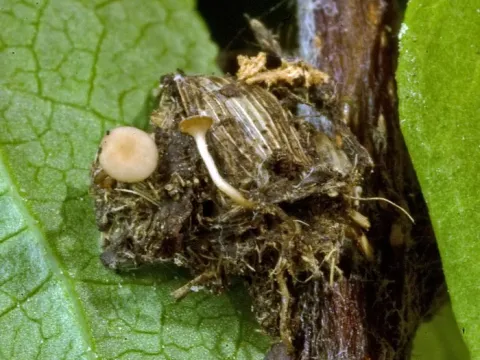
Ciborinia candolleana
Ciborinia candolleana
The causal agent of this disease is the fungus Ciborinia candolleana (formerly known as Sclerotinia candolleana). It is a specialized pathogen that primarily targets the foliage of specific hardwood trees, notably oak species.
What the section contains
Ciborinia candolleana
The life cycle of the fungus is closely tied to the forest floor litter. It overwinters as sclerotia within fallen leaves, which act as a reservoir for infection until the following spring.
During the spring, when temperatures rise and humidity increases, these sclerotia develop apothecia—small, cup-shaped fruiting bodies that release ascospores into the air.
These ascospores land on newly emerging leaves and penetrate the tissue, initiating the infection cycle. The mycelium then colonizes the leaf tissue, causing cellular breakdown and necrosis.
Being a highly specialized pathogen, its persistence in the environment is dependent on the accumulation of plant debris, making its biological cycle predictable but difficult to eradicate entirely.
The primary symptom includes the formation of large, irregularly shaped necrotic spots on the leaves. These spots usually turn brown or dark black as the infection progresses.
Affected leaves often exhibit curling and premature deformation. As the necrotic areas expand, the leaves lose their structural integrity and may look withered or shriveled.
Under humid conditions, a fine fungal growth might be visible on the underside of the leaves in the affected areas, which represents the sporulation stage of the pathogen.
In dry conditions, the necrotic leaf tissue becomes brittle and may break away, giving the leaf a ragged or "shot-hole" appearance. This significantly reduces the functional area of the leaf.
In cases of severe infestation, premature leaf drop is commonly observed. This often starts from the lower parts of the canopy where the microclimate is more humid.
High humidity and moderate spring temperatures are the critical environmental factors that promote the development and spread of Ciborinia candolleana.
The presence of old leaf litter is essential for the disease to propagate, as it provides the necessary substrate for the fungus to develop its fruiting bodies.
Frequent rainfall or persistent morning dew during the leaf-flush period significantly increases the infection rate by facilitating the germination of ascospores on the host leaves.
Poor air circulation within the tree canopy or dense forest stands creates micro-environments that are highly conducive to the rapid spread of the fungus.
Trees that are already stressed due to drought, nutrient deficiency, or other pests are generally more susceptible to successful colonization by the fungus.
The primary impact of the disease is the reduction of the total photosynthetic surface area, which hinders the tree's ability to produce energy during the growing season.
Chronic annual infections lead to reduced annual growth increments and overall weakening of the tree's physiological vitality, making it more vulnerable to other environmental stressors.
In nursery settings, the disease significantly affects the aesthetic and market value of oak seedlings, potentially causing heavy economic losses for producers.
Repeated defoliation over several consecutive years can cause twig dieback and significantly diminish the tree's ability to store reserves for the winter season.
While rarely causing immediate tree mortality, the disease compromises the overall health of the forest ecosystem and makes trees more prone to secondary infestations by insects.
Sanitation is the most effective control strategy: raking and destroying fallen leaves during the dormant season helps eliminate the primary source of fungal inoculum.
Improving air circulation through proper pruning and thinning of stands can lower the local humidity, making the environment less favorable for fungal growth.
In high-value areas like nurseries, the application of appropriate fungicides during the bud-burst phase can help prevent initial infection and protect the emerging leaves.
Maintaining optimal tree vigor through proper fertilization and watering helps increase the natural resistance of the host plants against various fungal pathogens.
Regular monitoring of canopy health during the spring allows for early detection of the disease, enabling timely management interventions before the pathogen spreads further.