
Description
Symptoms
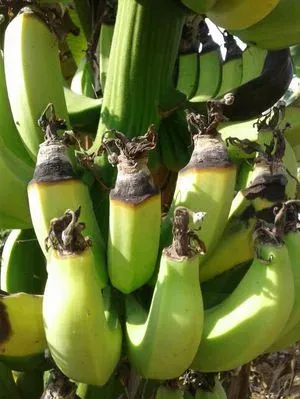
The disease is characterized by the development of a necrotic lesion at the tip of the banana fruit, which gradually expands towards the stem end.
The affected tissue becomes dry, shriveled, and darkens to a black or deep brown color, resembling the ash of a burning cigar.
In high-humidity conditions, a whitish or greyish fungal growth becomes visible on the surface of the necrotic area, indicating active sporulation.
As the rot progresses, it can penetrate the underlying pulp, causing a soft rot that compromises the entire fruit and creates an off-putting odor.
While the fruit skin is the primary site of infection, the pathogen can eventually lead to the loss of the entire banana cluster if left unchecked.
Pathogen
The causative agent of this disease is the fungus Trachysphaera fructigena, which specifically targets the fruit of banana plants.
This fungus is characterized by its saprophytic nature, but it acts as a significant pathogen when it colonizes the tissues of developing banana fruits.
The pathogen produces large quantities of spores, which are easily disseminated by wind, rainwater splash, and various insect vectors present in the plantation.
The fungal life cycle relies heavily on decaying plant matter, allowing it to persist in the plantation environment throughout the year.
Initial infection often occurs shortly after flowering, as the spores settle on the residual floral parts left attached to the tips of young fruits.
Conditions for development
Warm temperatures combined with high relative humidity are the primary environmental drivers for the proliferation of Trachysphaera fructigena.
Poor plantation hygiene, such as the accumulation of decaying leaves and debris, provides an ideal reservoir for the fungus to multiply.
Overcrowded plantations reduce airflow, leading to stagnant pockets of high moisture that facilitate spore germination on the fruit surfaces.
Heavy rainfall during the fruit-set stage often splashes spores from the soil or lower leaves onto the developing fruits, initiating the infection.
The presence of necrotic floral remnants at the tip of the fruit is a critical factor, as these tissues are the easiest point of entry for the fungus.
Why it matters
Cigar end rot causes severe economic losses by significantly reducing the market value of banana crops destined for local or international markets.
Infected fruits are typically culled during the sorting process because their necrotic tips and overall poor appearance make them unsellable.
During shipping and storage, the disease can spread rapidly through the box, causing widespread decay and financial loss for exporters.
The disease can reduce the overall yield of a plantation by causing premature softening and rotting of banana fingers within the bunch.
Farmers face increased operational costs due to the need for manual removal of infected parts and the application of chemical control measures.
Protection
The most crucial management practice is the manual removal of the persistent floral parts from the ends of young bananas shortly after fruit set.
Maintaining strict sanitation on the plantation by removing and disposing of diseased plant materials is essential to reduce the inoculum level.
Implementing proper spacing between plants ensures better air circulation, which helps keep the surface of the fruits dry and less hospitable to fungi.
Targeted fungicide applications during critical growth stages can protect the fruit from infection, especially in areas with high disease pressure.
Careful handling during harvest and packing minimizes skin abrasions, which are natural entry points for fungal spores and bacterial secondary infections.
Pathogens and affected parts
Affects crops · 1
Discussion
No discussions yet — be the first.