
Cinereomyces lindbladii
Cinereomyces lindbladii
Description
Symptoms
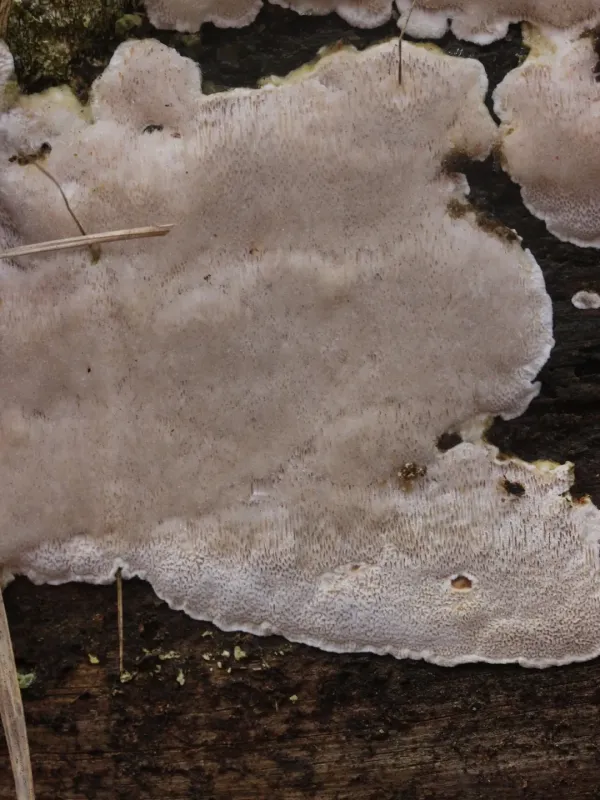
The most visible sign of Cinereomyces lindbladii is the presence of its fruit bodies, which often appear on the underside of fallen logs or tree stumps.
The fruit bodies are characterized by a grayish color and a porous texture, often appearing as patches that may slightly curl at the edges.
The wood affected by this fungus typically exhibits a brown rot, where the material becomes brittle, dark, and develops a cubical fracture pattern.
Affected trees may show decreased vigor, thinning crowns, or visible cracks in the bark where the fungal mycelium has penetrated.
In advanced stages, the internal structure of the tree trunk becomes significantly decayed, making the tree fragile and prone to windthrow.
Pathogen
Cinereomyces lindbladii is a wood-decay fungus belonging to the order Polyporales, which is known for its ability to break down woody substrates.
This fungus acts primarily as a saprotroph, decomposing lignin and cellulose, but it can potentially affect weakened living trees as a facultative pathogen.
The fungus produces resupinate to effused-reflex fruit bodies, which are typically gray or ash-colored, giving the fungus its name.
The mycelium develops within the wood tissues, secreting specific enzymes that dissolve the structural components of the tree's cell walls.
As a biological agent, it plays a complex role in forest ecology, contributing to the recycling of dead organic matter, though it remains a concern in timber management.
Conditions for development
The development of this fungus is highly dependent on moist conditions, as it requires water to facilitate its metabolic activities and spore dispersal.
Cinereomyces lindbladii thrives in environments with high humidity and cool to moderate temperatures, which are common in dense forest understories.
Poor aeration in forest stands or improper spacing of trees can create a microclimate that encourages the growth of this pathogen.
Physical injuries to the tree, such as wounds from wildlife or improper pruning, provide entry points for fungal spores to infect the heartwood.
Prolonged storage of harvested logs in damp conditions significantly increases the risk of colonization by this specific wood-decay fungus.
Why it matters
The primary damage caused by Cinereomyces lindbladii is the degradation of wood quality, which renders timber useless for construction or industrial purposes.
When it infects living trees, it causes internal heart rot, which reduces the structural integrity of the trunk and poses safety risks in urban areas.
The fungus significantly reduces the economic value of forest stands by accelerating the decay of potentially harvestable timber resources.
It interferes with the tree's vascular system in early infection stages, potentially causing branch dieback and eventually tree death.
The spread of this fungus can alter the natural succession of plant species in a forest, as it selectively targets vulnerable or damaged trees.
Protection
Effective control requires strict adherence to forest hygiene, including the prompt removal and disposal of infected timber and debris.
Protecting trees from physical damage is essential, as even minor bark wounds can become entry points for the fungus to establish a colony.
For ornamental or park trees, regular inspections are crucial to identify and isolate infected areas before the fungus spreads further.
Improving the overall health of the forest through thinning and proper tree spacing can help create less favorable conditions for fungal growth.
- Sanitary clearing of deadwood and stumps;
- Proper sealing of pruning cuts on ornamental trees;
- Regulating humidity through stand management;
- Frequent monitoring of susceptible tree species.
Discussion
No discussions yet — be the first.