
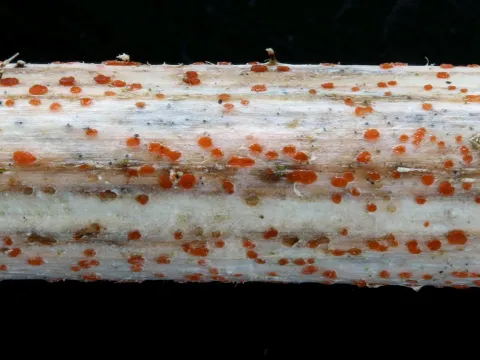
Chaetosphaerellaceae
Chaetosphaerellaceae
Chaetosphaerellaceae is a family of fungi within the Sordariomycetes class. While many species are known as saprotrophs living on decaying matter, some can act as opportunistic pathogens that compromise the health of living plants.
What the section contains
Chaetosphaerellaceae
The pathogen reproduces via spores, which are disseminated by wind, rain splashes, and physical movement within the crop canopy. Upon contact with a suitable host, the fungal hyphae penetrate the epidermis to begin colonization.
These fungi are characterized by the production of dark, flask-shaped structures called perithecia. These reproductive organs are often found embedded in the bark or stems of the host plant, serving as a primary survival mechanism.
The biology of Chaetosphaerellaceae allows them to exploit a wide range of host plants, particularly when those plants are under environmental stress. They thrive in environments where organic matter breakdown is active.
Scientific studies focus on distinguishing between the saprotrophic and pathogenic modes of these fungi to better predict potential disease outbreaks in commercial agriculture.
The most common symptoms include necrotic spots on leaves, stems, and fruits. These spots may coalesce as the infection progresses, leading to significant tissue destruction.
In woody plants, bark infection leads to cracking and localized dieback. Small, black, protruding dots, which are the fungal fruiting bodies, can often be seen on the affected surfaces.
Infected plants frequently exhibit wilting and premature yellowing of leaves. This occurs as the pathogen disrupts the vascular tissues, impeding the flow of water and nutrients.
A dark, powdery or velvety fungal layer may develop over the lesions under high-humidity conditions. This represents the sporulation stage of the fungus, indicating a high risk of spread.
Early diagnosis is crucial, as the symptoms can sometimes be confused with other fungal diseases. Proper laboratory identification or expert consultation is often required to confirm the presence of Chaetosphaerellaceae.
The development of Chaetosphaerellaceae is heavily influenced by high moisture levels and stagnant air. Prolonged periods of rain or excessive overhead irrigation create ideal conditions for spore germination.
Temperatures ranging from 18°C to 25°C are generally considered optimal for the rapid colonization of host tissues. Fluctuations in weather that weaken the plant's natural defenses increase susceptibility.
Poorly ventilated growing areas and high-density planting exacerbate the spread of the fungus. Moisture retained on leaves for extended periods provides the necessary medium for the infection to take hold.
Crop debris left on the field serves as a significant reservoir for the pathogen. In the absence of proper sanitation, the fungus can persist in the soil and on plant litter from season to season.
Mechanical damage caused by hail, pruning, or insect feeding creates entry points for fungal spores, facilitating the rapid infection of otherwise healthy plant tissue.
The primary harm caused by Chaetosphaerellaceae is a reduction in plant vigor and overall yield. By impairing photosynthesis, the disease forces the plant to divert energy toward defense rather than growth.
Heavy infestations can lead to the total loss of individual plants, particularly seedlings or stressed mature specimens. This significantly reduces the economic value of the agricultural production.
The pathogen's impact is compounded when it allows secondary infections to enter the plant. Weakened tissue becomes a magnet for bacteria and other opportunistic decay-causing organisms.
Product quality is often compromised, as the fruit or foliage may be blemished or distorted. This leads to higher rejection rates at the market level and direct financial loss.
Continuous presence of the pathogen in a cultivation area necessitates frequent interventions, increasing the production cost for farmers over the long term.
Effective control starts with strict sanitation practices. Removing and destroying all infected plant parts reduces the local spore load and prevents the cycle of re-infection.
The use of fungicides can provide significant protection during high-risk periods. It is advisable to rotate chemical groups to prevent the development of resistant fungal strains.
Enhancing plant health through balanced fertilization and stress management makes crops more resilient. Plants with strong cell walls are inherently more resistant to fungal penetration.
Improving canopy airflow through proper pruning and planting spacing is a vital non-chemical control measure. Maintaining dry conditions around the foliage is key to disease prevention.
- Utilize certified disease-free planting material.
- Monitor weather patterns to time preventive treatments.
- Disinfect pruning tools between plants to prevent pathogen spread.