
Chaetoseptoria
Chaetoseptoria
Description
Symptoms
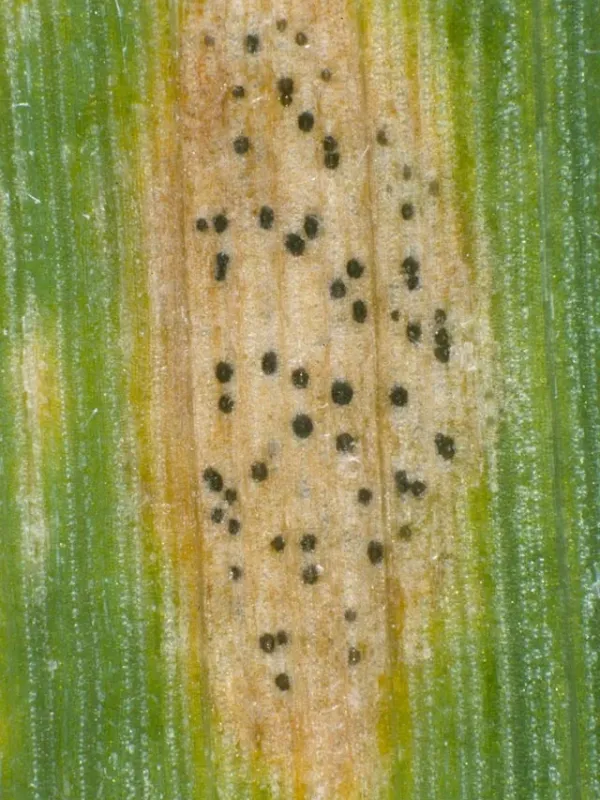
Initial symptoms of Chaetoseptoria appear as small, chlorotic flecks on the lower leaves. As the disease progresses, these flecks expand into larger spots that often exhibit a pale center with a darker brown margin.
A key visual indicator is the presence of pycnidia within these lesions. These are tiny, dark, dot-like structures where the fungal spores are produced, and they are typically visible to the naked eye or with a hand lens.
Severe infections lead to the coalescing of spots, which causes large sections of the leaf blade to wither and die. This premature senescence significantly impairs the photosynthetic efficiency of the plant.
The disease typically moves upward from the lower canopy to the upper leaves, including the flag leaf. If the flag leaf is heavily infected, the impact on grain yield and quality is usually severe.
Under humid conditions, a fine, greyish layer of fungal sporulation may be observed on the lesions, further confirming the presence of the pathogen in the field.
Pathogen
The disease is caused by fungi belonging to the genus Chaetoseptoria, which are classified as ascomycetes. These pathogens are morphologically characterized by the presence of setae (bristles) on their pycnidia, which differentiates them from related Septoria species.
The fungus survives between cropping seasons as mycelium or pycnidia on crop residues, stubble, and alternative hosts like wild grasses. During the growing season, it spreads via conidia, which are dispersed primarily by wind and rain splashes.
The pathogen's life cycle is strictly dependent on moisture availability. Once conidia land on a host leaf, they require a film of water to germinate and penetrate the epidermal tissues, eventually establishing a network of mycelium within the plant.
Host range is primarily limited to cereal crops. The fungus invades the leaf tissues, producing toxins that disrupt cellular metabolism, leading to the characteristic necrotic lesions associated with the infection.
High genetic plasticity allows the fungus to adapt to varying environmental conditions, making it a persistent threat in regions where cereal production is intensive and monoculture practices are common.
Conditions for development
Chaetoseptoria flourishes in cool to moderate temperatures accompanied by high humidity and frequent rainfall. Prolonged periods of leaf wetness are essential for the successful infection of host tissues.
Dense crop stands create a sheltered microclimate that traps humidity, allowing the fungus to propagate rapidly. Poor airflow within the canopy significantly increases the disease pressure on the crop.
Optimal temperatures for fungal development range from 18°C to 25°C. During such weather, the pathogen can complete its infection cycle within a few days, leading to rapid disease spread throughout the field.
Management practices that leave crop debris on the soil surface, such as conservation tillage or no-till farming, often increase the risk of early-season infection by providing a ready inoculum source.
Plants under nutrient stress or those experiencing excessive nitrogen fertilization are often more susceptible to infection, as the lush, soft growth is easier for the fungal hyphae to penetrate.
Why it matters
The primary damage caused by Chaetoseptoria is the reduction of green leaf area, which limits the plant's ability to perform photosynthesis. This ultimately leads to a decrease in grain filling and overall biomass accumulation.
Yield losses can be substantial, often ranging from 10% to 30%, depending on the timing of the infection and the duration of favorable weather for the fungus. Late-season infections can specifically reduce grain size and test weight.
The disease weakens the host plant, making it more susceptible to environmental stress and other opportunistic pathogens. In severe cases, significant lodging can occur due to weakened stalks.
Reduced crop quality, characterized by shriveled grain and decreased protein content, can lead to lower market value and potential rejection by processors.
Additionally, the costs associated with repeated fungicide applications to manage the disease contribute significantly to the overall economic burden of crop production.
Protection
Crop rotation is the cornerstone of managing Chaetoseptoria. By alternating cereals with non-host crops, growers can break the pathogen's life cycle and significantly reduce the primary inoculum levels in the soil.
Deep plowing or incorporating crop residues into the soil helps decompose infected material more rapidly, preventing the pathogen from overwintering and reinfecting the following year's crop.
The use of certified, disease-free seed and the selection of resistant or tolerant cultivars are essential strategies for minimizing the impact of the disease in high-risk areas.
Fungicide application is recommended when weather conditions favor disease spread and initial symptoms are detected on lower leaves. Rotating different chemical modes of action is vital to prevent the development of resistant fungal strains.
Maintaining balanced soil fertility, particularly adequate potassium levels, helps strengthen plant cell walls, which can provide a degree of mechanical resistance against fungal penetration and colonization.
Discussion
No discussions yet — be the first.