
Chaetosphaerella blight
Chaetosphaerella
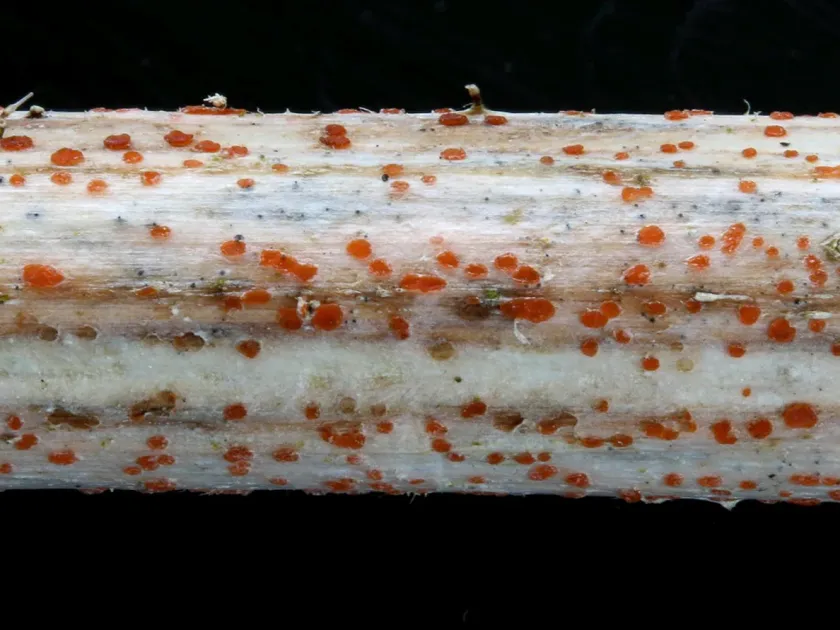
Description
Symptoms
The primary symptom of the infection is the appearance of dark, irregular necrotic spots on the leaves, stems, and sometimes fruit. These spots often start small and expand gradually as the fungus colonizes the internal tissues.
Close inspection of these lesions reveals small, dark, granular structures. These are the perithecia of the fungus emerging through the plant epidermis, which is a definitive sign of active sporulation and colonization.
As the disease progresses, the infected plant tissue dries out, becomes brittle, and may eventually die. This leads to premature chlorosis and necrosis, disrupting the nutrient and water transport within the plant's vascular system.
Under humid conditions, a fine fungal growth or mycelial mat may be visible on the surface of the lesions. This moisture-loving growth is a precursor to the dispersal of spores and the infection of adjacent healthy tissues.
Visible decline in plant vigor is another common sign. Infected plants typically exhibit stunted growth, reduced leaf surface area, and poor development of reproductive organs, leading to overall yield decline.
Pathogen
The causative agent of this disease is the fungus Chaetosphaerella, belonging to the class Sordariomycetes. These fungi are primarily known as saprotrophs living on decaying wood or plant debris, but they can act as opportunistic pathogens under favorable conditions.
The fungus produces specific fruiting bodies called perithecia. These are often dark and covered with fine, hair-like bristles, which is a key diagnostic feature for mycologists identifying the genus in field or laboratory conditions.
The life cycle of the pathogen is closely associated with organic matter degradation. The fungus reproduces by releasing spores that are spread by wind, rain, or water splashes, facilitating the colonization of susceptible plant surfaces.
Chaetosphaerella is highly adaptable and can survive in the environment for extended periods, especially when plant residues remain in the soil. This persistence makes it a resilient pathogen in various agricultural settings.
From an agronomical standpoint, this pathogen is often categorized as a secondary invader that exploits the weakened state of a host plant to colonize and destroy living tissue.
Conditions for development
The development of Chaetosphaerella blight is strictly correlated with high humidity levels. Prolonged leaf wetness, often caused by heavy morning dew or frequent rainfall, creates an ideal environment for the fungus to establish infection.
Temperature is a critical factor, with the fungus showing maximum activity in the range of 15°C to 22°C. These moderate temperatures allow for rapid mycelial growth and successful penetration of host tissues.
Crowded planting conditions often exacerbate the issue by restricting airflow around the plants. Poor ventilation prevents foliage from drying out quickly, which allows the fungus to remain active for longer periods during the day.
Any injury to the plant, whether mechanical damage during field operations or pest-induced wounds, serves as an entry point for the pathogen. Healthy, intact plant tissue is generally much more resistant to infection.
Poor soil management and the accumulation of plant debris provide a reservoir for the pathogen. In such environments, the fungus can survive the off-season and initiate new infections as soon as the weather becomes favorable.
Why it matters
The harm caused by this disease is primarily economic, resulting from the reduction in quality and quantity of the harvest. Necrotic lesions render fruits or vegetables visually unappealing and often unsuitable for market or storage.
Physiological disruption caused by the fungus leads to significant yield losses. Because the pathogen interferes with photosynthesis and nutrient uptake, the overall biomass production is severely compromised during the growing season.
In cases where the pathogen affects the reproductive tissues, seed quality is adversely impacted. Infected seeds may show reduced germination rates, leading to poor crop stands in the following season.
Furthermore, Chaetosphaerella serves as a precursor to other fungal and bacterial infections. By damaging the integrity of the plant, it opens the door for secondary invaders, which can accelerate the collapse of the plant.
Constant pressure from this disease in permanent plantations can lead to a long-term decline in plant productivity, forcing growers to invest in expensive replacement programs or intensive chemical control.
Protection
The most effective strategy for controlling the disease is the implementation of a diverse crop rotation system. This practice denies the pathogen its preferred substrate, effectively reducing the inoculum levels in the soil.
Deep plowing or incorporating crop residues into the soil helps accelerate the decomposition process, which is detrimental to the survival of the fungus in the field over the winter months.
Fungicidal treatments are recommended when environmental conditions are conducive to disease outbreaks. Applying systemic fungicides can provide a robust barrier against infection and help cure early-stage symptoms.
Maintaining optimal plant density and ensuring good field hygiene are vital. By promoting air circulation and promptly removing infected plant material, the overall disease pressure can be managed effectively.
- Utilizing disease-resistant crop varieties whenever possible.
- Ensuring balanced fertilization to boost plant immune systems.
- Managing irrigation to avoid prolonged leaf moisture.
- Regular monitoring and rapid intervention at the first signs of infection.
Discussion
No discussions yet — be the first.