
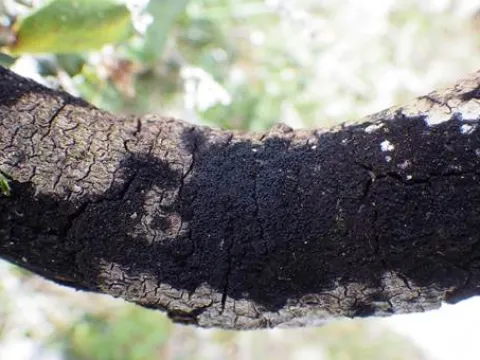
Chaetosphaerella phaeostroma
Chaetosphaerella phaeostroma
The causative agent of the disease is the ascomycete fungus Chaetosphaerella phaeostroma. It typically functions as a saprotroph, but can act as a weak parasite on various woody plants.
What the section contains
Chaetosphaerella phaeostroma
The fungus produces distinctive black perithecia, which are small fruiting bodies often adorned with dark, stiff setae or hairs. These structures are the primary diagnostic feature used for identification.
The life cycle involves the production of ascospores, which are released into the environment to colonize new hosts. These spores can travel significant distances via wind dispersal.
The mycelium of this fungus is capable of penetrating the outer layers of bark and utilizing enzymes to break down organic matter. This allows it to thrive on decaying or weakened plant tissues.
As a fungus that often follows other biological disturbances, it is frequently classified as a secondary colonizer that exploits existing physical or pathological weaknesses in the host.
The most evident signs of infection are the small, dense clusters of black perithecia appearing on the bark. They look like dark, raised spots that can eventually cover large areas of the stem.
The bark in the affected areas often shows signs of necrosis, including cracking, discoloration, and a tendency to flake off. The underlying wood may also appear darkened due to fungal growth.
During periods of high humidity, a faint fungal mycelium may become visible around the fruiting bodies. This growth can be subtle and often goes unnoticed until the infection becomes severe.
Visible decline in the health of branches, such as premature drying or reduced foliage density, can indicate that the fungal colonization has impacted the plant's vascular efficiency.
- Black, clustered perithecia on bark.
- Bark cracking and premature peeling.
- Discoloration of woody tissues.
- Reduced vigor in affected branches.
Chaetosphaerella phaeostroma thrives in environments characterized by high moisture and frequent precipitation. Stagnant air and lack of sunlight are major contributing factors.
The fungus prefers temperate climates where temperature fluctuations do not reach extreme levels. High humidity levels are essential for the germination and spread of spores.
Plants that have been stressed by environmental factors, such as drought or frost damage, are significantly more susceptible to infection by this opportunistic pathogen.
Poor orchard or forest management, specifically the accumulation of debris and dead wood on the forest floor, provides a perfect substrate for the fungus to overwinter and multiply.
Dense, unpruned canopies that limit air circulation create a micro-climate where moisture remains trapped on the branches, facilitating fungal colonization.
The primary damage is caused by the degradation of bark tissues, which weakens the protective barrier of the plant. This leaves the host vulnerable to further invasion by more aggressive pathogens.
Systemic weakness caused by the fungus can lead to reduced nutrient and water transport, eventually resulting in the dieback of skeletal branches and decreased overall plant vitality.
For ornamental trees, the presence of these black perithecia is aesthetically undesirable and often necessitates heavy pruning to remove the unsightly, infected parts.
Persistent infection reduces the tree's ability to resist environmental stresses like winter cold, potentially leading to long-term decline or even death of the affected plant.
Economic losses in wood production can occur if the fungus colonizes timber, as it degrades the quality of the wood and makes it more brittle and prone to structural failure.
Sanitation is the most critical control measure. All infected wood should be pruned and disposed of properly to reduce the local spore population in the area.
Improving air circulation through regular pruning of tree canopies is highly effective in managing the moisture levels that the fungus requires for survival and reproduction.
Application of copper-based fungicides during the dormant season can help reduce the spore load and prevent new infections from establishing on the bark.
Maintaining high vigor through proper irrigation and fertilization ensures that trees are better equipped to resist infection, making them less attractive to opportunistic fungi.
Preventing mechanical damage to the bark during maintenance activities is essential, as these wounds serve as primary entry points for fungal pathogens like Chaetosphaerella phaeostroma.