
Celery rust
Puccinia apii
Description
Symptoms
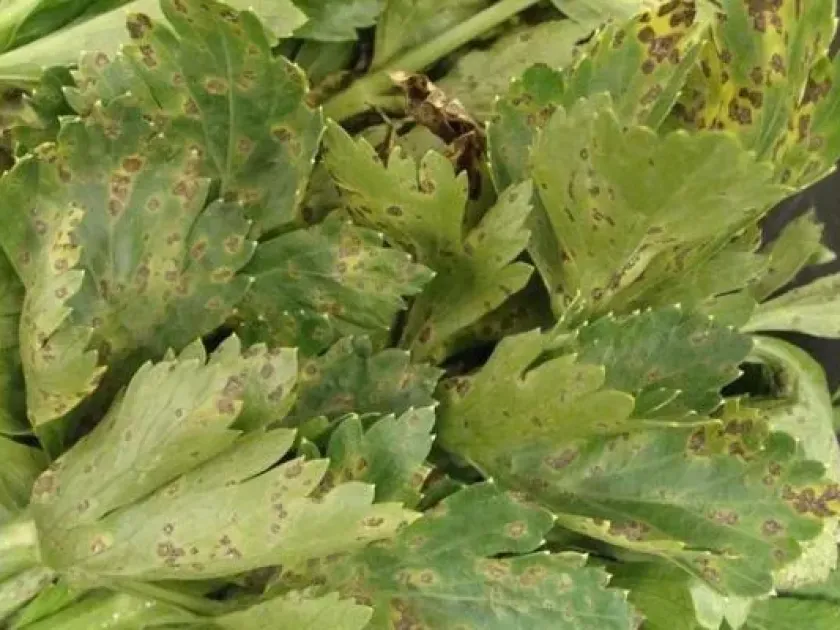
The earliest signs of celery rust are small, pale or yellowish spots appearing on the undersides of the leaves, which gradually develop into characteristic pustules.
These pustules eventually rupture, releasing masses of dusty, rusty-brown spores. This powdery substance is a hallmark sign of the infection and can easily coat neighboring leaves.
As the disease progresses, leaves begin to yellow, curl, and wither prematurely. This decline in photosynthetic leaf area is detrimental to the plant's overall development.
In cases of severe infestation, the stems (petioles) may also become infected, resulting in a stunted appearance and a significant reduction in the quality of the harvested crop.
- rusty-brown powdery spots (pustules) on foliage;
- yellowing, wilting, and premature senescence of leaves;
- stunted plant growth and reduced vigor;
- spore masses visible on both leaf surfaces;
- overall decrease in marketability and shelf life.
Pathogen
The causal agent of celery rust is a specialized fungal pathogen known as Puccinia apii. It is an obligate parasite, meaning it requires living host tissue to complete its life cycle and thrive.
The fungus propagates through the production of spores, specifically urediniospores and teliospores, which are easily disseminated by wind currents across garden plots and fields.
Puccinia apii is specific to the Apiaceae family, with celery (Apium graveolens) being its primary host, which can lead to significant outbreaks in regions where celery is cultivated intensively.
The pathogen survives between growing seasons as dormant spores on crop debris or in the soil, allowing it to re-infect emerging crops when environmental conditions become suitable.
Once spores land on the leaves, they germinate and enter the plant through stomata, establishing a network of mycelium that drains nutrients from the host, ultimately impacting plant vigor.
Conditions for development
The development of Puccinia apii is highly dependent on environmental factors, with high humidity levels exceeding 75% acting as a primary catalyst for rapid spore germination.
Mild temperatures ranging from +15 to +22 degrees Celsius are considered optimal for the pathogen, making spring and early autumn particularly risky periods for infection.
Dense planting schemes that lack adequate airflow create microclimates with stagnant air and trapped moisture, which significantly favors the spread of the fungus.
Frequent rain or overhead irrigation methods that keep foliage wet for extended periods provide the necessary moisture for spores to penetrate the leaf tissue efficiently.
Poor soil management and the lack of crop rotation contribute to higher inoculum levels in the field, making the plants more susceptible to repeated infections each year.
Why it matters
Celery rust causes considerable economic damage by destroying the foliage, which is the primary organ responsible for energy production and nutrient storage in the root system.
Plants affected by the disease produce smaller, lower-quality roots that often lack the flavor and structural integrity required for commercial sale or long-term storage.
The infection makes the plants highly susceptible to secondary bacterial and fungal invaders, which can lead to soft rot and complete destruction of the vegetable in storage.
Commercial growers may face yield losses of up to 50% during severe epidemics if preventative measures are not taken, leading to significant financial instability.
Furthermore, the visual impact of the rust on the celery makes it unacceptable for retail, as consumers prioritize healthy, blemish-free vegetables for their cooking needs.
Protection
The most effective strategy for managing celery rust is consistent crop rotation, ensuring that celery is not replanted in the same location for at least 3-4 years to break the infection cycle.
Strict sanitation is vital; all infected plant debris must be removed and destroyed after harvest to prevent spores from overwintering in the soil and infecting future crops.
Selecting resistant cultivars or hybrids that show natural tolerance to rust is a recommended approach for reducing the need for chemical interventions during the growing season.
Ensuring proper plant spacing to improve ventilation and using drip irrigation instead of overhead watering can significantly reduce leaf wetness and disease pressure.
When necessary, systemic fungicides can be applied to protect the plant tissue from infection, but these should be used as part of an integrated pest management program.
Discussion
No discussions yet — be the first.