
Sordariosis
Sordaria
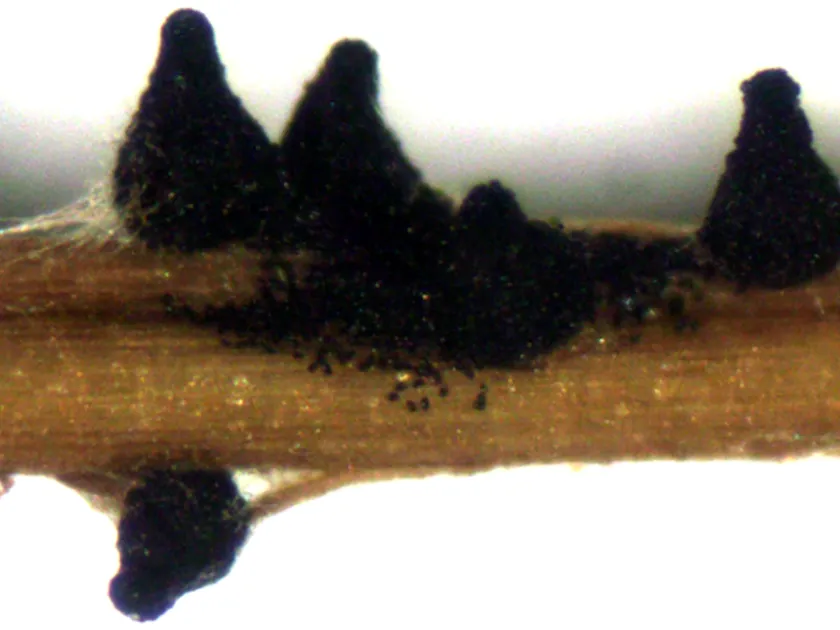
Description
Pathogen
The causative agent of Sordariosis is the fungus from the genus Sordaria, most notably Sordaria fimicola. These are filamentous ascomycete fungi that are primarily known as saprotrophs living on decaying organic matter but can act as opportunistic pathogens under certain circumstances.
The fungus produces microscopic fruit bodies called perithecia, which contain asci with dark, usually black, ascospores. These spores are highly resistant to adverse environmental conditions, including drought and extreme temperatures, allowing them to persist in the soil for extended periods.
Biological activity is centered around the degradation of plant cell walls. By secreting specific enzymes such as cellulases, the fungus can penetrate plant tissues, leading to necrosis and decay, particularly in weakened or stressed plant specimens.
The life cycle involves the formation of spores that spread via air currents, water splashes, or contaminated agricultural tools. Once they reach a susceptible host, they germinate and penetrate the epidermal layers, establishing infection.
While often associated with manure and soil rich in humus, Sordaria species have evolved the ability to thrive in diverse environments, making them a common component of the soil mycobiota that can turn pathogenic if host resistance is compromised.
Conditions for development
High moisture levels are the most critical factor for the development of Sordariosis. Constant soil saturation, poor drainage in pots, and high humidity in greenhouses create an environment that favors spore germination and mycelial spread.
Moderate temperatures ranging from +18°C to +25°C are ideal for the rapid proliferation of the pathogen. Within this range, the metabolic activity of the fungus is maximized, leading to faster colonization of the root systems and stems.
The presence of uncomposted organic matter, such as raw straw or crop residues in the growing medium, provides a rich nutrient source for Sordaria. This build-up of organic substrate acts as a base from which the fungus attacks living plant tissue.
Poor ventilation and air circulation, particularly in high-density indoor cropping systems, prevent the surface of the plant from drying out. Persistent moisture on plant parts is a primary trigger for successful fungal penetration.
Compacted soils with low oxygen levels weaken the plant's root health, making them significantly more vulnerable to opportunistic fungal pathogens like Sordaria, which easily overwhelm stressed tissue.
Why it matters
The primary damage caused by Sordariosis includes root and stem rot. As the pathogen colonizes the root system, it impairs water and nutrient uptake, leading to visible symptoms such as stunting, leaf chlorosis, and general plant decline.
In seedlings, the infection can cause pre-emergence and post-emergence damping-off. This leads to reduced plant stands, significant yield losses, and the necessity of replanting, which impacts the overall profitability of the agricultural cycle.
The fungus produces necrotic lesions on the stem base, which can eventually lead to lodging or complete stem collapse. The affected tissue becomes dark, soft, and decayed, effectively interrupting the physiological processes of the plant.
In stored seeds, Sordaria contamination leads to reduced germination energy and potential mold growth. This degradation of quality makes the seed lot unfit for sowing and may necessitate the use of aggressive seed treatments.
Secondary infections are common, as the damage caused by Sordaria opens up entry points for bacteria and other soil-borne fungi, creating a disease complex that is significantly harder to treat than a single pathogen infection.
Protection
Management of Sordariosis relies heavily on strict sanitation practices. Removing crop residues and ensuring a clean growing environment significantly reduces the reservoir of spores available to infect the next cycle of plants.
Effective crop rotation is essential to break the infection cycle. By alternating host crops with non-host species, the level of pathogen pressure in the soil can be gradually lowered, minimizing the risk of outbreaks.
Seed treatment with authorized fungicides is a standard preventive measure, especially in regions or conditions where soil-borne pathogens are prevalent. This protects the vulnerable seedling stage from early infection.
Optimizing the microclimate is critical in protected cropping. Maintaining proper ventilation, controlling irrigation to prevent excessive soil moisture, and ensuring good light levels help keep plants healthy and resistant to opportunistic attacks.
Biological control using beneficial microbes like Trichoderma species is highly effective. These beneficial fungi compete with Sordaria for nutrients and space in the rhizosphere, acting as a natural shield for the plant roots.
Discussion
No discussions yet — be the first.