
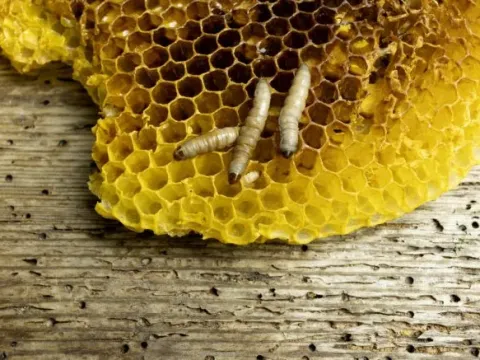
Lesser wax moth
Blasiphalia pseudogrisella
The Lesser wax moth, scientifically known as Achroia grisella, is a common pest in beekeeping, often mistaken for a plant disease due to the nature of the damage it inflicts on hive structures.
What the section contains
Lesser wax moth
It belongs to the Pyralidae family. The adult moth is small, slender, and silver-gray in color, typically active at night when it seeks out hives to lay eggs.
The larvae are the destructive stage of the pest's life cycle. They are small, whitish creatures that feed voraciously on beeswax, pollen, and bee cocoons.
Unlike the Greater wax moth, the Lesser wax moth is more agile and capable of thriving in smaller spaces, making it a persistent nuisance for beekeepers.
This insect is a major pest of honey bee colonies worldwide, particularly impacting weakened or improperly stored hive equipment.
The most distinctive sign of a Lesser wax moth infestation is the presence of silk webbing spun by larvae across the cells of the honeycombs.
As the larvae feed, they tunnel through the wax walls, creating galleries that destroy the structural integrity of the comb and trap emerging bees.
Evidence of their presence includes a fine, brownish, granular residue left at the bottom of the hive, which consists of larval excrement and chewed wax particles.
A heavily infested colony shows signs of stress, and the bees may attempt to remove larvae from the hive, though they often fail if the infestation is severe.
When holding a frame up to a light source, the tunnels carved by the larvae appear as dark, winding paths through the wax, clearly indicating significant damage.
Infestations are most common in weak colonies that cannot effectively patrol their combs or maintain proper hygiene within the hive environment.
High temperatures and humidity levels inside the hive promote the rapid development of the moth, shortening the cycle from egg to adult.
Storing old, dark combs without proper temperature control creates a perfect nursery for the moths, especially during the off-season or in storage facilities.
Poor ventilation within the hive allows moisture and debris to accumulate, which provides an ideal feeding ground for the larvae to thrive.
Neglected hives with cracks and crevices offer the perfect hiding spots for female moths to deposit their eggs undetected by the bee guards.
The primary damage caused by the Lesser wax moth is the total destruction of honeycomb wax, which is expensive and time-consuming to produce for the bees.
By destroying the combs, the larvae prevent the queen from laying eggs and reduce the available storage space for honey and pollen.
The webbing and debris produced by the larvae contaminate the honey and make the frames completely unusable for future bee generations.
In severe cases, the destruction of the brood comb leads to the death of developing bees, which can cause the entire colony to collapse or abscond.
The financial impact includes the cost of replacing destroyed wax, the loss of honey production, and the labor required for disinfecting the beekeeping equipment.
Maintaining strong, healthy bee colonies is the most effective way to prevent wax moth infestations, as healthy bees naturally defend their hives.
Regular hive inspections and the prompt removal of debris from the bottom board help reduce the moth's ability to establish a foothold.
Proper storage is critical: frames should be kept in cool, dry, and well-ventilated areas, or sealed in containers to prevent adult moths from entering.
Freezing affected frames at negative temperatures for several days is an effective, chemical-free way to eliminate eggs and larvae.
- Regularly cull and melt down old or damaged combs.
- Ensure hives are tightly fitted to minimize gaps where moths can hide.
- Use biological control agents or pheromone traps to monitor and reduce populations.