
Ascodichaenosis
Ascodichaenaceae
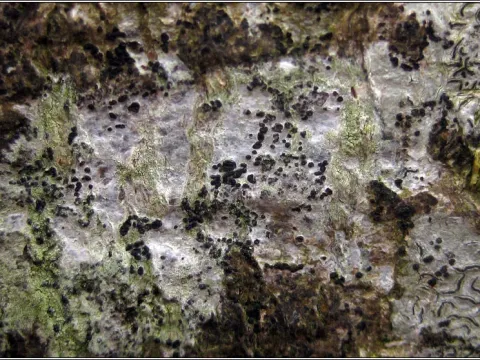
The main sign of ascodichaenosis infection is the appearance of characteristic rough patches on the smooth bark of young branches and trunks. The surface of the affected areas becomes uneven, cracked, and dark, almost black in color.
What the section contains
Ascodichaenosis
In areas where the fungus develops, the bark becomes noticeably thickened and keratinized, which hinders the plant's normal gas exchange. Over time, these patches can merge, forming large necrotic zones covering a significant area of the bark.
Upon close inspection with a magnifying glass, tiny black fruiting bodies of the fungus can be found on the dead areas of the bark. They appear as small bumps or flat apothecia, which are characteristic of this family.
Unlike many other forms of necrosis, the development of ascodichaenosis is quite slow. Infection rarely leads to the immediate death of the tree, but it gradually weakens the overall condition of the plant.
The signs of the disease are especially noticeable during the autumn and winter periods, when the contrast between the healthy smooth bark and the dark patches of the pathogen becomes most prominent.
The causative agent of the disease is a fungus from the Ascodichaenaceae family, the most well-known representative being Ascodichaena rugosa.
This microorganism belongs to a group of saprotrophic or weakly parasitic fungi that specialize in infecting the bark of deciduous tree species.
The biology of the pathogen is closely linked to the life of the host plant, where the fungus is capable of surviving for long periods within the epidermal tissues of the bark.
Fungal spores are spread mainly by air currents and raindrops, landing on undamaged parts of the trunk or on microscopic cracks.
The pathogen's life cycle includes a stage of apothecia formation, which matures on the bark surface and ensures the subsequent infection of new parts of the woody plant.
Conditions with high air humidity favor the development of ascodichaenosis, which is especially relevant for regions with frequent precipitation and fog.
Densely planted trees, where natural crown ventilation is hindered, create an ideal microclimate for the germination of the pathogen's spores.
Weakened trees under stress from unfavorable soil and climatic factors become most vulnerable to the invasion of Ascodichaena rugosa spores.
A temperature range from moderately warm to cool is the most favorable for the active reproduction and spread of the fungus across the bark.
Violation of agrotechnical rules, such as improper pruning or neglect of trunk maintenance, provokes mass development of the disease in park and forest areas.
The main damage caused by ascodichaenosis is the gradual loss of the ornamental value of trees, which is critical for landscape design and urban greening.
The affected bark loses its elasticity and protective functions, which opens the way for the penetration of secondary pests, such as bark beetles or wood rot.
The disease causes premature leaf drop in advanced cases, which negatively affects photosynthetic activity and annual wood growth.
With prolonged exposure to the pathogen, general exhaustion of the tree occurs, reducing its resistance to low winter temperatures and drought.
In forestry, the development of this fungus can lead to a decrease in the quality of timber due to localized cambium damage and subsequent trunk deformation.
The basis of ascodichaenosis prevention is adhering to a tree crown thinning regime to ensure adequate aeration and trunk illumination.
Timely sanitary pruning of affected branches, followed by the incineration of plant residues, significantly reduces the infectious pressure.
- Applying preventive copper-based fungicide treatments in the early spring period.
- Regular fertilization to improve the overall immunity of woody plants.
- Cleaning localized infection sites on trunks followed by disinfection of wounds.
When working in nurseries, it is important to use only healthy planting material that has passed quarantine control before being planted in its permanent location.
Maintaining optimal soil moisture levels and managing soil compaction helps trees successfully resist fungal necrosis infections.