
Ascodichaena
Ascodichaena
The causative agent of the disease is the fungus Ascodichaena rugosa, belonging to the Ascomycota division. It functions primarily as an epiphyte or a weak pathogen inhabiting the bark of living deciduous trees.
What the section contains
Ascodichaena
The fungus colonizes the outer layers of the periderm. While it typically does not invade the deeper wood tissues, its presence significantly alters the appearance and physiological barrier of the tree bark.
Its life cycle involves the formation of black stromatic structures that rupture the bark. These structures facilitate spore dispersal under favorable environmental conditions, ensuring the survival of the fungus.
It is widely distributed across Europe and North America. The fungus is host-specific and has adapted to thrive on the bark surfaces of various tree species throughout the growing season.
Microscopic examination of the fruiting bodies reveals distinct characteristics that distinguish Ascodichaena from other saprophytic or parasitic fungi common on tree surfaces.
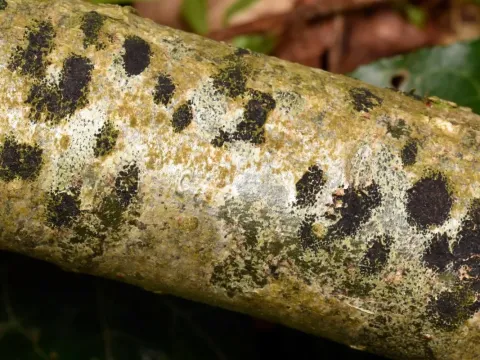
The primary symptom is the emergence of rough, blackish patches or crusts on the otherwise smooth bark of young trees. The affected bark becomes cracked and appears discolored compared to healthy tissue.
Upon closer inspection, small, dot-like black structures become visible. These are the fruiting bodies of the fungus, which protrude through the bark surface as they mature.
In many cases, the patches expand and merge, creating extensive areas of necrotic-like growth. This can make the tree trunk look blackened, as if scorched or heavily diseased.
Unlike some other fungal infections, Ascodichaena does not usually cause deep open sores. However, the textural change is dramatic, often being mistaken for thick lichen growth by non-specialists.
- Dark, crusty patches on tree trunks.
- Small, raised black spots (fruiting bodies).
- Cracking and thickening of the bark.
- Distinctive change in bark color and texture.
High humidity and moderate temperatures are the primary drivers of fungal growth. Ascodichaena rugosa thrives in dense stands where air circulation is poor and bark stays damp for long periods.
Trees under stress, whether from soil compaction, drought, or nutrient deficiency, are more susceptible to colonization. A compromised tree often shows higher levels of fungal growth.
Spore dissemination is primarily driven by wind and rain splashing. Water droplets are essential for moving spores from the fruiting bodies to new, healthy areas of the bark.
The fungus is most active during moist spring and autumn months. During these periods, persistent moisture on the trunk allows the mycelium to penetrate and establish itself on the periderm.
Mechanical damage to the bark, caused by animal activity or human intervention, provides an entry point that significantly increases the speed of colonization.
Direct damage to the vitality of the tree is generally considered minor since the fungus avoids the cambium and inner wood. However, it compromises the protective integrity of the bark.
The aesthetic value of ornamental trees is significantly reduced due to the dark, unsightly crusts. This is a primary concern for municipal forestry and landscaping services.
Chronic infestation can weaken the bark's ability to act as a barrier against secondary pathogens and wood-boring insects, which may pose a more serious threat to the tree.
Large-scale infestation may interfere with gas exchange in the outer tissues of the trunk. While rarely fatal, it reflects a decline in the tree's overall vigor.
In forest ecosystems, the presence of this fungus is often monitored as an indicator of environmental stress in the tree population, prompting closer management of the stand.
Maintaining good silvicultural practices is the best prevention. Thinning tree stands to improve air circulation and sunlight exposure keeps the trunks dry and less hospitable to the fungus.
Mechanical removal of the crusts using soft brushes can be performed on valuable specimen trees. This reduces the spore count and clears the affected surface without harsh chemicals.
Copper-based fungicides can be applied to trunks as a preventative measure during the early spring. Careful application ensures that the fungicide coats the areas where the fungus is likely to colonize.
Promoting tree vigor through appropriate fertilization and adequate watering enables the tree to better withstand fungal pressure and recover its bark health naturally.
Regular monitoring is essential for identifying early signs of the infection. Pruning severely affected branches can prevent the spread of the fungus to the main trunk or neighboring trees.