
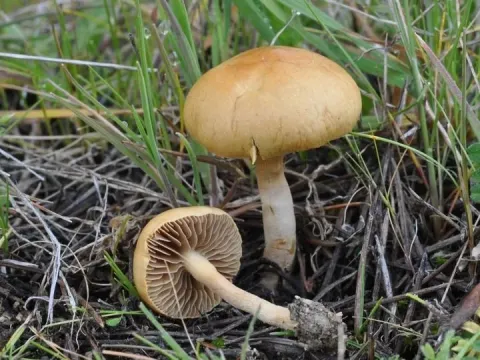
Agrocybe pediades
Agrocybe pediades
Agrocybe pediades is a species of mushroom in the Strophariaceae family. It is a facultative saprotroph that primarily thrives by decomposing organic matter within the soil profile.
What the section contains
Agrocybe pediades
The fungus develops an extensive mycelial network, which acts as the vegetative body of the organism, allowing it to efficiently extract nutrients from decaying plant debris.
Unlike parasitic fungi that target living plant tissues, this species focuses on dead organic material, making it a common sight in areas with accumulated thatch or mulch.
The fruiting bodies of this fungus are typically yellowish to light brown, featuring a convex cap and a solid stem, often accompanied by a partial veil remnant in the form of a ring.
The biological success of this fungus is linked to its ability to survive in various soil types as long as there is an available carbon source provided by decaying organic residues.
The most visible sign of the fungus is the emergence of mushrooms directly from the soil or turf surface, particularly following damp weather or irrigation cycles.
It often manifests as circular or irregular patches where grass growth patterns change, sometimes creating a ring effect known as a fairy ring, where grass color fluctuates.
Affected soil often becomes hydrophobic, meaning it repels water, which is a direct consequence of the mycelium coating soil particles with waxy substances.
The presence of the fungus is frequently accompanied by a distinct, earthy, or mushroom-like odor in the soil, especially after disturbances or rain.
Plants in the vicinity of the mushroom colonies may appear stunted or discolored as the mycelium competes for water and interrupts root zone soil moisture.
Growth is favored by warm temperatures, typically ranging from 18 to 25 degrees Celsius, combined with high moisture levels in the upper soil layers.
Excessive organic debris, such as uncollected grass clippings, straw, or mulch, acts as a primary food source for the mycelial expansion.
Poor soil aeration and compaction lead to water stagnation, which provides the perfect micro-environment for the fungus to establish and spread.
Frequent, shallow irrigation that keeps the surface constantly damp is a primary contributor to the persistence of this mushroom species in a given area.
Neglecting standard turf management practices, such as failing to balance pH levels or lacking regular top-dressing, can allow this saprotroph to gain a foothold.
The primary concern is the disruption of the soil's moisture-holding capacity, which can lead to localized dry spots and stress for the surrounding vegetation.
The fungus can cause significant aesthetic degradation of lawns, golf courses, and landscaped areas due to the sporadic appearance of mushrooms and irregular patches.
By producing hydrophobic compounds, the mycelium can prevent water and essential nutrients from reaching the root zone of the grass, causing yellowing and dieback.
The competition between the mycelium and plant roots for nutrients can weaken the turf, making it more susceptible to other biotic or abiotic stressors.
While not a direct pathogen of living plants, its presence is a strong indicator of an unhealthy soil environment that requires corrective management.
The most effective management approach involves removing accumulated organic matter (thatch) through mechanical dethatching or scarification.
Improving drainage and soil aeration through deep aeration techniques helps to prevent the conditions that encourage the fungal mycelium to thrive.
Transitioning to deep and infrequent irrigation schedules is essential to ensure the surface of the soil dries out, effectively inhibiting mushroom development.
Mechanical removal of fruiting bodies can help prevent the spread of spores, although it does not eliminate the established mycelium under the surface.
- Regular removal of grass clippings;
- Deep irrigation to promote soil drying;
- Soil aeration to improve oxygen circulation;
- Application of nitrogen-based fertilizers to mask symptoms.