
Agrocybe parasitica
Agrocybe parasitica
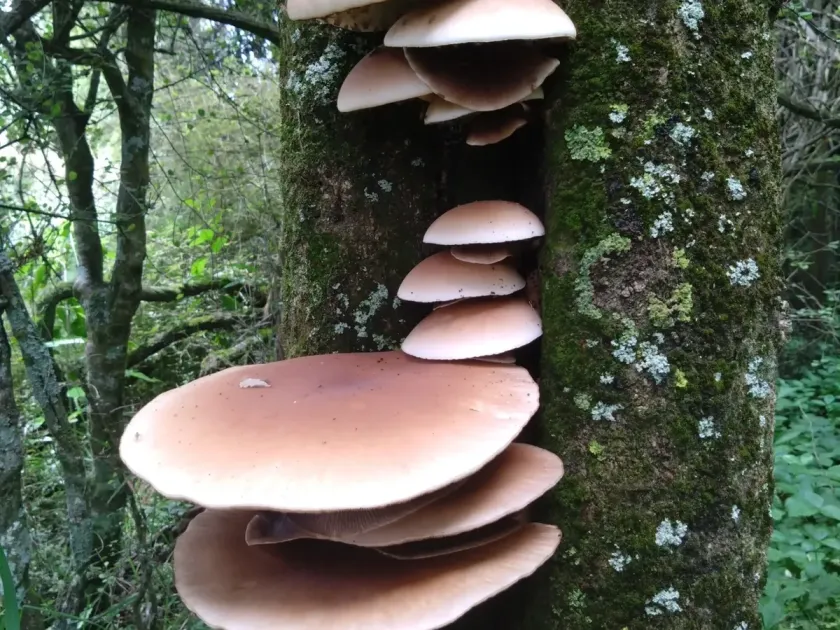
Description
Symptoms
The most visible symptom is the appearance of mushrooms (fruiting bodies) growing directly from the trunk or main branches. They often appear in clusters after periods of rain.
Infected trees may exhibit signs of general decline, such as canopy thinning, yellowing leaves, and reduced annual shoot growth due to impaired nutrient transport.
Bark lesions or cracks often develop at the site of infection. Upon investigation, the wood beneath the bark may appear soft, discolored, or brittle.
The structural integrity of the wood is compromised, making the tree fragile and prone to breaking during severe weather conditions, such as high winds.
- Fruiting bodies on the trunk or bark.
- Premature yellowing and leaf drop.
- Soft and decaying wood tissue under the bark.
- Visible cracks and lesions on the main trunk.
- Dieback of major branches.
Pathogen
Agrocybe parasitica is a wood-decaying fungus belonging to the group of basidiomycetes. It acts as a pathogen capable of attacking both living and weakened tree tissues.
The fungus develops a mycelium network that penetrates deeply into the wood structure, secreting enzymes that decompose cellulose and lignin, the primary components of wood.
The fruiting bodies of the fungus emerge on the bark surface as brown, cap-like structures. These bodies produce millions of microscopic spores that are released into the environment.
This pathogen demonstrates strong survival capabilities, often persisting in decaying organic matter or tree stumps before infecting nearby living host trees.
The fungal infection is primarily opportunistic, taking advantage of physical barriers being broken, which allows the hyphae to reach the inner, nutrient-rich tissues.
Conditions for development
The development of Agrocybe parasitica is largely dependent on the presence of entry points. Wounds from pruning, frost cracks, and sunscald are primary infection sites.
High humidity and mild to warm temperatures provide an optimal environment for spore germination and rapid mycelial spread within the host's vascular system.
Trees suffering from environmental stress, drought, or poor nutritional status are significantly more susceptible to successful colonization by the pathogen.
Poor orchard hygiene, such as leaving pruning debris near healthy trees, facilitates the spread of spores throughout the plantation.
Shaded, poorly ventilated areas where moisture persists on tree surfaces for long periods create a microclimate highly favorable for fungal growth.
Why it matters
The primary damage caused by this fungus is the internal rotting of the wood, which leads to a loss of mechanical stability, creating a severe risk of tree failure.
The disease interferes with the xylem and phloem, preventing the tree from distributing water and photosynthates, which results in a steady decline in yield.
Because the fungus targets the core structure, the damage is often irreversible. Once the heartwood is significantly degraded, the tree cannot be saved.
Infected trees serve as active sources of inoculum, threatening the health of adjacent trees within an orchard or garden ecosystem.
Economic losses are inevitable, as they include the cost of removing hazardous trees, loss of productive canopy, and the risk of infection spreading to high-value crops.
Protection
Preventative measures start with maintaining orchard cleanliness. Promptly remove and destroy any infected wood or stumps to reduce the local spore load.
Use clean, sterilized tools during all pruning operations to prevent cross-contamination between healthy and potentially infected trees.
Proper wound care is essential. Apply professional-grade wound sealants or antiseptic pastes to all large cuts to prevent opportunistic fungi from gaining entry.
Ensure trees remain vigorous through proper irrigation and fertilization, as healthy trees possess better natural defense mechanisms against wood-decaying pathogens.
Regular inspections, especially after pruning or severe storms, are critical for early detection, allowing for the isolation and removal of infected branches before the fungus reaches the main trunk.
Discussion
No discussions yet — be the first.