
Agrocybe firma
Agrocybe firma
Description
Symptoms
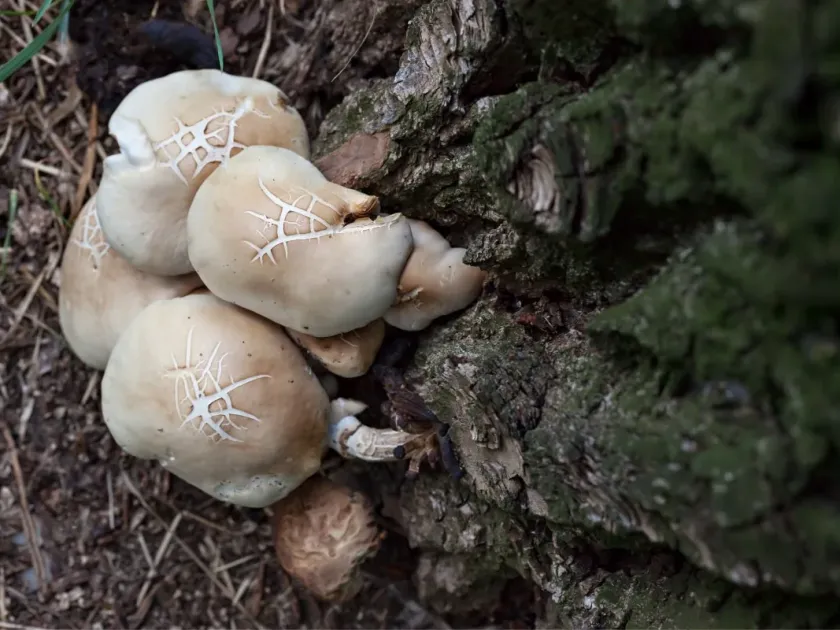
The most visible sign of Agrocybe firma is the emergence of dense, brownish-ochre fruiting bodies on the trunk or branches. These mushrooms usually appear in clustered groups.
The wood tissue affected by the fungus displays significant discoloration, often becoming bleached or pale. In advanced stages, the internal part of the tree becomes soft and pulpy.
Bark in infected areas may develop longitudinal cracks or become brittle. In some cases, the presence of white mycelial mats can be observed beneath the bark or within internal cavities.
Affected trees may show signs of general decline, such as thinning canopy, premature foliage drop, or stunted growth, resulting from the compromised internal vascular system.
The wood emits a distinct, earthy, or musty odor, which is indicative of the fungal decay process actively breaking down the lignocellulosic materials.
Pathogen
Agrocybe firma is a basidiomycetous fungus belonging to the Strophariaceae family. Primarily acting as a saprotroph, it plays a key role in the decomposition of dead wood in forest ecosystems, though it can colonize weakened living trees.
This fungus is recognized as a causative agent of white rot. It secretes specialized enzymes capable of breaking down the complex lignin and cellulose structures within wood, leading to the loss of structural integrity.
The fungus propagates through basidiospores that colonize exposed timber or wounds on trees. Once inside, the mycelium forms a network that progressively consumes the wood substrate.
Biological activity is most prominent in dead wood or trees suffering from severe physiological stress. It serves as a natural recycler of organic matter, yet poses a threat to forest health in disturbed environments.
Understanding the life cycle of Agrocybe firma is essential for foresters, as its presence often signals that an individual tree has already suffered internal damage.
Conditions for development
High humidity and consistent moisture levels are primary drivers for the growth of Agrocybe firma. It thrives in damp environments, particularly after rainy periods in summer and autumn.
Wounds on trees, whether caused by frost, wind breakage, or improper pruning, provide direct entry points for the fungal spores to colonize healthy heartwood or sapwood.
Stressed trees, particularly those experiencing drought or nutritional deficiencies, are more susceptible to infection because their natural defense mechanisms are weakened.
Poor ventilation within dense forest stands or orchards creates a microclimate with stagnant air and high humidity, which favors the germination and spread of fungal spores.
Optimal temperatures for mycelial growth range from 18°C to 25°C, making the growing season a period of high risk for the spread of this wood-rotting pathogen.
Why it matters
The primary harm caused by Agrocybe firma is the reduction of wood strength. This leads to the structural failure of the tree, increasing the risk of windthrow and breakage.
Economic losses in forestry occur due to the reduced timber quality. Once a tree is colonized, the wood is often unsuitable for construction or high-value carpentry purposes.
The fungus disrupts the tree's physiological processes by destroying the conductive tissues, eventually leading to the death of the host plant if the infection is extensive.
In ornamental and urban landscapes, the presence of this fungus renders trees hazardous, requiring their removal to prevent damage to surrounding property or injury to pedestrians.
Furthermore, an infected tree serves as an ongoing reservoir of spores, which can lead to further infections in surrounding healthy vegetation if not properly managed.
Protection
Sanitary management is the most effective control method. This includes the removal and destruction of dead wood and heavily infected trees to reduce the overall spore load in the area.
All pruning cuts and accidental wounds on trees should be immediately treated with appropriate wound sealants or fungicidal pastes to prevent spore colonization.
Promoting overall tree vigor through proper fertilization, irrigation, and soil management helps trees maintain the defenses necessary to repel fungal attacks.
Maintaining adequate spacing between trees ensures good air circulation, which prevents the build-up of moisture on trunks and reduces the risk of fungal infection.
Regular monitoring of forest stands and orchards allows for the early detection of fruiting bodies, enabling the removal of localized infections before they spread to healthy trees.
Discussion
No discussions yet — be the first.