
Barley yellow dwarf
Wheat yellowing
Barley yellow dwarf is a viral disease caused by the Barley yellow dwarf virus (BYDV), which belongs to the Luteoviridae family. It is considered one of the most widespread and economically damaging viral diseases affecting cereals globally.
What the section contains
Barley yellow dwarf
The virus has a wide host range, infecting more than 150 species of monocotyledonous plants, including major crops like barley, wheat, oats, rye, maize, and various wild grasses that serve as primary reservoirs.
The virus is exclusively transmitted by several species of cereal aphids, such as the bird cherry-oat aphid, the grain aphid, and the rose-grain aphid. Aphids acquire the virus by feeding on infected plants and remain infectious for the remainder of their lifespan.
Transmission occurs through a persistent manner, meaning the virus circulates within the aphid's body before being injected into a healthy host. Crucially, the virus is not passed on to the aphid's offspring through eggs.
BYDV does not survive in soil, seeds, or crop debris. It survives the off-season in volunteer cereals, winter-sown crops, and wild perennial grasses, where aphid populations persist and maintain the viral cycle.
Symptoms typically become visible two to three weeks after infection, often appearing in patches across the field where aphid colonization was initially heavy. The severity of symptoms depends on the host plant, variety, and stage of development at infection.
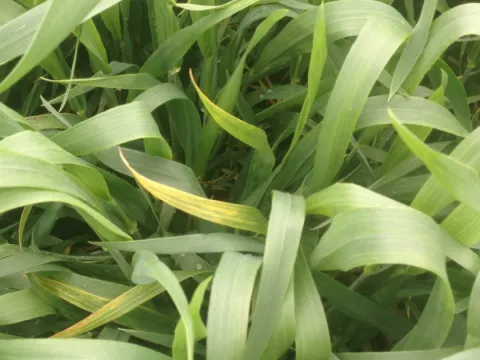
In barley, the most diagnostic symptom is a vivid yellowing of the leaves, starting at the tips and leaf margins. The leaves often become stiff, leathery, and grow in a more upright, rigid manner than healthy foliage.
Oats are particularly sensitive, showing a distinct reddish or orange discoloration, which is a classic field symptom. Wheat plants usually exhibit leaf tip chlorosis and general stunted development rather than vibrant color changes.
Stunting is the hallmark of the disease, caused by the shortening of internodes. This gives plants a compact, dwarfed appearance. Infected plants often show increased tillering, making them look thicker but clearly undersized.
Plants infected at early growth stages show poor root development and may fail to produce heads entirely. If heads are produced, they are often small, sterile, and yield thin, shriveled grain that is economically worthless.
The development of the disease is strictly tied to aphid population dynamics. A warm, extended autumn allows aphids to migrate early and colonize winter cereal seedlings, leading to high infection rates before the onset of winter dormancy.
Favorable conditions for epidemics include dry and warm spring weather, which promotes rapid aphid reproduction and movement. Conversely, extreme weather events can sometimes limit aphid activity and slow down viral spread.
Early planting dates for winter crops increase the risk of infection, as younger, succulent plants are more attractive to migrating aphids. Late planting, conversely, can sometimes bypass the peak migration periods of the vectors.
The "green bridge" is a critical factor for infection. The presence of volunteer cereals and weeds during the interval between harvest and the emergence of new crops provides a necessary habitat for the virus to persist.
Agronomic factors, such as improper fertilization or poor soil conditions, can exacerbate the appearance of symptoms by stressing the plant, which makes it less capable of tolerating the viral presence.
Barley yellow dwarf virus causes significant economic losses, with yield reductions ranging from 10% to 80% depending on the infection timing and viral pressure. Early infection is generally the most detrimental to final crop yield.
The yield loss is primarily driven by a decrease in the number of fertile tillers and a reduction in grain weight. Sterile florets often result in empty or partially filled heads, leading to a substantial drop in harvest volume.
Quality parameters are also negatively affected. Affected grain typically has low bushel weight, poor milling quality, and reduced nutritional value, making it unacceptable for high-end food production standards.
Infected crops exhibit decreased resilience to environmental stressors like drought, cold, or secondary fungal attacks. Their weakened root systems struggle to uptake necessary moisture and nutrients, further stalling growth.
In severe instances, widespread infection can lead to the total failure of a crop, requiring growers to destroy or plow under the affected areas, which leads to massive financial losses and field management difficulties.
The most effective management strategy is controlling the aphid vectors. Applying systemic insecticides early in the season can significantly reduce the establishment of the virus by killing the aphids before they spread the infection.
Strategic planting is essential: adjusting planting dates to avoid the peak flight periods of aphids is a highly effective, low-cost preventive measure. Additionally, maintaining clean fields is crucial for overall crop health.
Controlling the green bridge is a vital agronomic practice. Eliminating volunteer cereals and weeds immediately after harvest deprives the aphid vectors of their breeding sites and breaks the chain of viral transmission.
Utilizing resistant or tolerant cereal varieties is the most sustainable approach to managing the disease. Breeding programs continue to develop lines that show improved resistance to BYDV infection.
Farmers should implement a monitoring program using yellow sticky traps or visual scouting for aphids. Data from these traps allow for informed decisions on whether an insecticide application is necessary, preventing unnecessary chemical use.