
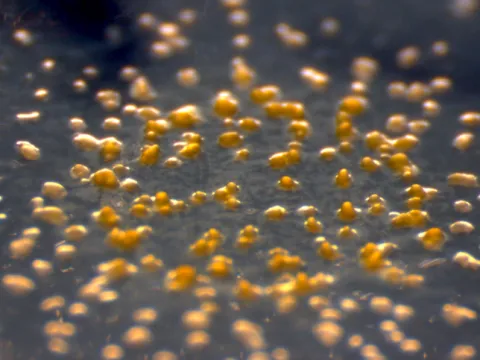
Myxobacteriosis
Myxococcaceae
The disease is caused by soil-dwelling bacteria belonging to the Myxococcaceae family, known for their unique complex life cycles.
What the section contains
Myxobacteriosis
These organisms exhibit social behavior, moving as a colony using a gliding mechanism, which allows them to explore the soil environment efficiently.
During unfavorable conditions, they produce fruiting bodies containing spores that are highly resistant to dehydration and temperature changes.
While often functioning as beneficial decomposers, under specific conditions of high humidity, they can transition into opportunistic plant pathogens.
Their ability to secrete extracellular enzymes allows them to break down plant cell wall polymers, facilitating tissue colonization.
Initial symptoms are primarily observed on the root system or the base of the stem, presenting as tissue softening and water-soaked lesions.
As the infection progresses, the affected tissues darken and lose their structural integrity, often appearing mushy or slimy.
Plants display visible signs of distress, including stunted development, leaf chlorosis, and rapid wilting during peak sunlight hours.
Microscopic examination of the affected surface may reveal the presence of bacteria-filled biofilms or primitive fruiting bodies.
Unlike many other bacterial rots, the characteristic pungent odor of decaying proteins is often absent in the early stages of this disease.
The primary driver for the development of myxobacteriosis is excessive soil moisture, which limits oxygen availability for the plant roots.
Optimal growth and activity for these bacteria occur within a temperature range of 20 to 30 degrees Celsius, which is common during spring.
Poorly drained fields, especially those with heavy clay textures, create the perfect anaerobic environment for these microbes to thrive.
An abundance of uncomposed organic material in the rhizosphere provides a significant carbon source, fueling the multiplication of the bacteria.
Host plant stress, caused by nutritional imbalances or mechanical injury to roots, makes the plant significantly more susceptible to colonization.
The primary impact of the disease is the systematic destruction of the root system, which severely hinders nutrient and water uptake.
Field-wide infections can lead to significant seedling mortality, causing poor crop establishment and reduced final yield densities.
Plants that survive the initial infection exhibit chronic weakness, poor vigor, and increased susceptibility to secondary environmental stressors.
The long-term persistence of the pathogen in the soil represents a major challenge for agricultural productivity in infested regions.
Management of the disease requires intensive intervention, as the pathogen can remain dormant in the soil for extended periods of time.
Improving soil drainage and physical structure is the most effective preventative measure to disrupt the pathogen's development cycle.
Implementing rigorous crop rotation strategies prevents the buildup of concentrated microbial populations within the rhizosphere.
Maintaining optimal soil pH and nutrient levels strengthens the host's natural defenses, reducing the severity of potential attacks.
Sanitation practices, including the removal of crop residues, help to minimize the availability of nutrients that support the bacteria.
- Application of bio-fungicides containing beneficial bacteria.
- Use of high-quality, treated certified seed for planting.
- Regular soil testing to optimize fertilizer application rates.