
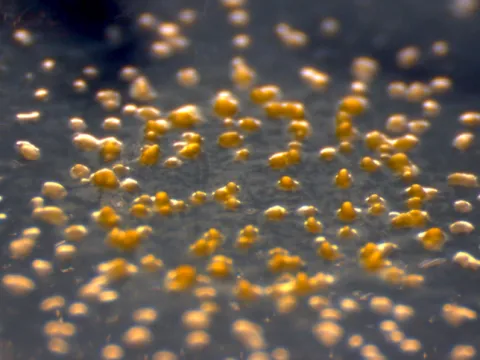
Myxococcus
Myxococcus
Myxococcus species are specialized soil-dwelling bacteria belonging to the group of myxobacteria. They are known for their complex life cycles and the ability to aggregate into fruiting bodies when nutrients are scarce.
What the section contains
Myxococcus
These organisms are unique predators that hunt other bacteria in the soil. They secrete a wide range of enzymes to break down the cell walls of their prey, effectively recycling organic material within the soil ecosystem.
Although they are not traditional plant pathogens, their predatory behavior in the rhizosphere can negatively affect the beneficial microbial community that supports root health.
They are Gram-negative, rod-shaped bacteria that move via gliding, which allows them to migrate efficiently across moist soil surfaces in search of food sources.
The ecological role of Myxococcus is significant in soil nutrient cycling, but in high densities, they can disrupt the symbiotic relationships between plant roots and beneficial microorganisms.
High soil moisture levels are a primary driver for the expansion of Myxococcus populations, as they rely on a thin layer of water to glide and navigate the soil environment.
Optimal temperatures for their growth typically range between 20°C and 30°C. In these conditions, their metabolic activity reaches a peak, accelerating their hunting and reproductive cycles.
The abundance of raw organic matter, such as un-decomposed plant debris, acts as a catalyst for their growth, providing necessary energy for the microbial communities they feed upon.
Soil aeration plays a dual role: while they are aerobic, excessive surface moisture or compaction can lead to stagnant zones where their population density can surge rapidly.
Disturbed soil environments with a lack of biodiversity are often more prone to spikes in myxobacterial activity, as they face less competition from other soil inhabitants.
The primary concern regarding Myxococcus in agriculture is their interference with the plant-growth-promoting rhizobacteria (PGPR) that are essential for nutrient uptake.
By consuming beneficial microbes, these bacteria can reduce the plant's access to vital minerals like nitrogen and phosphorus, leading to stunted growth and reduced vigor.
The enzymatic secretions used by Myxococcus to hunt can occasionally cause minor abrasions or damage to fine root hairs, potentially facilitating secondary infections by other pathogens.
Plants affected by a significantly altered rhizospheric environment often show symptoms of nutrient deficiency and lower stress tolerance to environmental conditions.
Overall, a high concentration of predatory myxobacteria can lead to a decline in crop yields due to the compromised health of the soil-root interface.
Crop rotation is an essential practice to limit the accumulation of specific soil conditions that favor Myxococcus colonization, breaking the cycle of their food supply.
Proper soil management, including deep tillage and ensuring the efficient decomposition of crop residues, helps prevent the build-up of excess organic matter on the soil surface.
The application of biological inoculants containing beneficial microbial consortia can help restore the natural balance and suppress the populations of predatory myxobacteria.
Monitoring and managing soil pH levels can create an unfavorable environment for Myxococcus, as they are sensitive to drastic changes in soil acidity or alkalinity.
Strengthening plant health through balanced fertilization and proper irrigation management minimizes the impact of rhizospheric competition, ensuring robust crop development.