
Myxococcus xanthus
Myxococcus xanthus
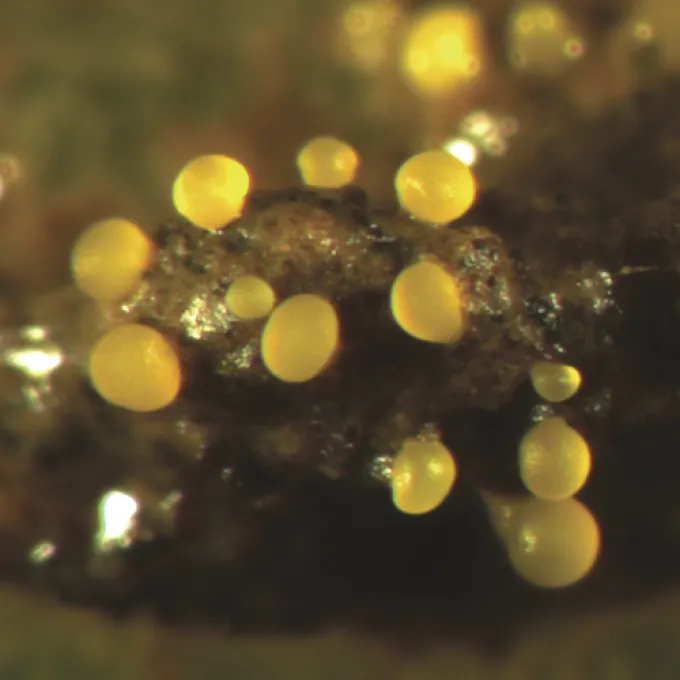
Description
Pathogen
Myxococcus xanthus is not a plant disease or a phytopathogen. It is a well-studied gram-negative bacterium commonly found in soil, known for its predatory nature and complex social behavior.
The organism survives by hunting other bacteria, utilizing a range of extracellular enzymes to break down prey cells. This predatory activity is essential for its survival in nutrient-poor conditions.
Unlike pathogenic bacteria, Myxococcus xanthus does not parasitize crops or cause necrotic tissue damage. It lives primarily in the top layer of soil or the rhizosphere.
The bacterium is famous among microbiologists for its ability to form multicellular fruiting bodies when nutrients become scarce, facilitating survival through spore formation.
In an agricultural context, it acts as a scavenger of other microorganisms, essentially serving as a component of the soil's natural microbial regulation system.
Conditions for development
The growth and predatory activity of Myxococcus xanthus are highly dependent on moisture levels in the soil, as they require a thin water film to facilitate gliding motility.
An optimal temperature range for this bacterium is between 25 and 30 degrees Celsius, which is typical for soil surface temperatures during the growing season.
The availability of prey, such as other bacteria and fungi, is a critical factor for its colonization and reproduction in the rhizospheric zone of plants.
Neutral pH levels in the soil environment support the robust metabolic processes required for the formation of its characteristic fruiting bodies.
During periods of environmental stress or starvation, the bacteria aggregate to form spores, which remain dormant until conditions improve for vegetative growth.
Why it matters
There is no evidence that Myxococcus xanthus causes harm to agricultural crops. It lacks the mechanisms required to infect plants or damage plant tissues.
Instead of posing a risk, it contributes to soil health by recycling nutrients from lysed bacteria back into the soil microbial loop.
Studies have suggested that Myxococcus xanthus and related species may even assist in suppressing other harmful microorganisms in the rhizosphere.
Crop loss, chlorosis, or necrotic symptoms observed in fields are always caused by other factors, not by the presence of this beneficial soil bacterium.
Farmers and agronomists do not need to manage or control Myxococcus xanthus, as it is a natural part of a healthy, biodiverse soil environment.
Protection
No control measures are needed for Myxococcus xanthus. Attempting to eliminate it from the soil would be counterproductive to general soil health.
Promoting a balanced soil environment through organic fertilization and reduced tillage supports the survival of beneficial bacteria like this one.
Indiscriminate use of broad-spectrum pesticides can disrupt the natural predator-prey balance, potentially harming beneficial microbial populations.
Integrated pest management strategies should emphasize the conservation of natural microbial communities that provide ecosystem services.
Ultimately, Myxococcus xanthus serves as an indicator of a diverse and biologically active soil, which is an objective of sustainable agriculture.
Discussion
No discussions yet — be the first.