
Entomoplasmatosis
Entomoplasmatales
The causative agents of entomoplasmatosis are specialized microorganisms belonging to the order Entomoplasmatales. These are Gram-negative bacteria lacking a rigid cell wall, making them highly susceptible to osmotic pressure changes in their environment.
What the section contains
Entomoplasmatosis
These pathogens maintain a close biological relationship with insect vectors, which act as both primary hosts and vehicles for their transmission. Unlike typical bacteria, entomoplasmas have a reduced genome, adapted specifically for a parasitic lifestyle within plant and insect cells.
They are classified as Mollicutes. In plant pathology, they are often categorized within the group of mycoplasma-like organisms (MLOs) that cause systemic infections by colonizing the plant's vascular system, specifically the phloem.
Transmission occurs exclusively through the feeding activity of insect vectors, primarily leafhoppers, which acquire the pathogen from infected plants. Without a vector, the spread of entomoplasmatosis in agricultural ecosystems is virtually impossible.
The incubation period within the insect vector is significant, requiring a specific amount of time before the insect becomes capable of transmitting the pathogen to healthy plant tissues.
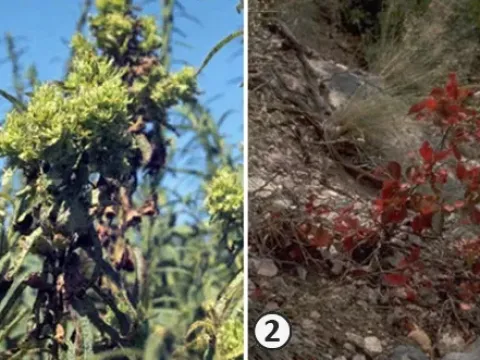
External symptoms of the disease include severe plant stunting, chlorosis of leaves, and yellowing along the veins or leaf margins. A characteristic sign is the reduction in leaf size, which often gives plants a bushy or rosetted appearance.
Common symptoms include the deformation of plant organs. Flowering is often disrupted, where petals may turn green, transforming into leaf-like structures, while reproductive organs may fail to develop properly or fall off prematurely.
Root system degradation is a frequent consequence of entomoplasma infection, characterized by a decrease in lateral root growth. This weakens the plant, making it significantly more susceptible to abiotic stressors like drought.
In cereal crops, symptoms often manifest as reddening or leaf discoloration due to the disruption of carbohydrate transport through the phloem. These signs can be mistaken for nutrient deficiencies, complicating field diagnosis.
The systemic nature of the infection means the pathogen colonizes the entire vascular network, preventing the plant from producing any viable fruit or yield by the later stages of the disease.
The development of the disease is directly linked to the population dynamics of insect vectors. Outbreaks are most frequent in years with warm, prolonged springs that facilitate the early migration of vectors from overwintering sites to crop fields.
The presence of weeds around field margins is a critical factor, as these serve as reservoirs for the pathogen, allowing it to survive throughout the growing season of the primary crops.
Temperature plays a decisive role in the replication rate of the pathogen inside the insect. Optimal temperatures between 20–28 degrees Celsius significantly shorten the incubation period and increase the transmission efficiency.
High planting density combined with excessive nitrogen fertilization creates a microclimate conducive to leafhopper breeding, which inevitably leads to the rapid expansion of entomoplasmatosis foci in agricultural fields.
Drought conditions can also increase insect activity, intensifying the contact rate between vectors and crop plants, thereby raising the risk of widespread infection.
Entomoplasmatosis causes severe losses in agricultural productivity by triggering a systemic metabolic collapse. The blockage of assimilate transport makes it impossible for plants to develop healthy fruits, seeds, or root crops.
Damage manifests as a critical decline in product quality. Infected plants lose their marketability, and key indicators such as sugar content or dry matter percentage drop to negligible levels.
Early-stage infection of young plants is particularly dangerous, often leading to total crop failure before the flowering phase. This necessitates costly reseeding and results in significant gaps within the fields.
Economic damage stems from direct yield losses and the high cost of monitoring pest populations and applying broad-spectrum insecticides throughout the entire growing season.
Plants weakened by entomoplasmas become highly vulnerable to secondary fungal and bacterial infections, which finalize the destruction of any remaining potential yield from the already stressed crop.
The primary control strategy involves comprehensive management of insect vector populations. Timely application of systemic insecticides during early growth stages is essential to mitigate the spread of the pathogen.
Preventive measures include the strict removal of weeds from around field borders and adjacent areas. Clearing these ecological reservoirs is vital for breaking the transmission cycle of the pathogen.
Utilizing high-quality, pathogen-free seeds and seedlings, along with rigorous adherence to phytosanitary regulations, helps prevent the introduction of entomoplasmas into healthy areas of the farm.
Implementing crop rotation cycles that include non-host species for specific leafhopper vectors helps lower the overall infectious pressure on the soil and surrounding environment.
Breeding and introducing resistant cultivars capable of limiting pathogen replication within their tissues remains the most promising and environmentally sustainable method for managing entomoplasmatosis in modern agriculture.