
Entomoplasmosis
Entomoplasma
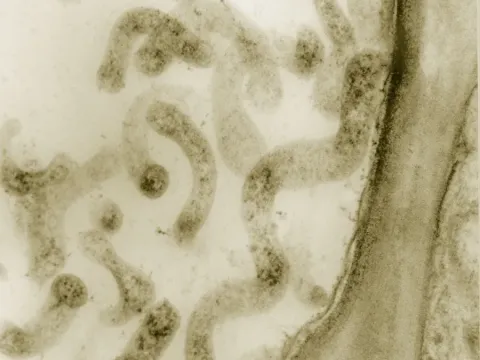
Entomoplasmosis is caused by phytoplasmas, which are specialized prokaryotic organisms lacking a cell wall. They are classified within the class Mollicutes and inhabit the plant phloem vessels.
What the section contains
Entomoplasmosis
The transmission of these pathogens is primarily mediated by sap-sucking insects, such as leafhoppers, planthoppers, and psyllids. The phytoplasma survives and multiplies within the insect vector.
Infection is established when an infected insect feeds on a healthy plant, injecting the pathogen into the phloem tissue. From there, the phytoplasmas migrate systematically throughout the entire plant.
Phytoplasmas are notoriously difficult to culture in laboratory conditions due to their complex nutritional requirements. Detection typically relies on advanced molecular techniques like PCR or loop-mediated isothermal amplification.
The absence of a cell wall makes these pathogens susceptible to certain antibiotics in vitro, although effective field-scale chemical control via chemotherapy is generally not feasible for agricultural crops.
A classic symptom is yellowing or reddening of leaves, often starting at the margins. This chlorosis is frequently accompanied by a reduction in leaf size and premature senescence.
The formation of witches' brooms, characterized by excessive lateral branching and shortened internodes, is a common indicator. This leads to a stunted and bushy appearance of the host plant.
Floral malformations, such as phyllody, where flower parts are transformed into leaf-like structures, occur frequently. These plants become sterile and fail to produce viable seeds or fruit.
Root systems exhibit symptoms such as reduced growth, thinning of fine roots, and decay. This impairment leads to decreased nutrient and water uptake, further weakening the plant.
In many cases, the disease mimics nutrient deficiencies or viral infections. Because of this, visual diagnosis must be confirmed through laboratory testing to ensure appropriate management actions.
Entomoplasmosis causes significant economic losses in various crops, including vegetables, fruits, and ornamentals. Once a plant is infected, it remains a permanent source of inoculum.
Yield reduction is both quantitative and qualitative. Fruits from infected plants are often small, misshapen, tasteless, or completely absent due to flower sterilization.
The disease poses a severe threat to plant nurseries, where entire batches may need to be destroyed to prevent the spread of the pathogen to larger plantation areas.
Infected crops are highly vulnerable to environmental stress and secondary pathogen attacks. The systemic nature of the infection makes recovery impossible for the affected plant.
The persistent cycle between weed reservoirs and insect vectors ensures that the pathogen remains present in the environment, necessitating continuous management and surveillance efforts.
The most effective strategy is the use of healthy, certified, and disease-free planting material. Establishing clean propagation standards is critical for managing this disease.
Managing insect vector populations is vital for containment. The application of systemic insecticides at key times can significantly lower the transmission rate during peak insect migration.
Early detection and immediate rogueing (removal) of symptomatic plants are mandatory to reduce the inoculum pressure within a field or greenhouse.
Cultural practices, such as weed control, are essential, as many common weeds serve as symptomless reservoirs for phytoplasmas. Maintaining a clean field environment reduces vector attraction.
Integrated Pest Management (IPM) programs should emphasize the use of resistant varieties, biological control of vectors, and regular monitoring to detect and eliminate emerging infection centers early.