
Enterobacteriosis
Enterobacterales
Description
Symptoms
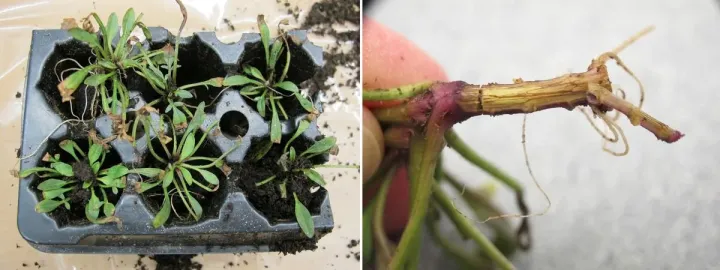
The primary symptom of enterobacteriosis is the development of soft bacterial rot. Infected tissues lose turgor, become soft and translucent, and often emit a strong, foul odor due to secondary fermentation.
When stems are affected, they darken and liquefy from the inside out, often causing the plant to collapse. In high humidity, a bacterial ooze or slime may appear on the surface of the infected plant parts.
In root crops and tubers, the disease manifests as deep, rotting lesions that can quickly consume the entire organ, leaving a hollowed-out or completely decayed structure.
Systemic infections often result in wilting, starting from the lower leaves and progressing upwards. Leaf yellowing and necrosis are common as the vascular system becomes blocked by bacterial colonies and debris.
Early-stage infections may be difficult to detect, manifesting only as stunted growth or reduced vitality, making early field scouting essential for effective disease management.
Pathogen
Enterobacteriosis is caused by bacteria belonging to the order Enterobacterales, including major genera such as Pectobacterium, Dickeya, Erwinia, and Enterobacter. These are Gram-negative, facultative anaerobic bacteria known for their intense enzymatic activity.
These pathogens produce potent pectinolytic enzymes that break down the middle lamellae of plant cell walls. This enzymatic action destroys cellular integrity, turning plant tissues into a watery, mushy mass.
Bacteria of this order are ubiquitous in soil and plant debris. They survive well in the rhizosphere, waiting for favorable conditions to infect the host plant tissue.
Entry into the plant usually occurs through natural openings like stomata and lenticels, or via mechanical wounds caused by agricultural equipment, weather conditions, or insect pests.
These bacteria have evolved sophisticated mechanisms to suppress plant immune responses, allowing them to rapidly colonize both parenchyma and vascular tissues, leading to rapid systemic infection.
Conditions for development
High humidity and waterlogged soil are the most critical factors favoring the development and spread of enterobacteriosis. Moisture is necessary for the bacteria to move and colonize new healthy tissues.
The optimal temperature range for the proliferation of these bacteria is typically between +20°C and +30°C. These warm, humid conditions significantly accelerate the bacterial life cycle.
Poor agricultural practices, such as excessive nitrogen fertilization, high plant density, and lack of adequate greenhouse ventilation, create a microclimate highly conducive to rapid disease outbreaks.
Insect pests that cause plant wounds act as vectors and entry points for the bacteria. Furthermore, lack of proper hygiene in storage facilities allows the disease to spread rapidly between healthy and infected produce.
A history of poor crop rotation leads to a high inoculum load in the soil, which significantly increases the risk of early-season infection for susceptible crops.
Why it matters
Enterobacteriosis poses a severe threat to global agriculture, affecting a vast range of crops including potatoes, tomatoes, peppers, and various ornamental plants.
The disease can cause total loss of marketable yield. Even a small number of infected fruits can cause an entire batch to rot during storage or transit due to contact infection.
In the field, severe outbreaks can lead to significant crop stand loss, necessitating replanting and causing substantial financial losses for producers due to wasted resources and labor.
Post-harvest losses are particularly high, with enterobacteriosis being a leading cause of decay in vegetable warehouses. This results in significant economic impact and supply chain disruption.
Latent infections in planting material (e.g., potato seed tubers) are particularly dangerous, as they act as a hidden source of inoculum that can initiate disease spread in new areas.
Protection
Implementing a strict crop rotation schedule is the first line of defense. Avoiding susceptible hosts in the same field for at least 3–4 years helps reduce the soil-borne inoculum level.
Using certified, disease-free seed and planting material is crucial. Treating seeds and tubers with appropriate disinfectants or biological protectants can effectively reduce the initial infection pressure.
Regular field monitoring for pests and diseases helps minimize tissue damage. Clearing weeds and removing diseased plant debris immediately after harvest reduces the overwintering capacity of the bacteria.
During the growing season, farmers should manage irrigation carefully to avoid waterlogging and ensure good airflow in greenhouses. Copper-based sprays or bio-fungicides can help suppress the spread of primary lesions.
Finally, maintaining hygienic storage conditions, including thorough cleaning, effective ventilation, and rapid drying of harvested produce, is vital to prevent post-harvest rot.
Discussion
No discussions yet — be the first.