
Entomoplasmatosis
Entomoplasmataceae
Entomoplasmatosis is a plant disease caused by microorganisms belonging to the Entomoplasmataceae family within the class Mollicutes. These pathogens lack a cell wall, which makes them highly flexible and specialized for life inside the host's phloem tissue.
What the section contains
Entomoplasmatosis
Unlike standard bacteria, these mollicutes reside within the sieve tubes of the plant, significantly interfering with the plant's ability to transport carbohydrates and vital nutrients.
The transmission of this disease is primarily mediated by sap-sucking insects, such as leafhoppers and planthoppers, which act as vectors. The pathogen colonizes the insect's salivary glands.
Once an insect feeds on an infected plant, it carries the mollicutes for the rest of its life, effectively acting as a mobile reservoir that spreads the pathogen across the crop field.
Taxonomically, these organisms are unique because they can infect both invertebrates and plants, posing a significant challenge for plant pathologists and diagnostic laboratories.
The first clinical signs of Entomoplasmatosis involve visible stunted growth and a general lack of vigor in the affected plants compared to healthy specimens.
Leaf chlorosis or yellowing is a hallmark symptom, typically appearing along the veins or at the margins. The leaves may eventually become brittle and curl inward.
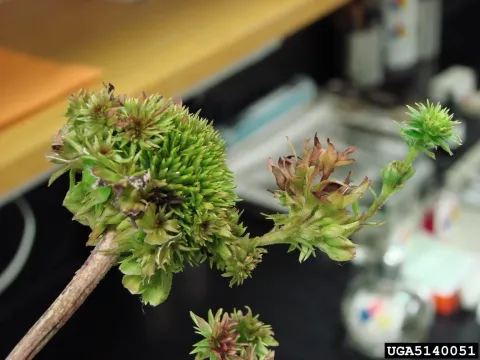
A classic symptom is the proliferation of thin, weak, and abnormally branched shoots, a condition often referred to as 'witches' brooms,' which disrupts the plant's natural shape.
The reproductive development is severely hampered, leading to flower sterility, greening of petals (virescence), or the complete absence of fruit set.
Below the surface, the root system often shows signs of decay, which further inhibits the plant's ability to absorb water and nutrients, leading to progressive wilting.
The development and spread of the disease are highly dependent on the population dynamics of the insect vectors, which flourish in warm and dry weather conditions.
Mild winters facilitate the survival of both the pathogens in perennial weeds and the insect vectors, ensuring a high initial infection pressure in the following spring.
Active plant growth stages, characterized by high sap flow, provide the most favorable environment for insects to feed and transmit the mollicutes into the host's system.
Poor field management, including excessive weed growth and lack of sanitation, creates microclimates that are ideal for the breeding and development of vector insects.
High nitrogen fertilization can inadvertently encourage lush, succulent foliage, making the plant more attractive to sap-sucking insects and increasing the likelihood of infestation.
The economic impact of Entomoplasmatosis is substantial, as it leads to total or near-total yield loss in affected crops, rendering the harvest commercially unviable.
In addition to yield quantity, the quality of the produce is severely compromised, with fruits often appearing misshapen, small, or lacking desirable flavor profiles.
Perennial crops are at the highest risk, as the infection can persist within the vascular system for years, eventually requiring the complete removal of orchards or vineyards.
The cost of implementing integrated pest management and constant monitoring adds a heavy financial burden to the agricultural production process.
Loss of genetic material and the inability to use propagation materials from infected fields can cause long-term disruptions in breeding and seed production programs.
The primary control strategy involves rigorous pest management, specifically targeting the vector populations using timely and appropriate insecticide applications.
Maintaining strict field sanitation is essential; this includes the removal of weeds and alternative host plants that can harbor the disease throughout the off-season.
Utilization of certified, disease-free planting material is the most effective preventative measure to ensure that new plantations start without the pathogen.
- Implementing sticky traps for monitoring vector population density.
- Rogueing and destroying symptomatic plants to eliminate the inoculum source.
- Establishing spatial barriers to limit the movement of insect vectors.
Developing resistant cultivars through plant breeding remains the ultimate goal for sustainable long-term management of Entomoplasmatosis in commercial agriculture.