
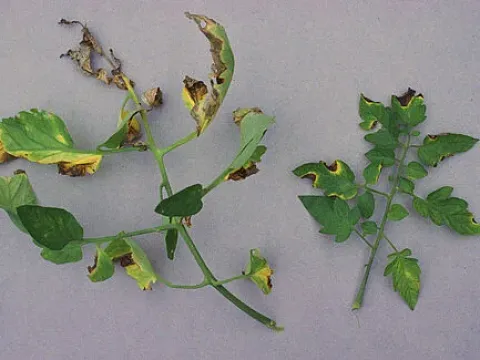
Clavibacter disease
Clavibacter
The disease is caused by bacteria of the genus Clavibacter, most notably Clavibacter michiganensis, which is a significant threat to various agricultural crops.
What the section contains
Clavibacter disease
These are gram-positive, rod-shaped bacteria that colonize the vascular system, specifically the xylem, of host plants.
As systemic pathogens, they produce extracellular polysaccharides and enzymes that cause the degradation of vessel walls and obstruction of water flow.
The bacteria can persist in crop residues, soil, and contaminated seeds for extended periods, making them resilient in diverse environments.
Transmission occurs through contaminated irrigation water, human activities, tools used during cultivation, and contact between plants.
Typical symptoms begin with wilting of the lower leaves, which is often observed only during the heat of the day with recovery at night.
As the infection progresses, leaf margins may show chlorosis followed by necrosis, giving a scorched appearance while veins remain green.
Inside the stem, the vascular tissue displays characteristic discoloration, turning tan, brown, or reddish-brown as the infection spreads.
Fruit symptoms, specifically in tomatoes, include the appearance of small, white-haloed spots that eventually become dark, sunken lesions.
Stunting of the entire plant is commonly observed, and in severe cases, the plant may collapse completely due to vascular failure.
Optimal development of Clavibacter species typically occurs at temperatures ranging between 24°C and 28°C.
High humidity and moisture are crucial factors for the movement and multiplication of the bacteria within the vascular tissues.
Poor ventilation in greenhouse environments leads to stagnant, humid conditions that accelerate the rapid spread of the pathogen.
Wounds created during pruning, harvesting, or by insect vectors provide direct entry points for the bacteria into the plant's vascular system.
Cultivation practices that result in excessive soil moisture or poor drainage contribute significantly to the severity of the outbreak.
Clavibacter is a highly destructive pathogen that can lead to complete yield loss in sensitive crops like tomatoes, potatoes, and peppers.
The systemic nature of the infection means that once the plant is colonized, it cannot be cured, necessitating the removal of the entire plant.
Contamination of the seed stock allows for the long-distance dissemination of the disease to previously unaffected areas.
The pathogen severely restricts agricultural productivity by limiting the choice of crops that can be grown in infested soil for many years.
Economic impact is amplified by the increased costs associated with stringent sanitation protocols and the loss of export market viability.
Integrated pest management remains the most effective strategy, starting with the use of certified pathogen-free seeds and seedlings.
Rigorous sanitation measures, including the disinfection of tools, pots, and greenhouse structures, are essential to prevent cross-contamination.
Implementing a crop rotation cycle, avoiding susceptible hosts for several years, helps reduce the population of bacteria in the soil.
Immediate roguing and destruction of infected plants are vital to slow down the spread of the pathogen within the crop canopy.
- Use of disease-resistant cultivars.
- Control of insect vectors.
- Seed treatment with appropriate disinfectants.