
Clover phyllody
Clover phyllody
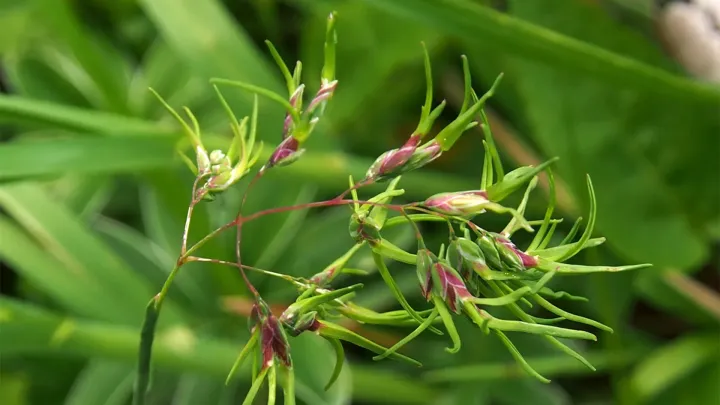
Description
Symptoms
The hallmark symptom is phyllody, the transformation of floral parts into leaf-like structures, resulting in deformed and greenish flower heads.
Excessive proliferation of stipules and other vegetative organs is commonly observed, often giving the plant a bushy or "witches' broom" appearance.
Flower heads are frequently reduced and fail to produce viable seeds, causing the affected parts of the plant to become completely sterile.
Leaves on infected plants may exhibit chlorosis, appearing pale green or yellowish along the margins, indicating disrupted photosynthetic processes.
Affected plants often display stunted growth, appearing significantly smaller and weaker compared to healthy counterparts in the same field.
Pathogen
The causative agent of clover phyllody is a specific phytoplasma (Candidatus Phytoplasma trifolii), belonging to the aster yellows phytoplasma group.
Phytoplasmas are microscopic prokaryotic organisms lacking a cell wall, inhabiting the sieve tubes of the host plant's phloem.
These pathogens cannot be cultured on artificial media, which poses significant challenges for laboratory diagnostics and detailed scientific study.
Inside the plant, the pathogen spreads systemically throughout the vascular system, leading to impaired nutrient transport and disruption of normal tissue development.
Transmission in the field occurs exclusively through insect vectors, primarily leafhoppers, which acquire the pathogen while feeding on infected sap.
Conditions for development
The incidence of the disease is directly correlated with the population density of insect vectors, particularly leafhoppers, which are active during warmer seasons.
Dry and warm weather conditions favor the rapid reproduction and migration of these vectors, facilitating the wide distribution of the phytoplasma.
Numerous weed species serve as natural reservoirs for the pathogen, allowing the phytoplasma to persist in the environment year-round.
The movement of infected insects from uncultivated field margins or nearby wild meadows represents a constant threat for initial infection.
Monoculture practices and the lack of crop rotation contribute to the long-term establishment and intensification of the disease within the area.
Why it matters
Clover phyllody causes severe economic losses in seed production due to the complete sterility of infected plants, preventing any seed yield.
For forage production, the disease significantly reduces total biomass yield and nutritional value, impairing the overall health of the clover stand.
Increased mortality of infected plants during winter leads to thinning of the stand, reducing the productive longevity of the clover crop.
The widespread presence of the disease can render certain fields unsuitable for clover cultivation without rigorous integrated pest management.
Reduced quality of livestock feed is an additional concern, affecting the productivity of animal husbandry operations utilizing infected forage.
Protection
Primary control relies on managing the insect vector population through the timely application of systemic insecticides during peak activity periods.
Effective weed management on field edges and internal boundaries is critical, as these areas act as main inoculum sources for the phytoplasma.
Utilizing high-quality, disease-free seed and maintaining spatial isolation between different clover plantings helps minimize the spread of the pathogen.
Adopting sound crop rotation practices and adjusting planting schedules can help avoid the periods of highest vector abundance.
- Routine field scouting for leafhopper populations.
- Mowing of roadsides and adjacent non-crop areas.
- Selection of resistant or tolerant clover varieties.
Discussion
No discussions yet — be the first.