
Clover rhizobia
Rhizobium trifolii
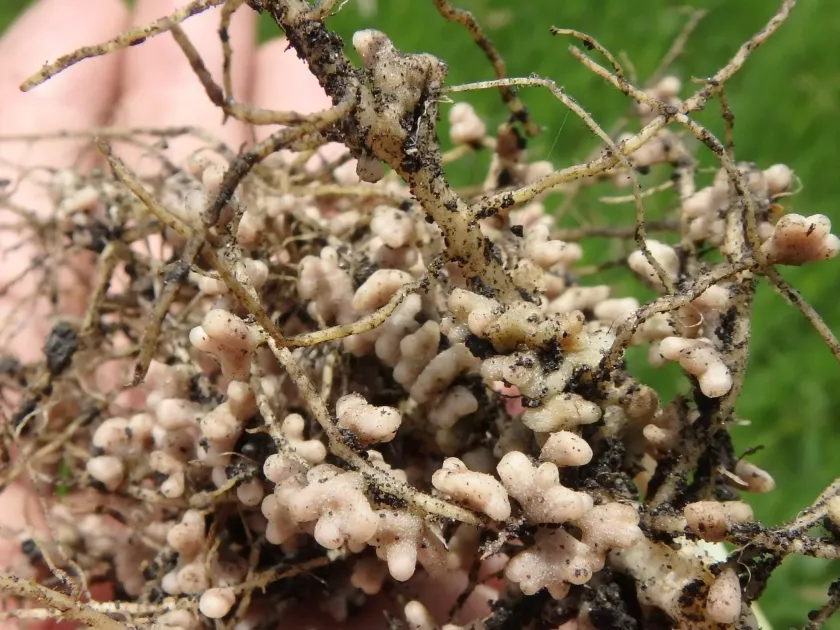
Description
Symptoms
The primary indicator of Rhizobium trifolii activity is the presence of nodules on the clover root system. A healthy, active nodule typically appears pink or red when sliced open, signifying the presence of the protein leghemoglobin.
Leghemoglobin functions as an oxygen regulator within the nodule, protecting the nitrogenase enzyme from inactivation by oxygen. This pigment serves as a visual diagnostic tool for farmers to confirm effective nitrogen fixation.
Clover plants colonized by effective rhizobia typically exhibit a deep green foliage color and vigorous growth. These plants show superior resilience against environmental stresses compared to those without active nodulation.
Conversely, ineffective or absent symbiosis is characterized by chlorosis (yellowing), stunted growth, and lower biomass production. If nodules are absent, pale, or watery, it indicates that the symbiotic process is failing to support the plant's nutritional needs.
- Presence of healthy, pink-colored root nodules.
- Deep green, lush canopy growth.
- High biomass production and rapid regrowth after harvesting.
- Well-developed root system architecture.
Pathogen
Clover rhizobia (Rhizobium trifolii) are soil-dwelling bacteria that form a symbiotic relationship with clover species (Trifolium). It is crucial to emphasize that these bacteria are not plant pathogens; instead, they are essential beneficial symbionts that induce the formation of root nodules.
The symbiosis begins when the bacteria infect the root hairs of the host plant, triggering cell division in the root cortex. This process results in the development of specialized organs called nodules, within which the bacteria differentiate into bacteroids capable of fixing atmospheric nitrogen.
This interaction is highly host-specific, meaning that distinct strains of Rhizobium trifolii are adapted to thrive only with specific clover varieties. The bacteria convert atmospheric nitrogen into ammonia, which the plant then assimilates for growth.
The efficiency of this nitrogen-fixing process is determined by the compatibility and metabolic activity of the bacterial strain. In soils lacking sufficient populations of these rhizobia, inoculation of clover seeds is a standard agronomic practice to ensure successful colonization.
From an agronomic perspective, the presence of these bacteria is a primary determinant of clover field performance. A lack of these symbionts results in nitrogen deficiency symptoms, limiting the biomass and protein quality of the clover crop.
Conditions for development
Rhizobia development is heavily influenced by soil pH, preferring neutral to slightly alkaline conditions. In acidic soils, the effectiveness of Rhizobium trifolii drops significantly, as the bacteria are highly sensitive to low pH levels.
Adequate soil moisture is essential for the movement of rhizobia toward the clover roots. During severe drought conditions, the signaling process between the plant and bacteria is disrupted, preventing the formation of new nodules.
Nutrient availability, specifically molybdenum and boron, is vital for bacterial function. Molybdenum is a critical component of the nitrogenase enzyme; thus, its deficiency can completely block the nitrogen fixation process regardless of bacterial presence.
The optimal temperature for rhizobial metabolic activity ranges between 18 and 25 degrees Celsius. Extreme soil temperatures, whether freezing or excessive heat, can reduce the population and vitality of these beneficial soil bacteria.
High levels of residual mineral nitrogen in the soil can inhibit nodule formation. When plants have easy access to nitrogen fertilizers, they reduce the energy investment in the symbiotic relationship with rhizobia, making the process less efficient.
Why it matters
Rhizobium trifolii is not a pathogen and does not inflict harm on the plant. However, in the field, incorrect identification often leads to the mistaken belief that root nodules are signs of a disease, resulting in unnecessary chemical treatments.
The true "damage" occurs when effective symbiosis is absent. This deficiency causes stunted development, poor crop quality, and low protein content in clover hay, leading to substantial economic losses for the farmer.
Over-reliance on synthetic nitrogen fertilizers can degrade the soil's natural capacity to host these bacteria. This creates a cycle where the soil becomes dependent on external inputs rather than utilizing natural biological nitrogen fixation.
Indiscriminate use of fungicides and pesticides can also disrupt the soil microbiome, potentially harming the rhizobial population. This disrupts the ecological balance and decreases the long-term fertility of the agricultural soil.
The main challenge for farmers is avoiding the misdiagnosis of symbiotic nodules as pathogenic infections. Understanding that these structures are beneficial is essential for reducing unnecessary expenses and maintaining a sustainable farming system.
Protection
Seed inoculation with high-quality Rhizobium trifolii strains before planting is the most effective management strategy. This ensures that the seedlings are colonized immediately upon germination, maximizing the nitrogen-fixing potential.
Liming acidic soils to maintain an optimal pH range is fundamental for supporting a robust rhizobial population. This practice provides the necessary environment for long-term survival and productivity of the bacteria.
Proper phosphorus and potassium fertilization promotes overall root development, which indirectly supports larger nodule mass and increased nitrogen uptake. A balanced nutrient program is key to optimizing the legume-rhizobia symbiosis.
Implementing proper crop rotation helps maintain healthy soil structures and beneficial microbial communities. This strategy reduces the need for external fertilizers and promotes the natural sustainability of the nitrogen cycle.
Adopting integrated pest management (IPM) practices minimizes the impact of chemicals on soil health. By avoiding unjustified fungicide applications, farmers can preserve the natural rhizobial population and ensure consistent, high-quality clover production.
Discussion
No discussions yet — be the first.