
Cellulomonas
Cellulomonas
The genus Cellulomonas consists of Gram-positive, facultatively anaerobic bacteria recognized primarily for their ability to hydrolyze cellulose. In agricultural pathology, these organisms are often characterized as opportunistic pathogens that contribute to plant tissue decay.
What the section contains
Cellulomonas
These bacteria produce powerful cellulolytic enzymes that break down plant cell walls. By degrading the structural components of plant tissues, they facilitate the entry and colonization of other primary plant pathogens.
Biologically, Cellulomonas species are motile, rod-shaped bacteria capable of surviving in diverse soil environments. Their ability to persist in plant debris makes them persistent residents in various agro-ecosystems.
Taxonomically, they belong to the phylum Actinomycetota. Their pathogenicity is largely dependent on the presence of high moisture, which supports their metabolic activities and enzymatic production.
Because they are highly adapted to utilizing organic carbon from plant matter, they are commonly found in soils rich in crop residues, playing a dual role in both decomposition and disease development.
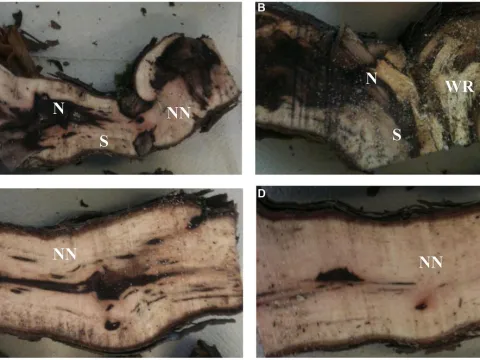
The primary symptom of Cellulomonas infection is the progressive softening and degradation of plant tissues. The affected areas lose their structural integrity, resulting in a mushy, watery mass that is often described as soft rot.
In the early stages, localized brown or necrotic spots appear on leaves or stems. As the infection progresses, these spots expand rapidly, often causing discoloration and severe chlorosis in the surrounding healthy tissue.
When the roots or stems are affected, the plant may exhibit sudden wilting. This occurs because the bacteria break down the vascular tissues, effectively blocking the transport of water and essential nutrients from the roots to the foliage.
Fruits and tubers affected by the bacteria often emit a foul, putrid odor, which is a byproduct of the decomposition process. The surface of these organs may crack or become slimy under the pressure of the decaying internal tissues.
Symptoms are often masked or exacerbated by secondary bacterial or fungal invaders, which commonly accompany Cellulomonas, leading to complex rot manifestations that can be difficult to diagnose.
The development of Cellulomonas is heavily influenced by moisture levels. High humidity in the air or saturated soil conditions provides the essential environment for the bacteria to thrive and secrete cellulase enzymes.
Temperature plays a crucial role in their activity, with an optimal range between 20°C and 30°C. While they can survive in cooler temperatures, their rate of tissue degradation slows significantly under such conditions.
Mechanical damage is the primary gateway for infection. Any injury to the plant surface—caused by cultivation tools, weather events like hail, or insect feeding—provides an entry point for the bacteria to initiate the infection process.
Poor soil aeration and dense crop spacing create a microclimate that prevents moisture from evaporating. This trapped moisture sustains the bacterial population and encourages its rapid spread across the plant canopy or field.
The presence of un-decomposed plant residues in the soil serves as a stable nutrient source for Cellulomonas, allowing it to survive between growing seasons and ensuring a high inoculum level for new crops.
The most significant economic impact is the loss of harvest during storage. Because Cellulomonas can spread rapidly in moist, enclosed environments, even a small number of infected vegetables can cause the total loss of an entire storage batch.
In the field, the pathogen causes seedling death and pre-harvest rot, leading to decreased crop yields and uneven stands. This necessitates expensive replanting or results in lower marketable volume at harvest time.
The destruction of structural integrity reduces the overall vigor of the plants. Infected crops are less resilient to environmental stressors, such as heat or drought, making the entire field more susceptible to secondary diseases.
Costs associated with preventative measures, such as soil disinfection and storage climate control, add significantly to the overall production expenses, reducing the profitability of the affected agricultural enterprise.
The synergy between Cellulomonas and other phytopathogens complicates disease management, often requiring a multifaceted approach rather than a single targeted treatment, which increases the complexity of standard IPM protocols.
Effective management begins with strict crop rotation practices. Avoiding the continuous planting of susceptible hosts in the same area reduces the build-up of bacterial inoculum in the soil and promotes natural pathogen suppression.
Field sanitation is of paramount importance. Removing all crop residues immediately after harvest and ensuring that storage facilities are clean and dry are essential steps to prevent the survival and spread of the pathogen.
Managing insect populations is crucial, as many pests act as vectors or create the physical wounds necessary for bacterial entry. Integrating pest management into the overall crop strategy significantly lowers infection rates.
- Use of high-quality, certified seed or planting material.
- Proper irrigation management to prevent water-logging and excessive moisture.
- Strict temperature and humidity control in storage facilities.
- Regular disinfection of all farming tools and storage containers.
Biological control agents, such as competitive antagonistic bacteria, can be used to colonize the plant surface and soil, thereby limiting the niche available for Cellulomonas to initiate its destructive infection process.