
Chamaesiphon
Chamaesiphon
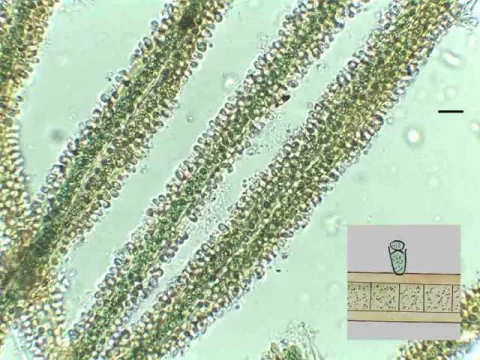
Chamaesiphon is a genus of unicellular cyanobacteria that is frequently observed in aquatic environments, acting as an epiphyte rather than a disease-causing pathogen.
What the section contains
Chamaesiphon
The biological cycle of these organisms is characterized by polar differentiation, where one end of the cell attaches to the substrate while the other releases spores.
Exospores are produced at the apical end of the cell, allowing the organism to colonize new aquatic surfaces effectively.
These cyanobacteria are photoautotrophic, meaning they derive their energy from sunlight and do not feed on plant tissues.
Because they do not penetrate the host's cells, they are categorized as epiphytic organisms that coexist with aquatic vegetation.
The development of Chamaesiphon colonies is heavily dependent on the presence of solid surfaces in nutrient-rich water environments.
Eutrophication, or high levels of phosphorus and nitrogen in the water, serves as a primary trigger for the proliferation of these cyanobacteria.
Optimal growth usually occurs in warm, stagnant or slow-moving water where nutrients can easily accumulate near the surface of plants.
Sufficient light penetration is necessary for the organisms to perform photosynthesis and maintain their structural integrity.
The absence of competition from other fast-growing algae often allows Chamaesiphon to dominate the surface of submerged plant organs.
The primary concern associated with Chamaesiphon is the shading effect it creates on the surface of the host plant.
By covering leaves and stems, dense colonies limit the host's access to light and may interfere with gas exchange.
While not a parasite, heavy epiphytic colonization can reduce the plant's overall photosynthetic efficiency, impacting its development.
In aquaculture, significant growth of these organisms can negatively affect the visual and commercial quality of aquatic products.
Furthermore, their presence is often an ecological indicator of poor water quality and an imbalance in the aquatic ecosystem.
Effective management begins with improving water quality, specifically by reducing nutrient runoff into the aquatic environment.
Mechanical removal of heavily colonized plant material can help control the population and prevent further spread of exospores.
Increasing water flow or implementing better filtration systems can disrupt the conditions favorable for colonization.
Biological control methods and safe algaecides can be employed in severe cases, provided they do not harm the primary crop.
Routine monitoring of water chemistry is essential to prevent conditions that support the rapid spread of cyanobacteria.